Disclosure: This article is for educational purposes only and is not investment advice.
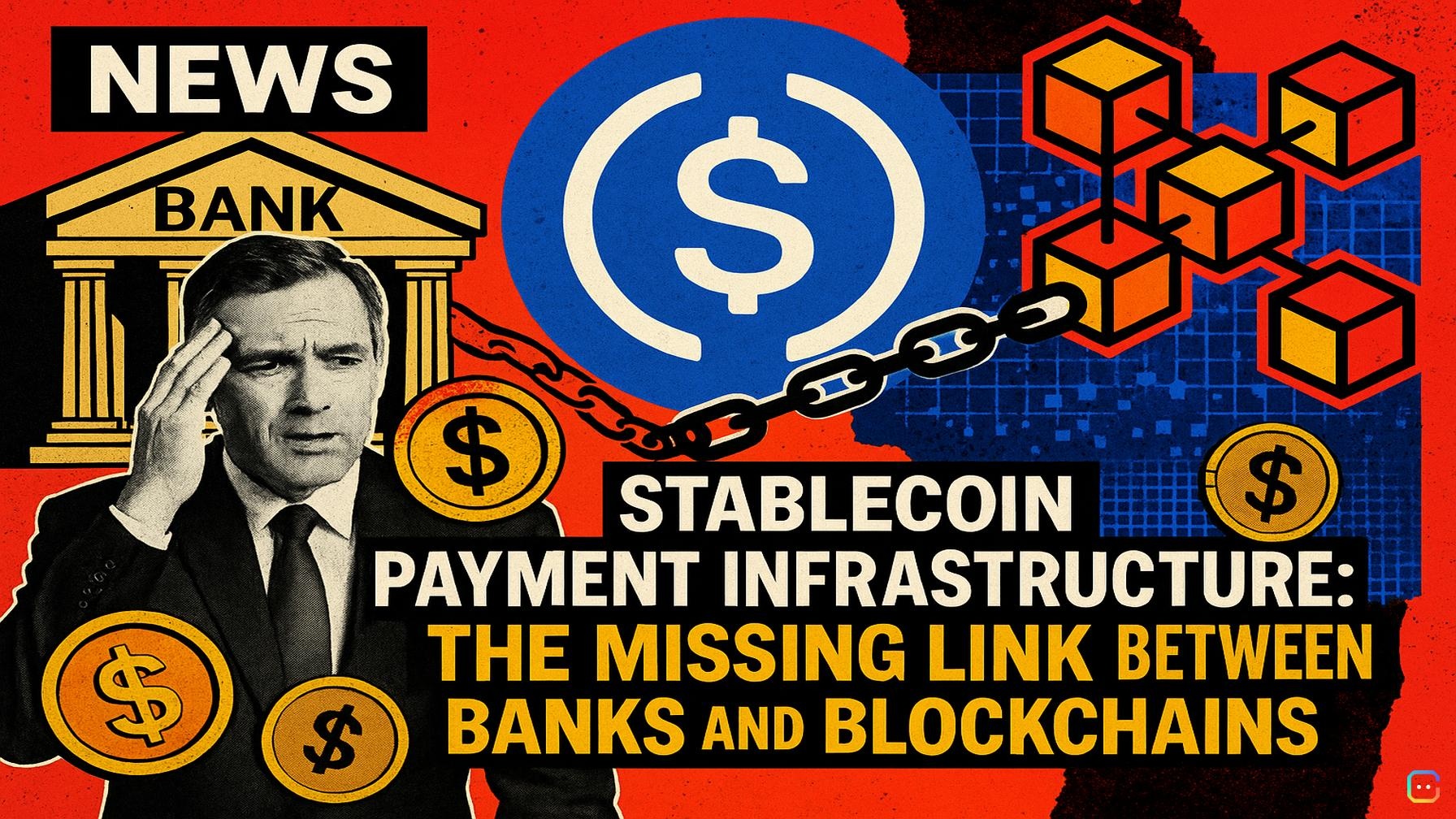
Stablecoins are fast becoming a core part of the global payments stack — used by fintech apps to settle transactions quickly, by remittance services to move money across borders, and by payroll platforms to pay international contractors. But although stablecoins settle on blockchains, everyday users still rely on traditional banking rails to get money in and out. That’s where stablecoin payment infrastructure comes in.
What is stablecoin payment infrastructure?
It’s the middleware that connects fiat payment systems (cards, bank transfers, regional methods like SEPA or PIX) with blockchain networks and stablecoin tokens. Instead of every fintech or wallet building bank relationships, compliance systems and payment processors from scratch, they plug into providers that handle the heavy lifting.
How the stack works (at a glance)
- User interface: wallets, fintech apps, marketplaces where people request buys, sends or withdrawals.
- Fiat on/off‑ramps and compliance layer: providers that accept payments, run KYC/AML, process fraud checks, and mint or swap fiat into stablecoins (and vice versa).
- Settlement layer: public or private blockchains that record token transfers and final settlement.
A typical fiat-to-stablecoin flow
1. User initiates a buy or deposit in an app.
2. The app calls a payment infrastructure provider’s API.
3. The provider takes payment (card, bank transfer, local method), runs identity checks and fraud screening, and handles regulatory requirements.
4. The provider issues or transfers stablecoins to the user’s wallet address on the blockchain.
5. For withdrawals, the reverse happens: stablecoins are redeemed or converted back to fiat and sent to a bank account.
Core capabilities of providers
- Multi‑method payment acceptance (cards, bank transfers, local schemes).
- KYC/AML and compliance tooling and licensing.
- Fraud monitoring and payment reconciliation.
- Fiat ↔ stablecoin conversion and blockchain settlement.
- Single API integrations so product teams can add stablecoin functionality quickly.
Why most companies use these providers
Building the full payment infrastructure internally is complex, expensive and slow — requiring bank relationships, regulatory licenses, compliance systems and support for many payment methods across jurisdictions. Firms report development timelines of 18 months or longer and costs that can run into millions. Using an infrastructure provider lets teams launch stablecoin features faster and stay focused on product rather than payments plumbing.
Who provides this infrastructure?
Several companies offer this bridge between traditional finance and blockchains — examples include Transak, MoonPay, Coinbase’s infrastructure tools, and Stripe’s crypto-related services. Each focuses on different markets and feature sets; Transak, for instance, emphasizes global fiat-to-stablecoin connectivity for wallets, remittance services, payroll providers and marketplaces via a single API.
Where stablecoin rails are being used
- Cross-border remittances: cheaper and faster value transfer across jurisdictions.
- Global payroll and contractor payments: converting fiat into stablecoins, transferring globally, and allowing recipients to cash out locally.
- Marketplaces and treasury operations: moving value across borders quickly without multiple FX layers.
The bottom line
Stablecoins deliver fast, blockchain-native settlement, but mainstream adoption depends on reliable fiat on‑ and off‑ramps. Payment infrastructure providers bridge that gap by linking cards, bank transfers and regional payment systems to blockchain networks while managing compliance, fraud and licensing. As stablecoin use cases expand, these infrastructure layers will play an increasingly central role in bringing crypto-native payments into everyday financial services.
Disclosure: Content provided by a third party. Neither crypto.news nor the author endorses any product mentioned. Conduct your own research before taking any action.
Read more AI-generated news on: undefined/news