Jamie Dimon says JPMorgan may enter prediction markets as big banks circle the space
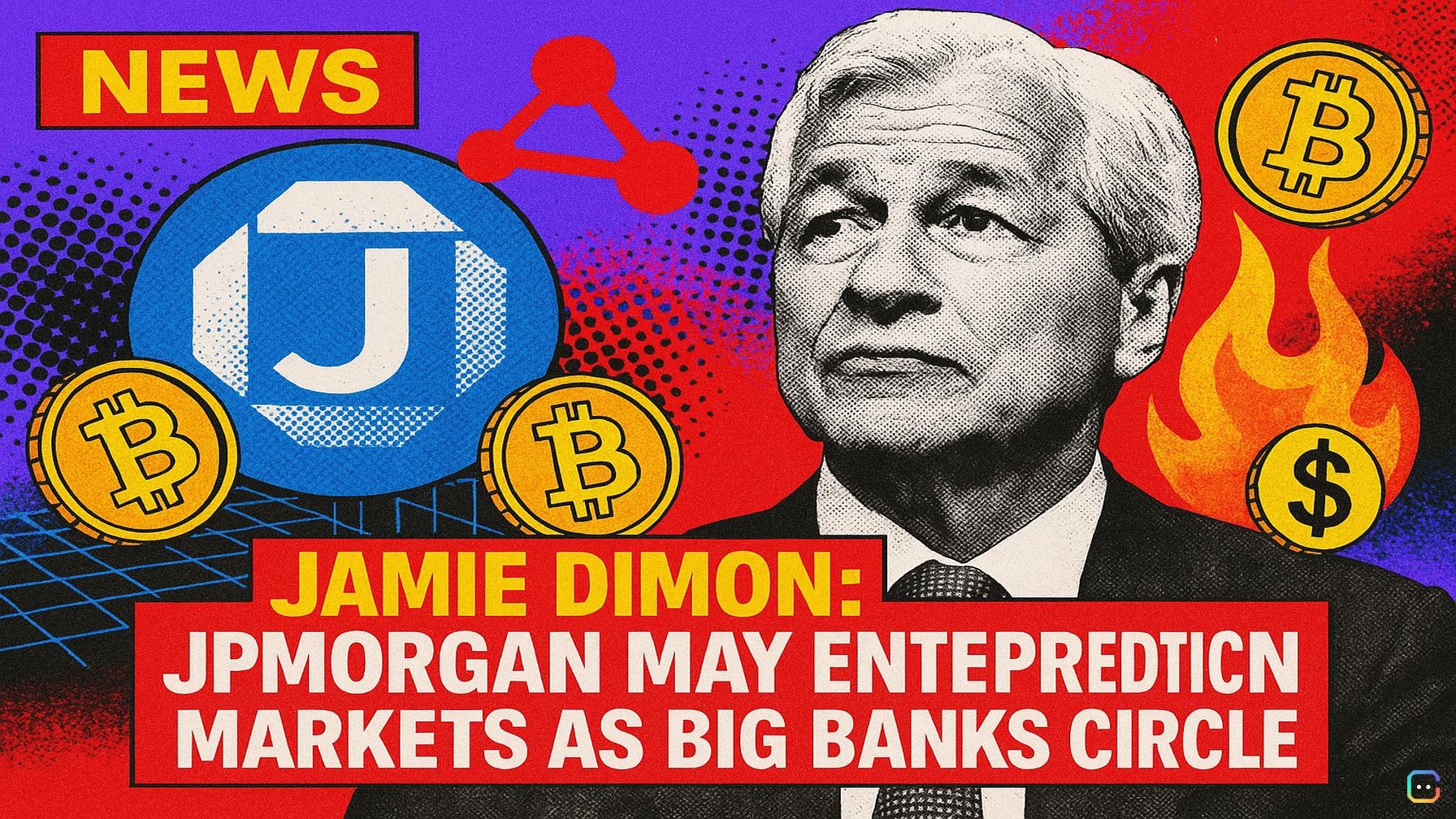
JPMorgan CEO Jamie Dimon signaled Tuesday that the bank is weighing a move into prediction markets, marking another sign that mainstream finance is taking the fast-growing sector seriously. Speaking on CBS, Dimon said “It’s possible one day we’ll do something like that,” but was careful to set boundaries — ruling out markets tied to sports or politics and stressing the bank’s strict rules on insider information.
Goldman Sachs has voiced similar interest. CEO David Solomon told investors in January that Goldman is “actively exploring” prediction markets and that he recently met with leaders at the two biggest firms in the space. “We have a team of people here that are spending time with them and are looking at it,” Solomon said.
Why it matters
- The comments underscore how quickly prediction markets have moved from a niche corner of finance to a mainstream battleground. What used to be dominated by just a couple of credible players is now attracting both crypto-native platforms and major banks.
- Retail access is widening: firms like Coinbase and Robinhood have integrated prediction trading into their products, boosting participation and liquidity.
- Legacy exchanges and venture capital are backing the space: Polymarket has struck partnerships and investment ties with Intercontinental Exchange (ICE), and is believed to be valued around $20 billion. Kalshi reached a roughly $22 billion valuation after a Coatue-led funding round.
Different technical models
- Polymarket: a blockchain-native model. It uses networks like Polygon to record trades and settle outcomes via smart contracts; users deposit stablecoins, place positions on event outcomes, and receive automated payouts when results are verified.
- Kalshi: a non-blockchain, exchange-style model that operates within a regulated framework with centralized matching and settlement.
What banks might do — and why it’s still uncertain
It’s unclear whether JPMorgan or Goldman would adopt blockchain infrastructure or opt for a traditional centralized setup. Banks will also be watching the regulatory environment closely. The legal status of prediction markets in the U.S. — especially which event types are permissible and how contracts are classified — remains in flux, and big financial institutions are likely to wait for clearer rules before launching products.
Regulation catching up
Regulators are beginning to respond: earlier this month the Commodity Futures Trading Commission (CFTC) took steps toward creating a regulatory framework for prediction markets, signaling that oversight of the sector is starting to take shape.
Bottom line
The entry of major banks would bring capital, compliance know-how and institutional distribution to a market long shaped by crypto-native innovators. But choices about technology, permissible markets, and regulatory clarity will determine whether legacy players complement or compete with the blockchain-first platforms that helped build the space.
Read more AI-generated news on: undefined/news