Key takeaways
- Rwanda’s central bank has drawn a firm line: crypto is not authorised for payments, and the Rwandan franc (FRW) remains the only legal tender.
- Bybit’s peer-to-peer (P2P) model—now offering franc pairs—raises oversight concerns because it can route fiat-crypto trades outside traditional banking controls.
- Rwanda is open to digital finance, including a potential CBDC, but is prioritising strict regulation and oversight before allowing broader crypto–fiat integration.
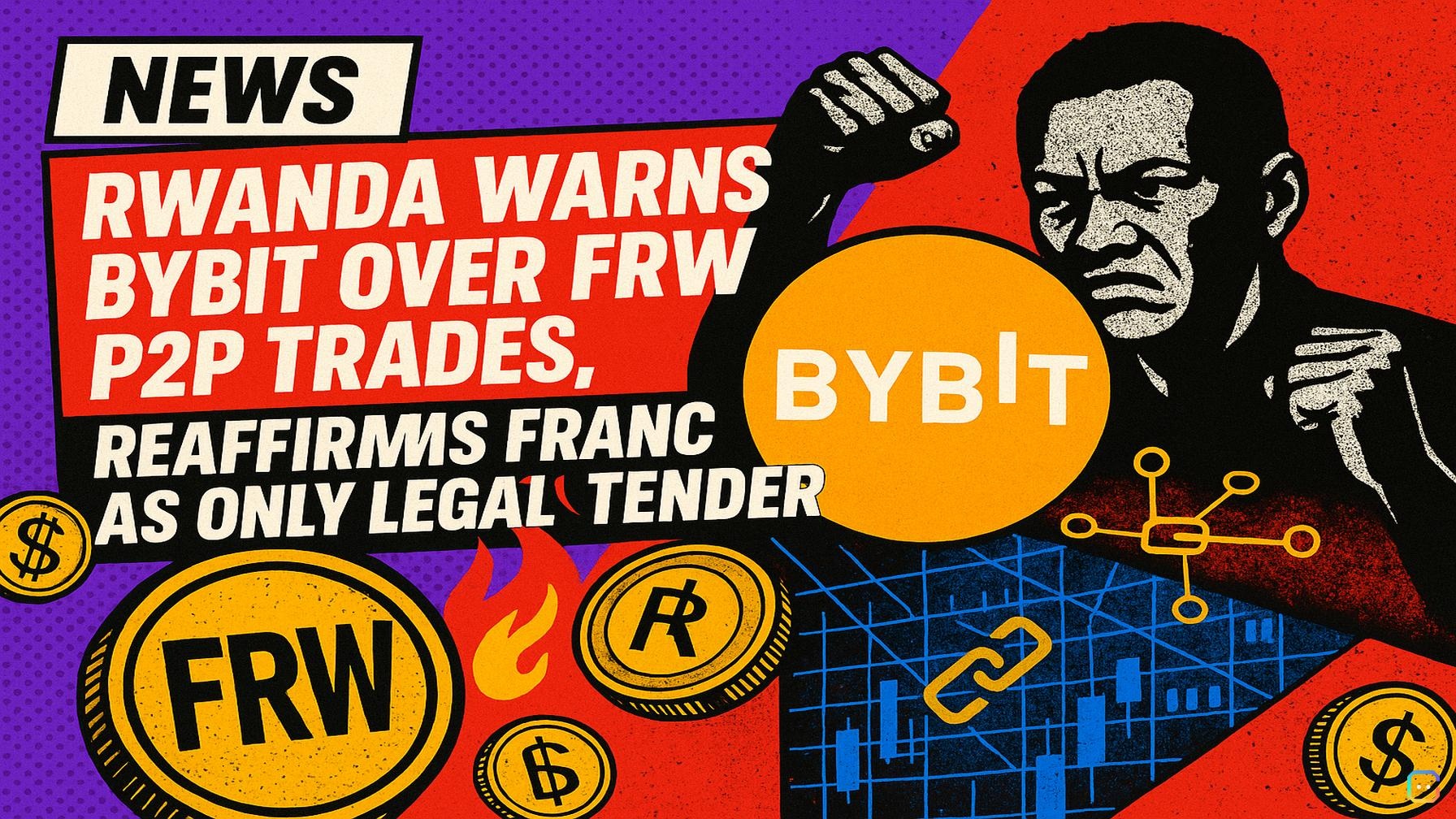
Rwanda’s financial regulators have issued a formal warning after crypto exchange Bybit began allowing users to buy and sell cryptocurrencies using the Rwandan franc on its P2P platform. The National Bank of Rwanda (NBR) cautioned that such direct conversion channels could operate outside established oversight and undermine monetary control, reminding the public that crypto-assets are not legal tender and that the franc remains the country’s sole official currency.
Why regulators pushed back
The NBR’s notice came within days of Bybit enabling franc trading on its P2P marketplace. Regulators are less alarmed by the existence of crypto trading per se than by the prospect of national currency flowing into informal crypto rails that bypass licensed banks and payment systems. Key concerns include:
- Anti-money laundering and counter-terrorist financing risks when trades occur outside regulated intermediaries.
- Consumer protection gaps for retail users unfamiliar with P2P counterparty risks and volatile crypto markets.
- Potential impacts on exchange-rate management and capital-flow controls if franc-conversion volumes grow unchecked.
Context: Rwanda wants digital innovation—on its terms
Rwanda has cultivated a fintech-friendly image and is actively exploring state-backed digital finance: the central bank is piloting a proof-of-concept for an e-franc CBDC. That ambition helps explain the firmness of the response. An unregulated foreign platform linking the franc to volatile crypto markets could complicate a future e-franc rollout and dilute the central bank’s ability to control domestic monetary policy.
The regulatory landscape is tightening more broadly. Rwanda’s Capital Market Authority has proposed licensing rules for virtual asset service providers (VASPs), which would formalise oversight, impose fines for unlicensed operations and restrict certain activities (including bans proposed on mining and mixer services). Licensed financial institutions are generally restricted from directly facilitating FRW–crypto transactions under current guidance.
Regional and market implications
Rwanda’s move fits a wider African pattern: regulators are increasingly open to digital innovation but wary of private cryptocurrencies creating parallel financial systems. Chainalysis data places Rwanda among lower-tier crypto adopters in Sub-Saharan Africa for 2024–2025, while the region as a whole continues to see substantial P2P volumes. With a GDP near $14 billion and rising mobile-money and fintech adoption, Rwanda is attractive to crypto platforms—but also has more to lose from unmanaged capital flows.
What this means for stakeholders
- Exchanges and fintechs: Expect tougher compliance expectations and the need to align fiat-crypto integrations with local licensing and AML rules before launching franc pairs.
- Users: P2P access may remain available but could be limited, regulated, or subject to new disclosure and verification rules—retail participants should exercise caution.
- Policymakers and regional markets: Rwanda’s early intervention could set a regional precedent, encouraging neighbouring countries to prioritise monetary sovereignty and structured oversight.
Bottom line
Rwanda isn’t shutting the door on crypto, but it is setting guardrails. The country is pursuing a dual-track strategy—exploring a state-backed e-franc and formal VASP oversight while restricting informal fiat-crypto channels that could undermine monetary control. For crypto platforms, the message is clear: expansion into Rwanda will require careful regulatory alignment and stronger compliance frameworks.
Read more AI-generated news on: undefined/news