A 33-day drought for solo Bitcoin miners came to an improbable end last week when a tiny operator solved a block that, by the math, shouldn’t have been hit for decades.
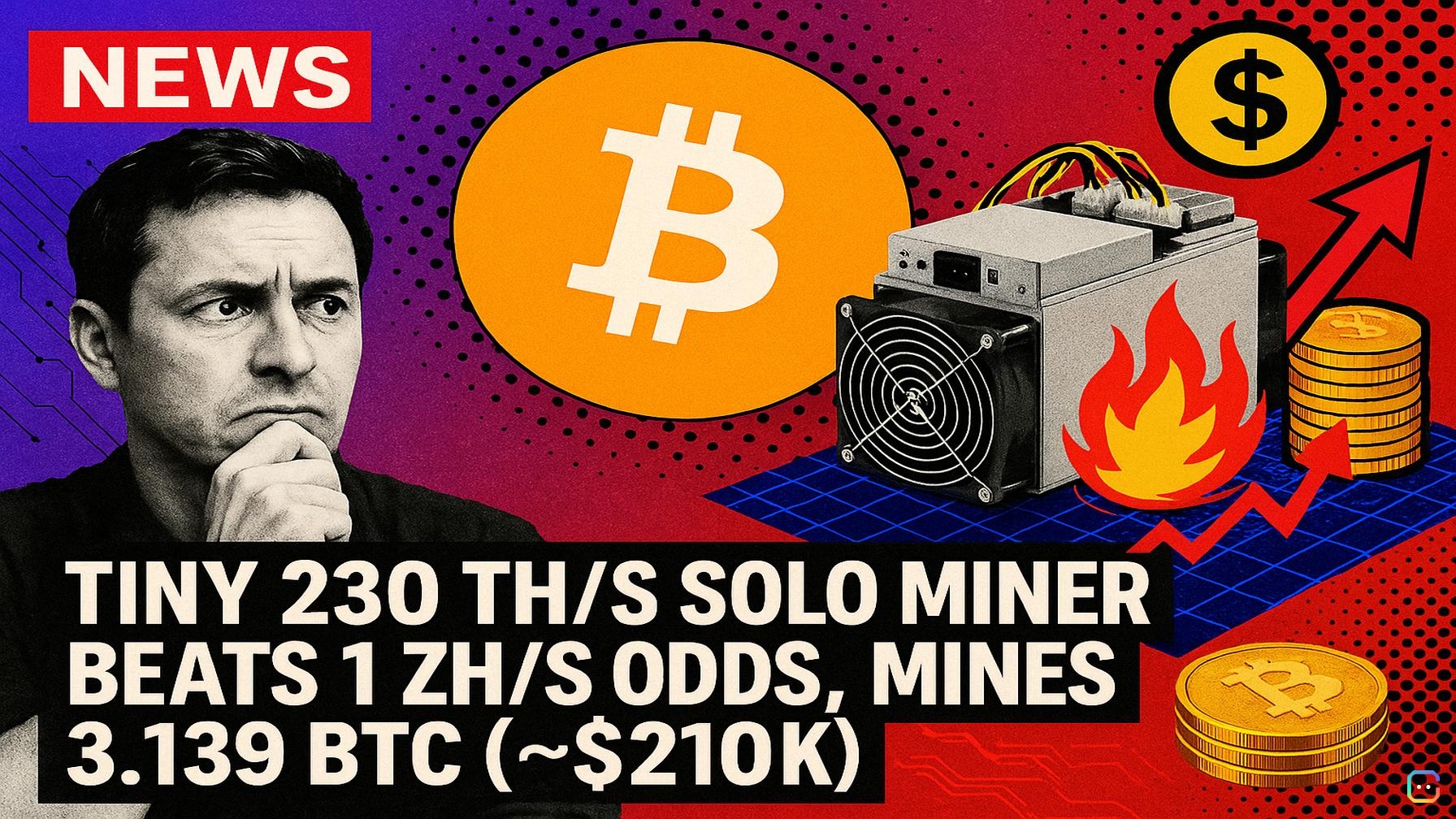
On April 3 the solo miner validated block 943,411 and collected 3.139 BTC — roughly $210,000 — consisting of the 3.125 BTC block subsidy plus about 0.014 BTC in transaction fees. Mempool.space confirmed the payout, which was earned through CKPool, a service that supports independent miners who choose to mine alone and keep nearly all of their rewards.
What made the win remarkable was the miner’s hardware. The setup had around 230 terahashes per second (TH/s) of power while the Bitcoin network’s total hashrate was about 1 zettahash per second (ZH/s). That put the miner’s share of global hashing power at roughly 0.00002% — effectively a microscopic stake in the network. CKPool developer Con Kolivas estimated the daily chance of success for a miner that size at about 1 in 28,000; Bitcoin Archive’s analysis framed it as a statistical win once every 76 years. The miner in question — running under address bc1qtt7cr9cxykyp9g4hq47zf5lq9t97cxvq72lun3 — beat those odds.
This was CKPool’s 312th recorded solo block, according to the Bennet solo-miner tracker, and it broke a 33-day gap since the previous solo success on February 28. But the April victory fits a recent pattern of extraordinary upsets: in December a 270 TH/s rig claimed more than $284,000; at one point a minuscule 6 TH/s setup secured about $265,000; a 200 TH/s operation netted about $350,000 in September; and in late February a renter who spent roughly $75 on cloud hashrate reportedly walked away with nearly $200,000. Each payout carried odds that would seem to deter most participants — and yet these low-probability jackpots keep appearing.
Why this matters: these events highlight the extreme variance in solo mining. Small operators can occasionally score life-changing rewards, despite vanishingly small expected shares of the network. That upside attracts hobbyists and lone operators to services like CKPool, even as professional outfits opt for scale and steadier returns through large pools or direct production.
At the same time, large publicly traded miners have recently been reducing their Bitcoin inventories. Riot Platforms sold 3,778 BTC in Q1 2026 for roughly $289 million while still holding 15,680 BTC at quarter’s end. Marathon Digital (MARA) moved even faster, selling more than 15,000 BTC between early and late March to raise about $1.1 billion, reportedly to manage debt obligations. The contrast is clear: retail and solo miners chase occasional windfalls, while big miners prioritize liquidity and balance-sheet management.
The April 3 solo win is another reminder of Bitcoin mining’s long tail — where tiny players, against astronomical odds, sometimes beat the house.
Read more AI-generated news on: undefined/news