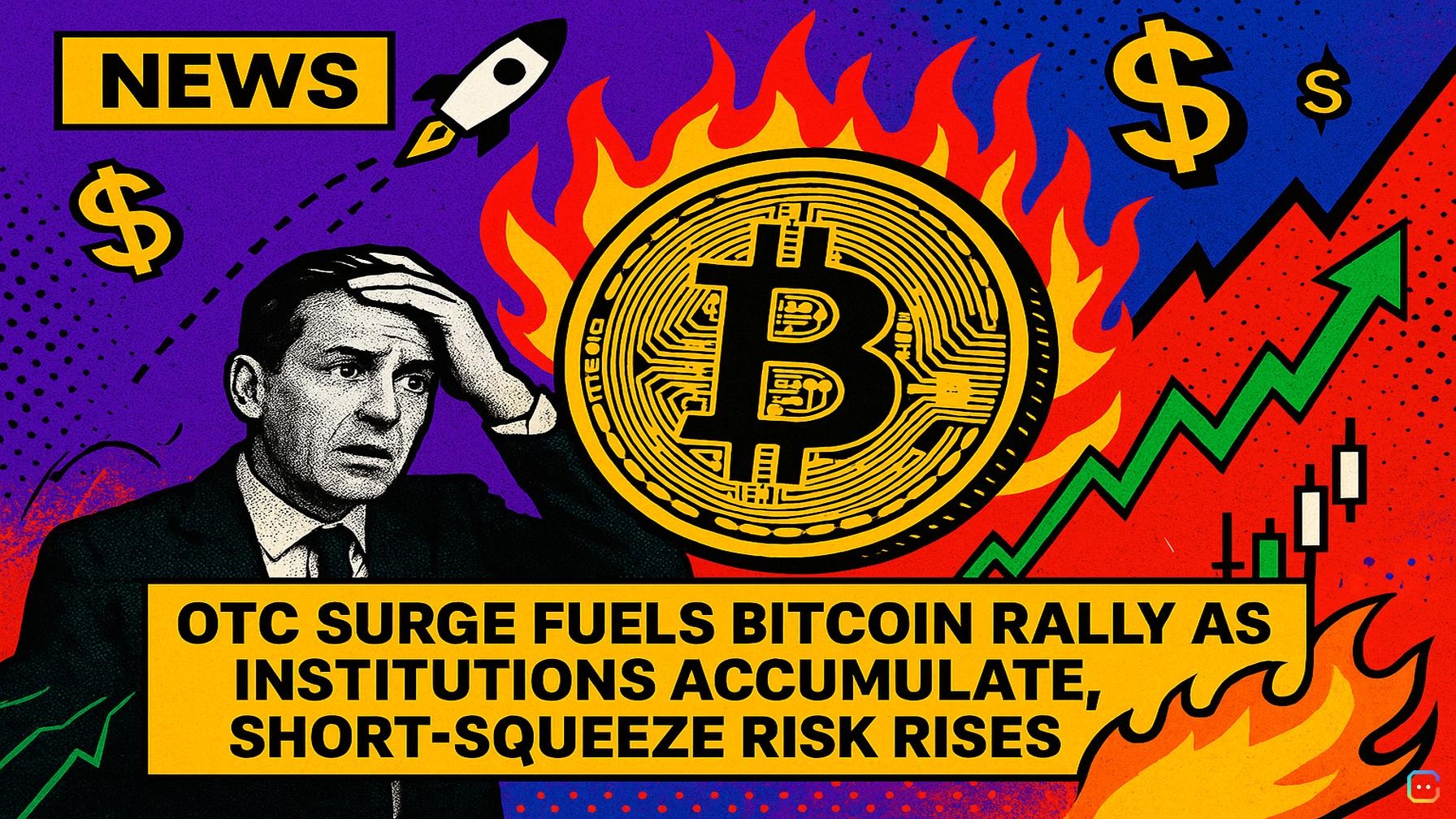
Bitcoin’s rally is taking on a distinctly institutional tone as April unfolds. The flagship crypto climbed to roughly $73,300 this week after a 9% gain over the past seven days, and fresh on-chain indicators suggest the drivers behind the move are shifting away from public exchange order books and into private, over-the-counter (OTC) deals.
Market analyst GugaOnChain flagged one telling gauge — the “Bitcoin: OTC vs Exchange Dominance Share (24h %)” — which showed OTC transactions accounted for 82.26% of total settlement volume, squarely inside the indicator’s “Institutional Alert Zone” (80–90%). Out of 706,000 BTC settled across the network in 24 hours (about $51.5 billion at current prices), only roughly 17.14% moved through centralized exchange (CEX) order books. In short: visible liquidity on exchanges is thinning as large counterparties increasingly trade off-exchange.
That shift has practical implications for market positioning. GugaOnChain warns traders against shorting Bitcoin now, arguing that heavy OTC accumulation can create a supply shock. If spot demand spikes while most large holders are accumulating off-exchange, price moves could be sudden and violent — wiping out bearish bets that rely on exchange liquidity to absorb selling pressure.
To confirm that the OTC flows represent accumulation rather than distribution, GugaOnChain pointed to the “Bitcoin: Exchange Inflow – Spent Output Age Bands” metric. Over the last 24 hours, only 94.68 BTC older than six months were deposited to exchanges — a tiny fraction compared with the 706,000 BTC transacted network-wide. That suggests long-term holders remain largely inactive and are not unloading coins into the current strength.
Examining where the remaining on-exchange volume is concentrated further underscores institutional influence. Within the 17.14% of activity on CEXs, Coinbase dominates with 58.21% of flows — a position strengthened by its role as custodian for eight of the 11 U.S. spot Bitcoin ETFs. Binance follows at 22.13%, retaining its large, retail-heavy global user base, while Kraken accounts for 6.44%, reflecting its niche among compliance-focused and institutional clients.
Taken together, the data paints a market increasingly shaped by large, off-exchange counterparties and a small number of custodial on-ramps. For traders and observers, that means price action may become more sensitive to concentrated flows and less reflective of public order-book depth — a dynamic that can amplify volatility in either direction.
Read more AI-generated news on: undefined/news