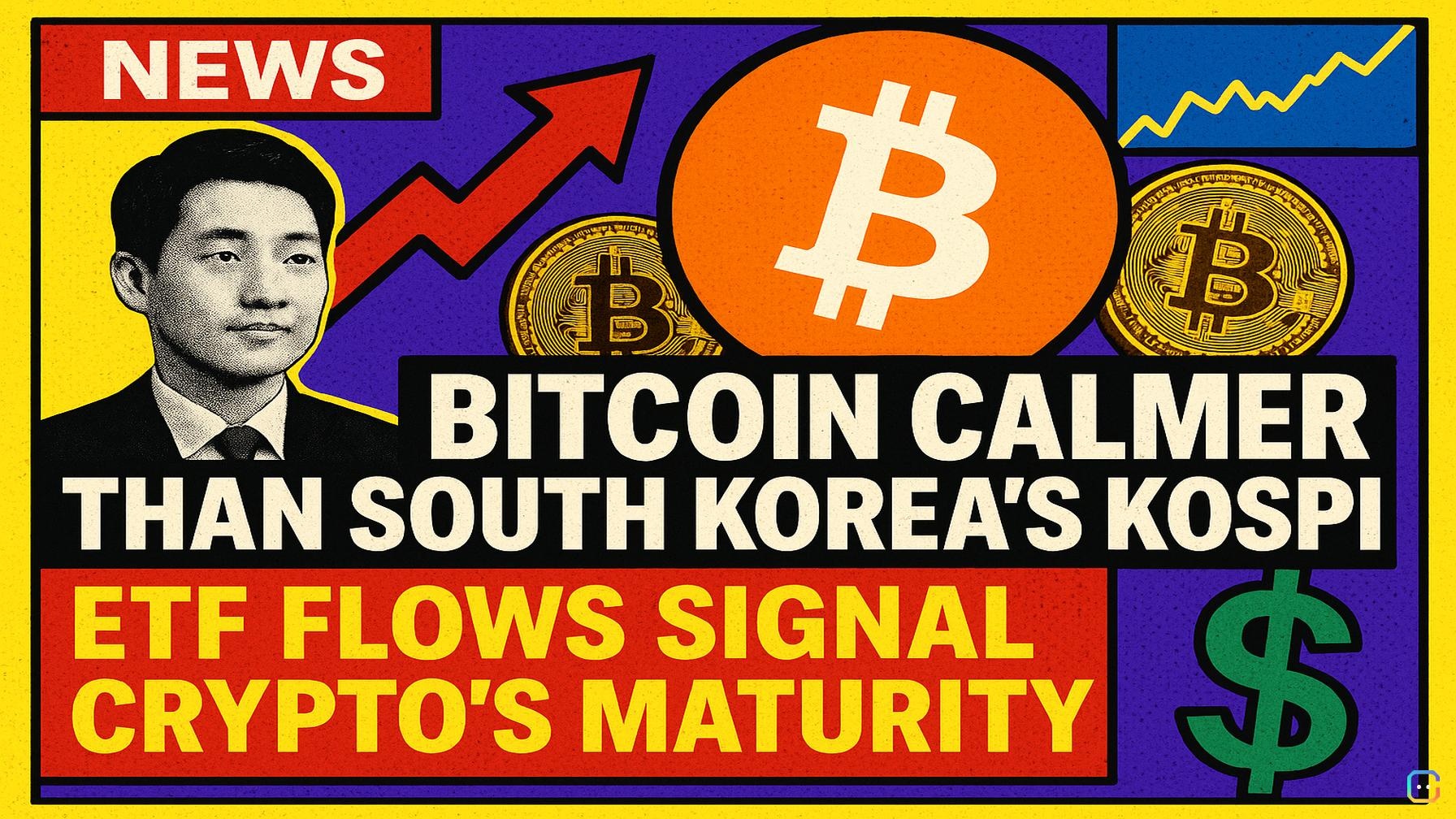
Bitcoin is now calmer than South Korea’s stock market — and that shift is telling
Bitcoin (BTC) — long synonymous with wild price swings — is behaving more like a mature asset these days. Trading around $76,458, BTC’s 30-day realized volatility has hovered near 42% this month, staying below 50% for the first time in a long while, according to TradingView.
By contrast, South Korea’s Kospi index — whose market capitalization is roughly twice that of bitcoin — spiked to 74% volatility last week and remains near 51%. Pakistan’s KSE‑100 is similarly volatile, also around 51%. Most other major regional and global markets were less volatile than bitcoin over the same period, but the outsized swings in Korea and Pakistan stand out.
Why the divergence?
- Energy shocks: The Kospi’s turbulence was driven largely by a spike in fossil-fuel costs after the late-February escalation of the Iran–U.S.–Israeli conflict and the temporary closure of the Strait of Hormuz. South Korea imports nearly all of its oil and gas, so the disruption sent the Kospi from about 6,340 in late February down to 5,000 by the end of March, before it rebounded to fresh highs above 6,380 as tensions eased and a temporary ceasefire was negotiated (set to expire on Wednesday). Pakistan’s market showed similar sensitivity because its economy is also highly exposed to energy-price shocks.
What’s steadying bitcoin?
- Spot ETFs: Bitcoin’s volatility has steadily fallen in recent years, with a notable decline after U.S.-listed spot bitcoin exchange-traded funds began trading in January 2024. Those products attracted more institutional, risk-managed capital, which has helped dampen large price swings.
- Geopolitical hedge narrative: Bitcoin’s relative stability during recent geopolitical shocks has reinforced its appeal as a hedge. Industry players like River have noted that bitcoin has outperformed traditional assets such as gold and the S&P 500 during wartime episodes earlier this year.
Through the same period that regional equities were gyrating, bitcoin largely traded between $65,000 and $75,000, buoyed by renewed ETF inflows. The comparison highlights two things: bitcoin appears to be maturing as an investable asset class, and traditional markets—especially those exposed to energy risks—can still exhibit sharper short-term volatility than crypto.
Read more AI-generated news on: undefined/news