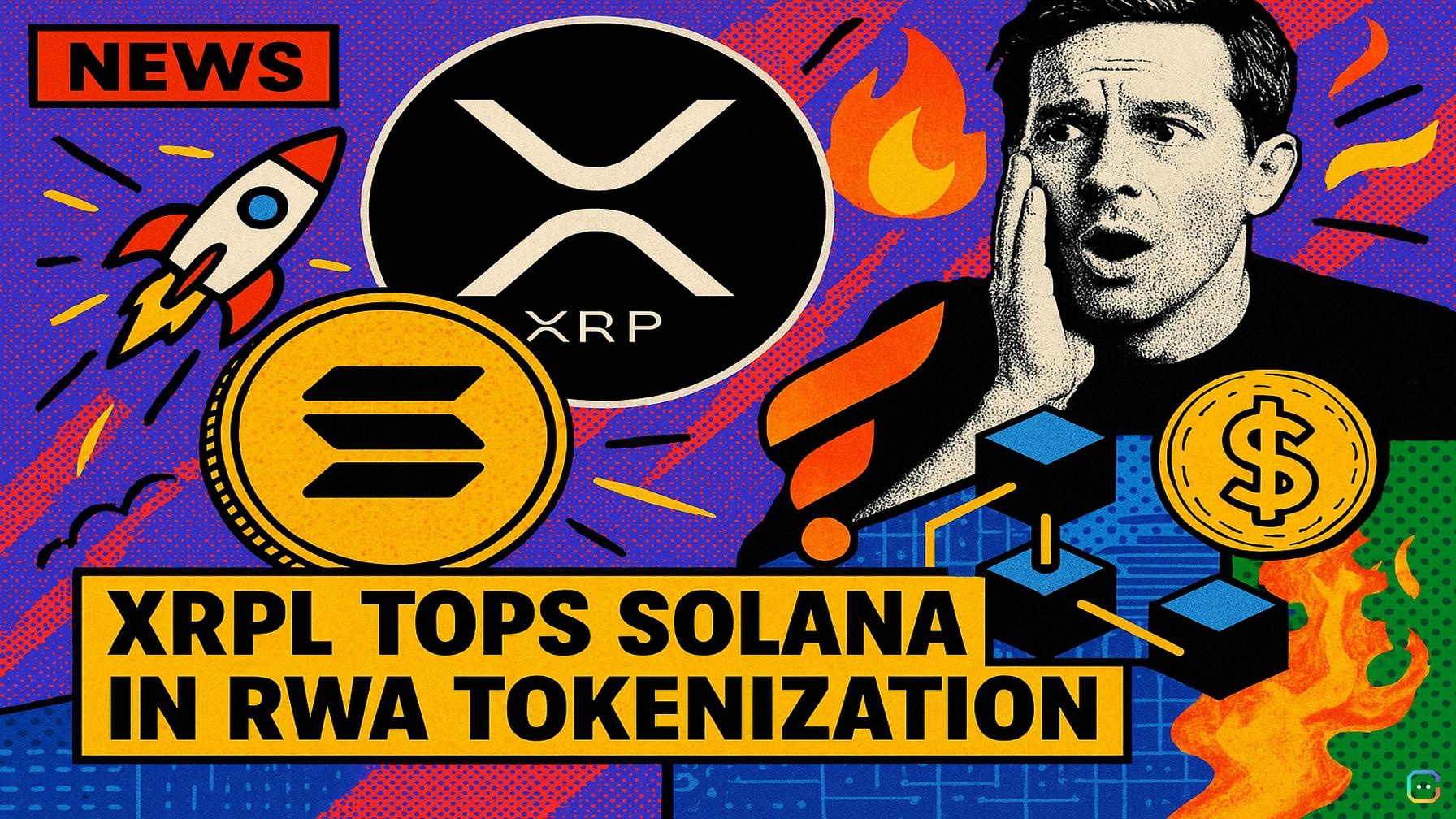
The XRP Ledger (XRPL) is quietly staking a bigger claim in the real-world asset (RWA) race, moving ahead of Solana in tokenized asset rankings and highlighting a shifting landscape for blockchain infrastructure.
Why it matters
Tokenization — the process of representing real-world assets like bonds, receivables or real estate on blockchains — is accelerating across crypto. Efficiency, low fees and scalability are becoming decisive factors for institutions picking a platform. In that context, the XRPL’s growth is notable: the ledger now hosts nearly $1.9 billion in tokenized assets, surpassing Solana in global RWA standings and signaling growing institutional interest beyond pure speculation.
Interoperability and new tooling
In an interview, Hugo Philion, co‑founder of Flare Networks, said RWAs issued on the XRPL can be leveraged within Flare’s compute layer while preserving privacy and compliance. Philion singled out XRPL’s new TokenEscrow amendment — an on‑ledger escrow mechanism — calling it a game‑changer for cleanly holding and releasing tokenized assets.
That combination matters because, although XRPL does not offer Solana‑style programmability or the same privacy model as systems like Canton, the ledger’s governed settlement model plus TokenEscrow creates a solid foundation for regulated asset flows. When paired with Flare’s programmable, privacy‑focused compute layer, stakeholders could access compliant, yield‑generating RWA products that bridge traditional finance and smart contract functionality.
Market takeaways
Observers such as BankXRP frame XRPL’s flip of Solana not as speculative hype but as meaningful institutional momentum. The practical improvements — escrowed token custody and tighter integration with private compute — help explain why institutions might prefer XRPL for some tokenization workloads despite tradeoffs in on‑chain programmability.
Preparing for quantum risk
Beyond tokenization, Ripple Labs is preparing XRPL for a post‑quantum future. The firm laid out a multi‑phase plan targeting full readiness by 2028, prompted in part by warnings from Google Quantum AI about the long‑term vulnerability of today’s cryptographic primitives. Ripple’s four phases are:
- Post‑quantum recovery
- Proactive planning and experimentation
- Exploration of post‑quantum cryptographic primitives
- Full transition to post‑quantum signatures
Ripple says this measured, multi‑phased approach is designed to migrate a live, global financial infrastructure without undermining asset value on the ledger.
Bottom line
XRPL’s rise in RWA rankings and the rollout of features like TokenEscrow — combined with integration plans with compute layers such as Flare and a roadmap for post‑quantum resilience — position the ledger as an increasingly attractive option for institutions exploring tokenization. The development underscores that, in the race to bridge traditional assets and blockchains, tradeoffs between programmability, privacy and governance are shaping diverse product and network choices.
Read more AI-generated news on: undefined/news