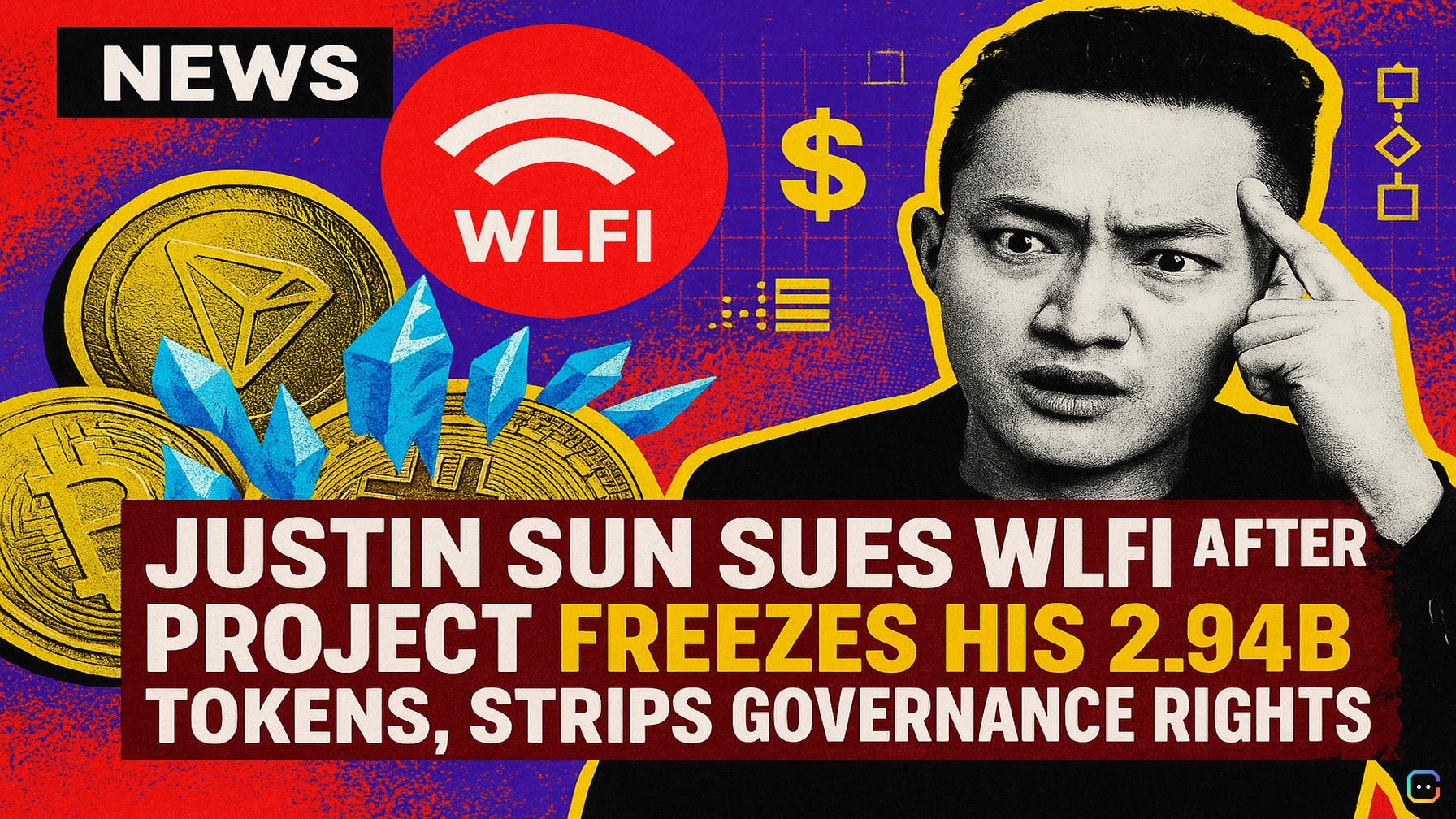
Justin Sun has taken WLFI to federal court in California, accusing the World Liberty Financial project of freezing his entire WLFI stake — 2.94 billion tokens — and stripping him of investor rights without justification. The lawsuit escalates a high-profile clash between one of crypto’s most recognizable entrepreneurs and a project that markets itself on decentralized governance and early-stage token distribution.
What Sun says
- Sun’s filing alleges WLFI froze all 2.94 billion tokens tied to his account (540 million unlocked, 2.4 billion locked), preventing him from transferring, selling or otherwise using the holdings.
- He claims the freeze removed his governance voting rights, blocking him from participating in protocol decisions — including recent governance changes — and that WLFI even threatened to burn part of his holdings.
- Sun says the tokens were frozen in September 2025, when the position was worth more than $107 million; by April 2026 he estimates the value fell to roughly $43–$60 million.
- He says he tried to resolve the dispute privately before suing, and that his goal is straightforward: equal treatment with other early investors, without special privileges for anyone — and without restrictions applied to him alone.
- Sun also emphasized the suit is about investor treatment and token governance, not politics, adding it does not affect his public support for the Trump administration’s pro-crypto direction.
The governance fight
- The legal dispute intensifies a governance disagreement tied to a WLFI proposal released April 15. Sun opposes the proposal, saying it could lock users’ tokens indefinitely if holders do not actively accept new terms.
- The proposal reportedly calls for a permanent burn of 10% of advisor tokens and sets an early-purchaser framework with a two-year cliff followed by two years of vesting. Under the proposed terms, users who don’t explicitly accept could have tokens locked.
- Sun says the proposal creates an unfair, retroactive consent mechanism — and because his tokens are frozen he cannot vote for or against changes that directly affect him.
WLFI’s response
- WLFI rejects Sun’s characterization, saying the token restrictions were imposed for security and compliance reasons. The project says its governance features include administrative controls intended to protect the platform and participants.
- The company’s position underscores a central tension: projects that advertise decentralization but retain administrative powers (token freezes, burns, overrides) face questions about disclosure, process and how those powers should apply to large early investors.
Why it matters
- With 2.94 billion tokens at issue, the outcome could shape how courts and the industry treat administrative controls in token ecosystems — especially whether such powers can be applied to major investors without clear procedural safeguards.
- The case will likely be watched as a test of the balance between centralized safety tools and the decentralization principles many projects claim to uphold.
Read more AI-generated news on: undefined/news