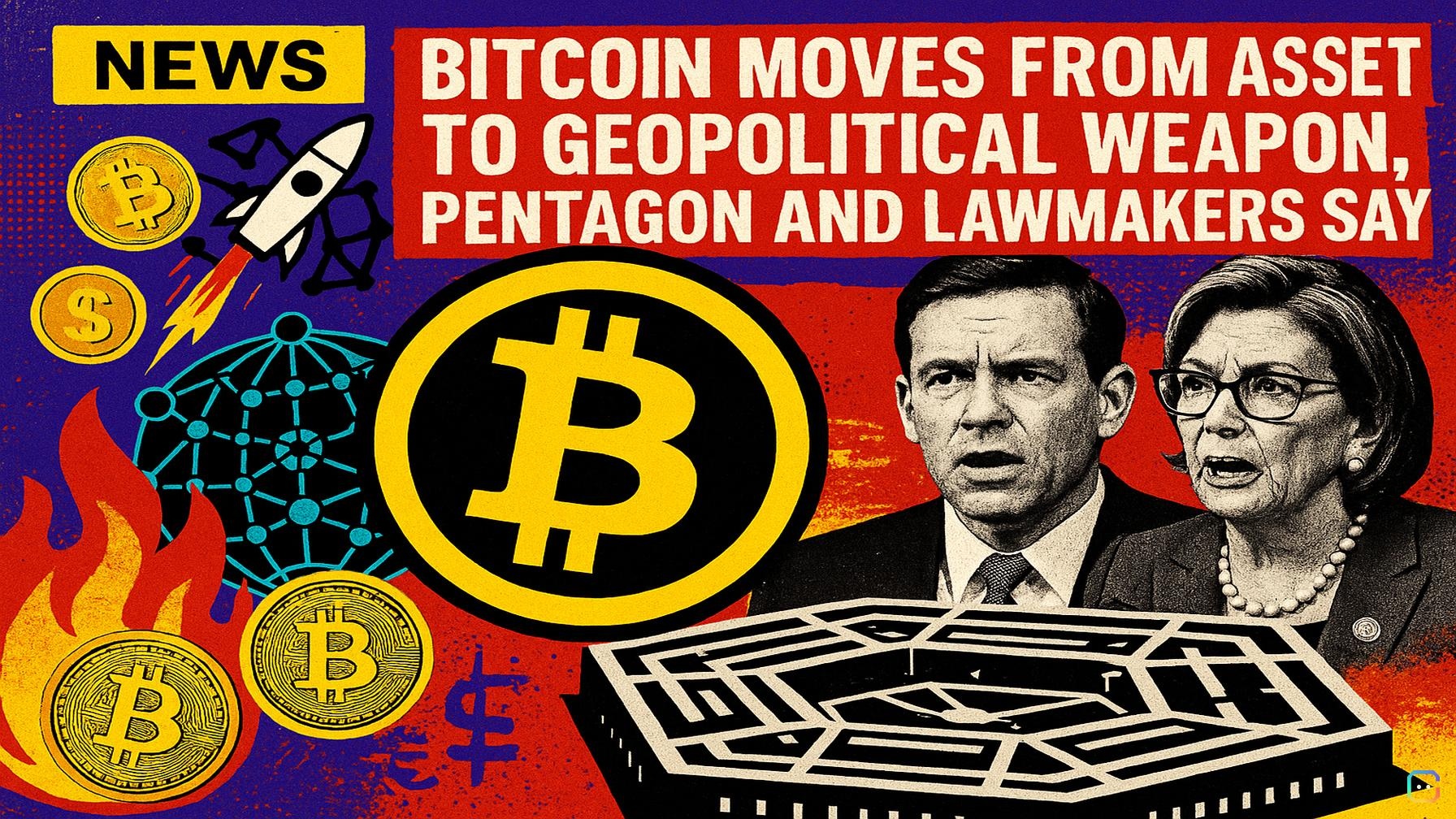
Top U.S. officials are increasingly treating Bitcoin as more than an investment vehicle — lawmakers and military leaders now describe it as a tool of geopolitics and national security.
Rep. Lance Gooden (R-Texas) told reporters this week that Bitcoin has become a “geopolitical weapon” wielded by multiple adversaries. His comments follow disclosures from Pentagon circles indicating the Department of Defense is actively engaged with crypto in ways that go beyond open-market interest.
Pentagon involvement, classified and public
According to reporting by the TFTC agency, Pentagon leader Pete Hegseth told Rep. Gooden the department runs classified programs that both enable and counter crypto activity as part of efforts to push back on what he called “China’s digital authoritarianism.” Hegseth was quoted saying, “I am a long enthusiast of Bitcoin and crypto potential, and a lot of the things we are doing, enabling it or defeating it, are classified efforts that are ongoing inside our department, which do provide us a lot of leverage in a lot of different scenarios.”
That classified work has a public-facing counterpart. Admiral Samuel Paparo, commander of U.S. Indo-Pacific Command, told the Senate Bitcoin has “incredible potential” for cybersecurity and strategic uses, adding, “We have a node on the Bitcoin network right now. Bitcoin has direct implications for power projection.”
A multi-front security landscape
Putting those statements together, Gooden sketched a broad security role for Bitcoin:
- He said Iran is allegedly demanding Bitcoin as a kind of toll for shipping through the Strait of Hormuz.
- He accused North Korea-linked hackers of using Bitcoin to launder ransomware proceeds.
- He suggested China is “believed to be stockpiling substantial holdings as part of its strategic reserve.”
“Over the past decade, Bitcoin has evolved from a fringe asset into a matter of national security,” Gooden concluded.
On-chain holdings that underscore the stakes
Advocacy and policy groups tracking crypto holdings lend data to the geopolitical framing. The Bitcoin Policy Institute (BPI) estimates China holds roughly 194,000 BTC, while U.S. entities hold about 328,000 BTC — figures Gooden cited as evidence that Bitcoin now figures in economic competition and reserve strategy, not just finance hearings.
Market snapshot
Bitcoin itself has continued to climb: at the time of reporting BTC traded near $76,384, up about 1% in 24 hours after testing a $75,000 support level. Traders and analysts are watching the $80,000 mark as a psychologically and technically significant next target — a level BTC hasn’t sustained since early February.
Why it matters
Whether through sanctioned reserve accumulation, covert defense operations, or criminal financing, Bitcoin’s decentralized, cross-border nature gives it utility across a spectrum of actors. That utility is what’s pushing policymakers and military leaders to take crypto seriously as a strategic asset and, in some views, a tool of statecraft.
Read more AI-generated news on: undefined/news