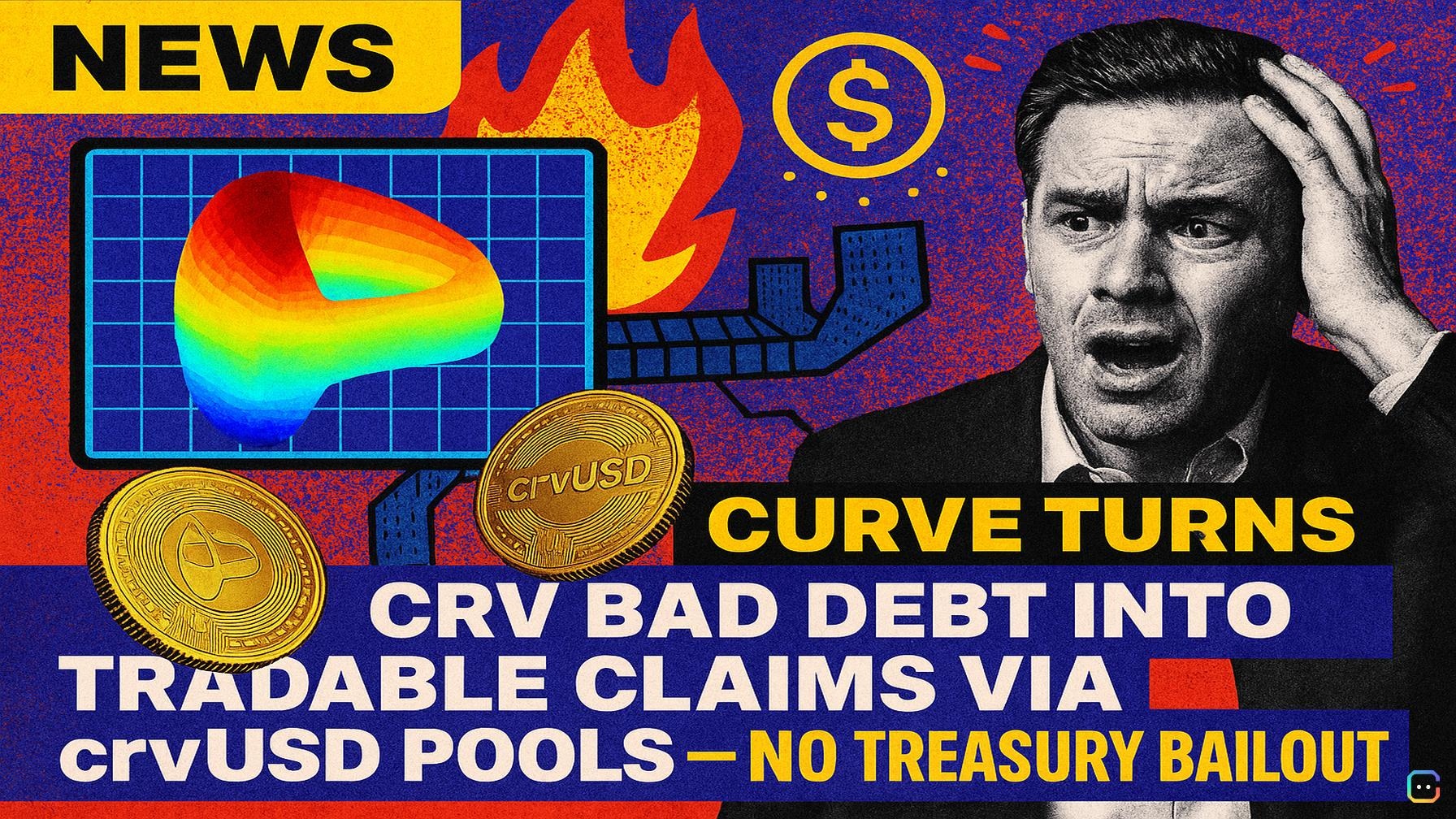
Curve turns CRV-linked bad debt into tradable on‑chain claims with crvUSD–debt pools
Curve Finance has launched a novel bad‑debt recovery framework that converts CRV‑linked lending losses into tradable on‑chain claims, moving the protocol away from socialized bailouts toward market‑priced resolution.
The idea, first proposed on Curve’s governance forum and reported by outlets including ForkLog and KuCoin News, was championed by founder Michael Egorov, who framed the mechanism as “an investment tool, not a donation.” The pilot targets the CRV‑long LlamaLend market, which accumulated roughly $700,000 of bad debt after the October 2025 market crash.
How it works
At the center of the design is a dedicated stable‑swap pool pairing crvUSD with a tokenized representation of the bad debt or vault claims. A RootData summary describes the pool’s parameters: a low amplification (A ≈ 2) and a relatively high redemption fee (about 1%). Liquidity is concentrated near an engineered “repayment capability”—roughly 71% of face value—so buyers acquire the debt tokens at a discount and effectively bet on CRV recovering enough to improve the collateral situation.
If CRV re‑rallies, capital from the pool can be used to unwind deficits as collateral values rise and bad loans are repaid. If CRV falls further, the model aims to prevent collateralization from deteriorating in the same way as conventional under‑water loans. In short, it turns stuck exposures into tradable instruments whose price reflects market expectations of recovery.
Incentives and governance
Liquidity providers earn trading fees and—if Curve DAO approves a gauge—additional CRV rewards. The DAO can also collect some degraded tokens via management fees. Crucially, this approach allows the protocol to manage losses without an outright treasury bailout: recovery is driven by market participants buying, speculating, and warehousing risk.
Why Curve chose this path
The mechanism was developed after the October sell‑off left some Curve lending markets impaired and caused withdrawal delays and losses. Egorov pitched the model as replacing “social welfare with market mechanisms”: distressed claims can be sold into the market at a discount, arbitrageurs can exploit pricing differences, and LPs earn yield for holding risk—rather than relying on a one‑off rescue funded by the DAO treasury.
Risk and limitations
Curve stresses this system “will not eliminate losses or guarantee recovery.” Affected users still face real losses and now have choices: sell their claims at market prices, hold them in hope of recovery, or supply liquidity to earn fees and potential upside. The protocol warns participants the model is not a risk‑free bailout.
Potential wider application
If the CRV‑long LlamaLend pilot weathers future volatility—including events like the KelpDAO fallout—Curve’s team and outside observers say the debt‑tokenization pool could become a template for other Curve markets and even external DeFi protocols that want to manage bad debt without reflexive treasury rescues.
Read more AI-generated news on: undefined/news