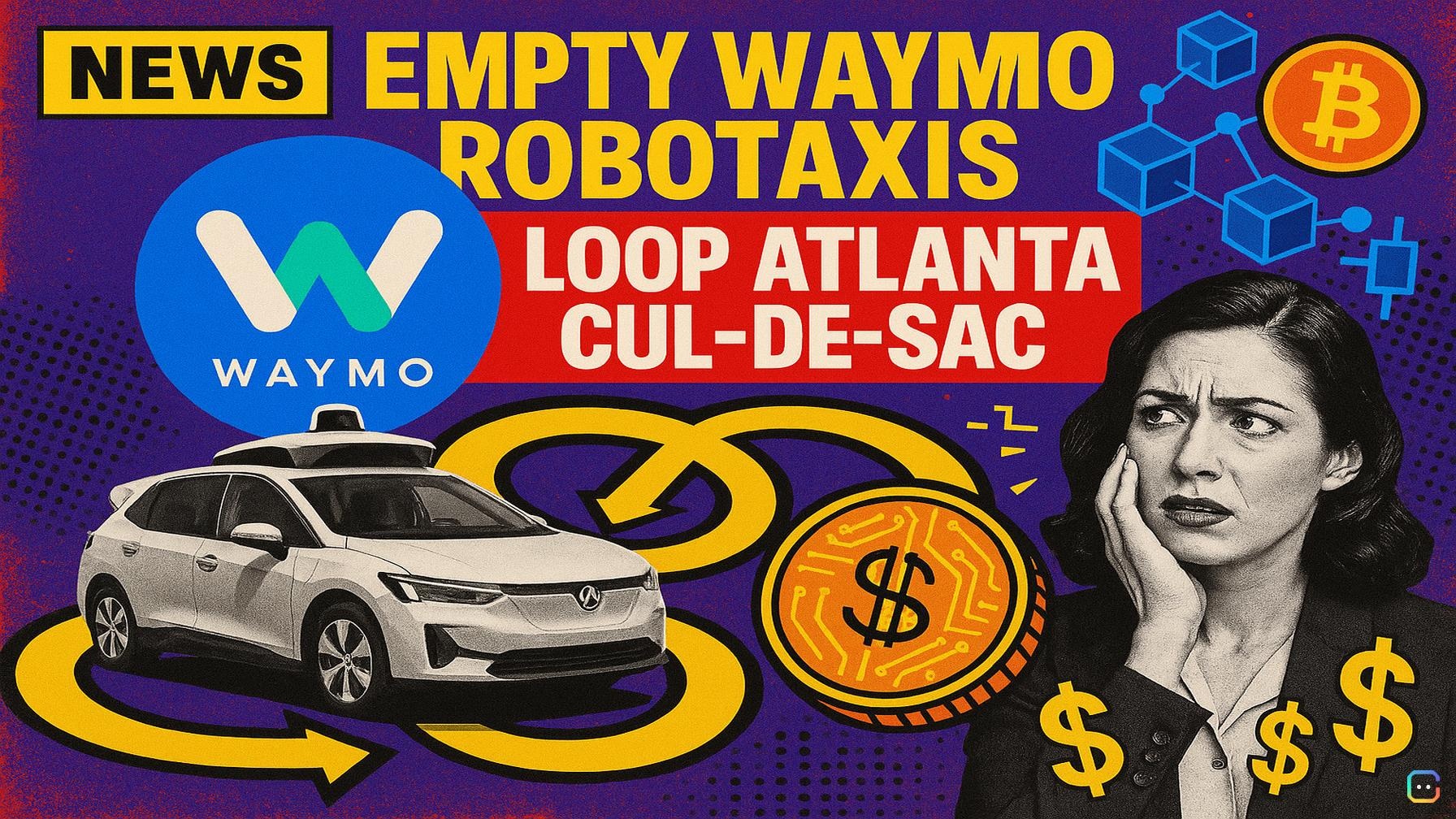
Headline: Empty Waymo Robotaxis Looping Through Atlanta Cul‑de‑sac Raise Questions About Fleet Control and Transparency
In a quirky — and slightly unnerving — scene that sounds more like a sci‑fi art installation than suburban life, residents of a northwest Atlanta dead‑end street say their mornings now begin with empty Waymo robotaxis slowly circling the cul‑de‑sac before sunrise.
Local station WSB‑TV reports that cars have been driving the loop along Battleview Drive for weeks, often between 6 a.m. and 7 a.m. One neighbor estimated roughly 50 Waymo vehicles passed through in a single hour. The phenomenon began about two months ago but has intensified recently, and residents say the vehicles are empty and not picking up passengers.
Small acts of resistance had unexpected effects. A resident planted a children’s street sign near the road in hopes of discouraging the cars — but several Waymos then became stuck trying to turn around. “We had, at one point, eight Waymos that were stuck trying to figure out how to turn around,” one neighbor told WSB‑TV.
Waymo acknowledged the problem and told Decrypt it uses a local partner to manage fleet positioning in Atlanta. The company says it’s already working with that partner to change routing and prevent a repeat. “At Waymo, we are committed to being good neighbors,” Waymo’s statement read.
Why crypto readers should care: this incident touches on broader issues around centralized fleet management, algorithmic decision‑making, and operational transparency — themes familiar to the blockchain world. The Waymo situation dovetails with earlier complaints this year in San Francisco, where residents said Waymo cars clustered and honked overnight near parking and staging areas. It also feeds into an ongoing debate about how much human intervention happens behind the autonomous curtain. Lawmakers have pressed Waymo on its use of remote human assistance operators, some based overseas; Waymo maintains that vehicles make driving decisions independently and that remote operators provide guidance rather than direct control.
Those concerns were echoed by Rep. Buddy Carter (R‑GA), who told Decrypt: “Users of autonomous vehicle services are currently in the dark about their safety and privacy when it comes to [Remote Assistance Operators] ... We know there have been instances of fatal or near‑fatal crashes involving [autonomous vehicles], and we cannot wait for a confirmed threat to the U.S. or fatal accident involving a remote foreign driver to act.”
As autonomous fleets expand, this Atlanta detour is a small but telling example of how routing algorithms, third‑party fleet management and limited transparency can create friction with communities — and attract regulatory scrutiny.
Read more AI-generated news on: undefined/news