Headline: Trump signs AI executive order focused on cybersecurity — what it means for crypto firms
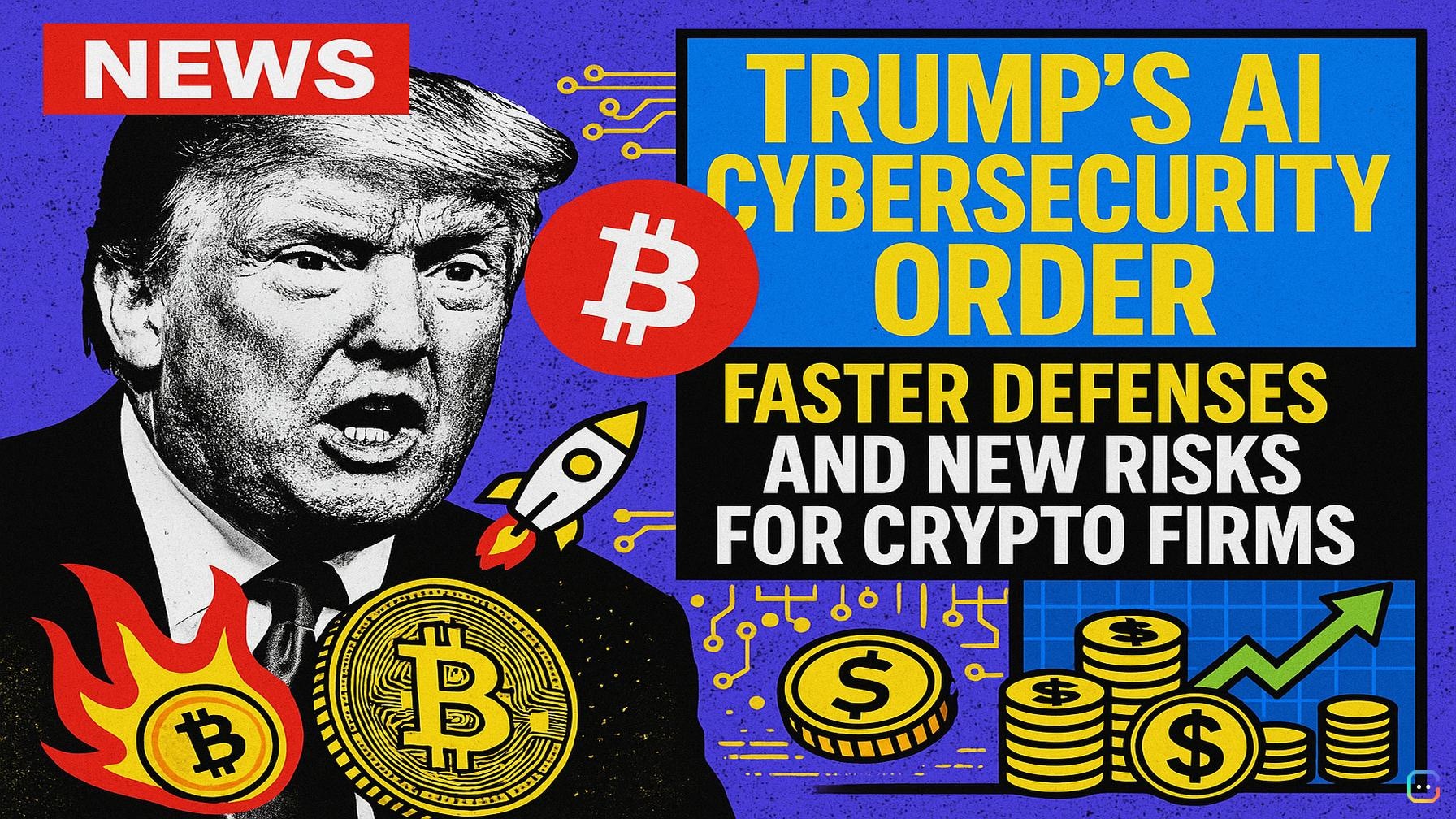
President Trump on Tuesday signed a new executive order, “Promoting Advanced Artificial Intelligence Innovation and Security,” directing federal agencies to accelerate the deployment of AI-powered cybersecurity tools and deepen collaboration with leading AI developers. The move is intended to tighten U.S. defenses against AI-driven threats while encouraging industry cooperation — but critics warn the plan relies too much on voluntary compliance.
Key directions in the order
- Agencies must speed adoption of AI tools to detect and counter cyber threats and create an AI cybersecurity clearinghouse to share best practices.
- The order sets up a classified review process, led by the NSA, to determine whether advanced models qualify as “covered frontier models.” Developers may voluntarily submit such models for evaluation up to 30 days before releasing them to trusted partners.
- A stated goal is faster private–public coordination so the “best and most secure technology is deployed rapidly” to confront threats. The order also emphasizes it is not intended to create a formal model-approval system.
- The administration calls for tougher enforcement against criminal uses of AI, including using AI agents to unlawfully access systems or data.
Why the order was delayed and controversy around voluntary rules
Trump previously delayed a similar order in May, expressing concern parts of it could slow U.S. AI development and weaken America’s competitive edge with China. That tension — balancing security without stifling innovation — runs through the new directive.
Critics, including consumer advocates, argue the framework leans too heavily on voluntary cooperation from the very companies it aims to oversee. “Models powerful enough to threaten cybersecurity and national security warrant real oversight,” said J.B. Branch of Public Citizen, urging Congress and the administration to pass enforceable federal AI legislation with independent testing, transparency, and safeguards for workers, consumers, children, and civil rights.
The Mythos wake-up call
The push for an AI-focused executive order gained urgency after Anthropic’s Claude Mythos model demonstrated capabilities that concerned officials — notably an ability to identify software vulnerabilities. The model’s reveal reportedly prompted U.S. Treasury Secretary Scott Bessent and then-Fed Chair Jerome Powell to meet with Wall Street CEOs to warn about potential cybersecurity risks. Anthropic has continued limited rollouts: on Tuesday it said it will expand Mythos access through Project Glasswing, a program to let tech, security firms, and governments test for exploits prior to broader public release.
Practical implications for crypto
For crypto exchanges, custody providers, DeFi platforms and blockchain infrastructure operators, the order matters in several ways:
- Faster deployment of AI-based defenses could help detect sophisticated fraud, automated exploits and novel intrusion patterns that target wallets, smart contracts and custodial services.
- The classified review process and voluntary 30-day evaluation window could influence release timelines for advanced models that attackers might weaponize against financial infrastructure.
- The administration’s emphasis on prosecuting AI-enabled breaches signals increased enforcement risk for attackers using generative tools to automate scams, create deepfakes, or probe systems for vulnerabilities — and may spur exchanges to tighten disclosure and incident-response practices.
Recent enforcement trend
The order arrives as prosecutors begin using newer legal tools against AI-enabled crimes: last month federal authorities charged two men for generating and distributing non-consensual sexually explicit images using AI, one of the first major enforcement actions under the new Take It Down Act. That case signals prosecutors are willing to pursue AI-enabled abuses aggressively — a trend crypto firms should watch if AI is used in fraud, extortion, or automated breaches.
Bottom line
The executive order signals a federal push to use AI to fight AI-driven threats while coordinating more closely with industry. It stops short of mandatory pre-release approvals, relying instead on voluntary model reviews and interagency measures — a compromise likely to please some developers but prompt calls for stronger, enforceable federal AI rules. For the crypto sector, the order raises both defensive opportunities (better AI defenses) and operational considerations (faster disclosure and tougher enforcement) as regulators and prosecutors tighten the net around AI-enabled cybercrime.
Read more AI-generated news on: undefined/news