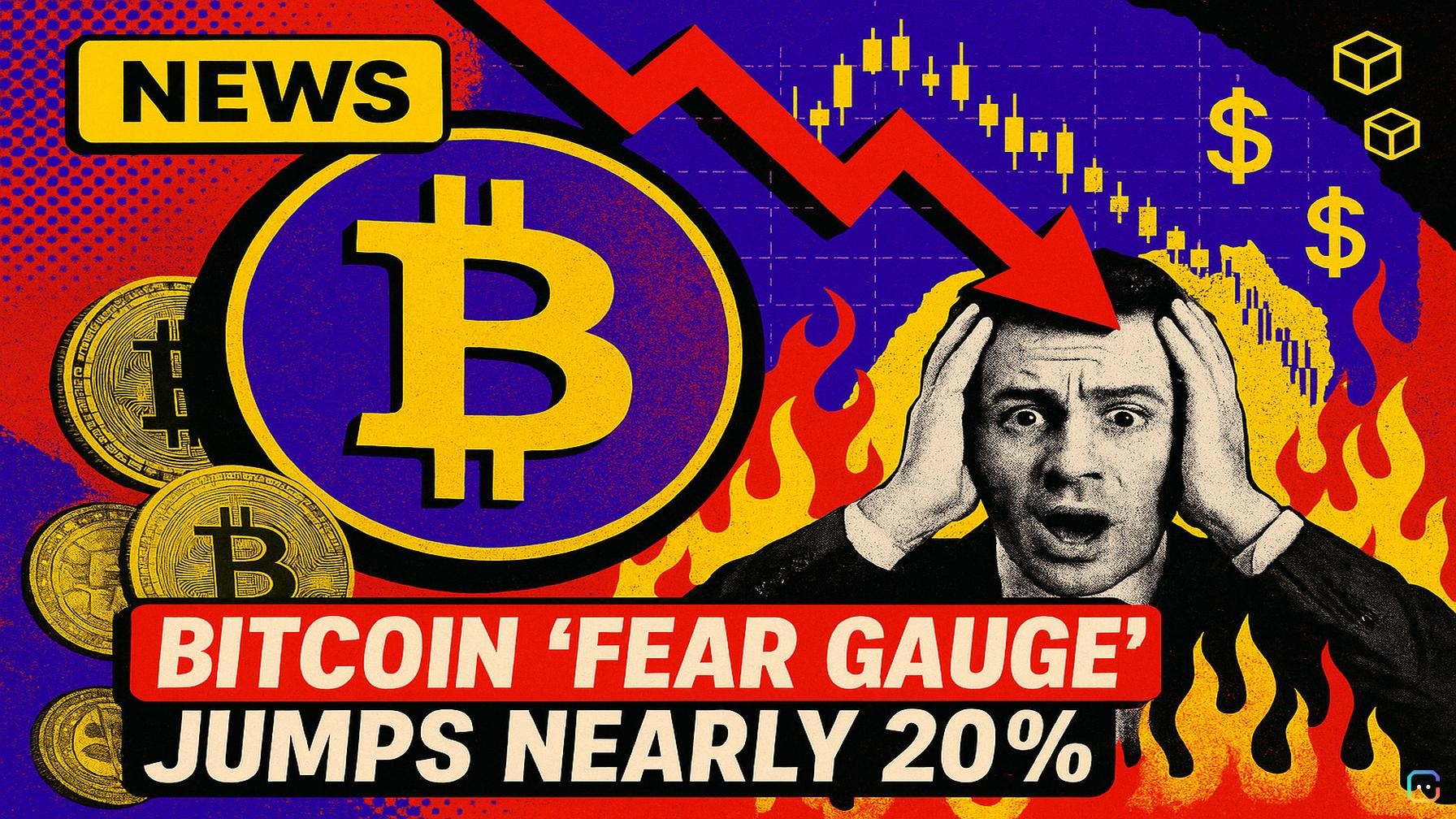
Bitcoin’s “fear gauge” jumps almost 20%, signaling growing trader anxiety
Bitcoin’s volatility index spiked sharply on Tuesday, suggesting traders are suddenly taking the recent price drop more seriously. The BVIV — which tracks 30-day implied volatility for bitcoin — surged nearly 20% to 46.45%, the largest single-day rise since the market shock on Feb. 5, according to TradingView.
Why that matters
For about two months the bitcoin market showed unusual calm. Even after BTC slipped from an early-May peak near $82,000 to roughly $75,000 last week, BVIV lingered near its year-to-date low of about 40% — a sign that selling had been orderly and largely devoid of panic. That changed when spot bitcoin tumbled more than 6% to around $66,000 on Tuesday; the BVIV shot up as traders aggressively bought options to hedge against further declines.
Putting Tuesday in context
Tuesday’s jump is far smaller than the dramatic volatility seen on Feb. 5, when BVIV vaulted more than 50% in a single day and topped 90% as bitcoin plunged toward $60,000. Still, the direction is notable: spikes in BVIV indicate renewed demand for downside protection, and this recent move marks a clear reappearance of fear in a market that had been unusually placid.
A new, more institutionalized dynamic
Since U.S. spot bitcoin ETFs launched just over two years ago, institutional flows have reshaped market behavior. BVIV now tends to move inversely to bitcoin’s spot price with increasing consistency — a dynamic investors recognize from traditional markets where the S&P 500 and the VIX have long been negatively correlated. In short: price drops lift fear, price gains calm it.
The takeaway
After a prolonged stretch of muted volatility, risk aversion is creeping back into the bitcoin market. Whether Tuesday’s spike turns out to be a one-day blip or the start of a more sustained volatility regime will depend on price action and flows in the coming days.
Read more AI-generated news on: undefined/news