Scammers are already circling the 2026 World Cup — and this time they’re building crypto-first schemes that could scale as tournament hype ramps up.
What TRM Labs found
- In a June 11 report, blockchain analytics firm TRM Labs identified four wallet addresses tied to three live operations aimed at football fans.
- So far the takings are tiny — under $1,700 across the initially identified addresses — but TRM frames these receipts as evidence of early-stage scam infrastructure rather than one-off fraud. One Polygon address linked to a ticketing scam received $1,562 (mostly on April 1, 2026).
- The low amounts suggest scammers are seeding and testing payment flows now, aware that demand and visibility will surge as the World Cup approaches.
How the scams work
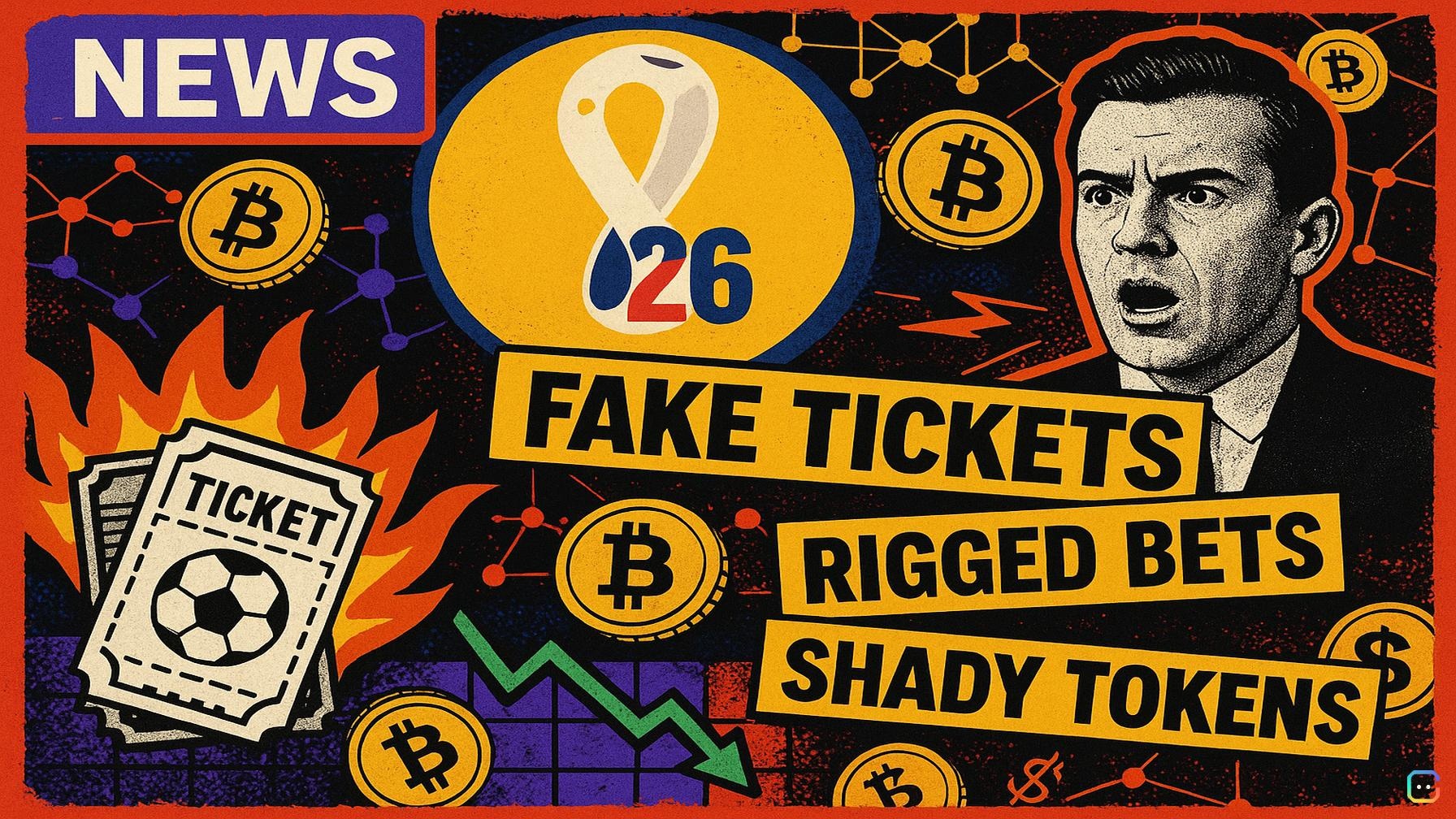
- Fake ticketing: Phishing-style checkout pages mimic legitimate event portals, then funnel victims into crypto payment flows controlled by scammers. Payments appear legitimate on a page but are routed to fraudulent processor addresses.
- Fixed-match betting: Operators promise insider info or “guaranteed” results in return for upfront crypto payments. TRM says funds from some of these operations are then routed to custodial exchange accounts, complicating recovery.
- Event-themed tokens: TRM flagged speculative commemorative tokens (for example, a $WORLDCUP token listed on LBank) that claim no official FIFA affiliation and are susceptible to pump-and-dump schemes.
Why cross-chain activity matters
- Scammers are already leveraging cross-chain swaps and custodial exchanges to obscure flows. TRM cites examples such as movement from Polygon to Tron — a route that can throw off casual observers.
- For broader context, TRM reports $1.9 billion moved through cross-chain bridges to complicate tracing, about $35 billion sent to fraud-linked wallets in 2025, and a record $158 billion in illicit crypto activity that year. Those larger figures aren’t specific to World Cup scams but show how small operations can share playbooks with bigger fraud networks.
Who’s at risk
- Fans looking for tickets, bettors chasing “insider” tips, and traders speculating on novelty tokens are all attractive targets. Fake ticketing appeals to emotional urgency, fixed-bet schemes target gamblers’ willingness to pay for certainty, and event-themed tokens exploit fandom and FOMO.
What users should do
- Don’t treat event-themed tokens or ticket pages as official just because they reference the tournament, team or slogan. Verify affiliation through official World Cup/FIFA channels.
- Avoid paying for tickets, bets or tips in crypto unless you’ve confirmed legitimacy through trusted sources. Be especially wary of checkout pages that push you into a crypto wallet or custom payment flow.
- Scrutinize token listings and project teams; unverified commemorative coins are often pump-and-dump candidates.
Bottom line
TRM isn’t saying World Cup crypto scams have exploded — yet. But the first signs are visible: low-value but targeted operations that could scale quickly as demand spikes. Early detection and fan vigilance matter—verify official sources, be skeptical of guaranteed returns, and think twice before routing crypto to unfamiliar ticketing or betting flows.
Read more AI-generated news on: undefined/news