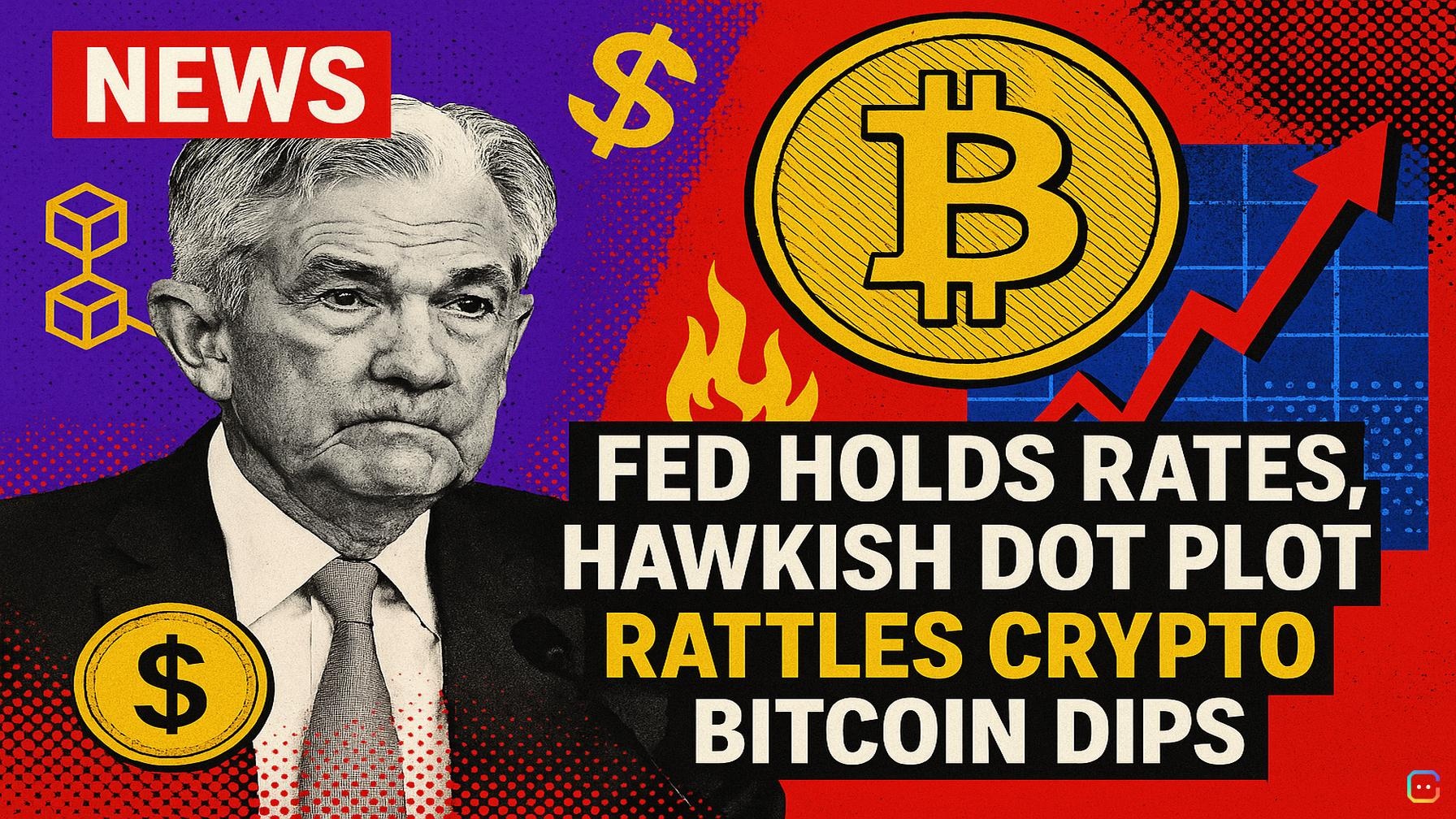
The Federal Reserve held its benchmark interest rate steady at 3.50%–3.75% for a fourth straight meeting on Wednesday, extending a pause that has been in place through 2026. Policymakers voted unanimously to leave the federal funds target range unchanged as officials continue to weigh persistent inflation risks across the U.S. economy.
All eyes now turn to Fed Chair Kevin Warsh’s first post-meeting press conference. Markets will be looking for fresh signals on whether policymakers see inflation as transitory or persistent—and whether further tightening could still be needed later this year. The Committee’s statement stressed ongoing uncertainty around price pressures as a key factor in future decisions.
The updated dot plot and voting results painted a more hawkish picture than the rate decision itself. According to the Fed’s projections, nine of 18 officials expect at least one rate hike before year-end; six of those anticipate multiple increases. Only one participant forecast a cut, and one official did not submit a projection—widely assumed by market observers to be Chair Warsh.
Economic data are keeping officials and market participants on edge. Headline CPI hit 4.2% in May, while Producer Price Index inflation accelerated to 6.5%, signaling continued cost pressures upstream. Firms such as Citadel Securities have warned that inflation may be becoming entrenched, pointing to supportive financial conditions, a resilient labor market, supply-chain frictions, and increased investment tied to artificial intelligence. Citadel highlighted a growing share of core CPI components rising more than 3% year over year and argued that an inertial Taylor Rule would justify roughly 75 basis points of rate increases during 2026—predicting potential hikes in September and December 2026 and another in March 2027.
BNP Paribas has also shifted away from expecting a stable policy path, now modeling three rate hikes beginning in December, citing persistent inflation, strong employment, and geopolitical risks including tensions involving Iran.
Energy markets add another wrinkle. Oil briefly eased after an initial U.S.–Iran agreement, reducing one inflation input, but many analysts say price pressures have spread beyond energy into broader parts of the economy—keeping policymakers cautious.
Politics remain part of the backdrop. President Donald Trump has publicly pushed for lower rates in the past, though he recently indicated he would not exert the same kind of pressure on Warsh that he directed at former Chair Jerome Powell.
Cryptocurrency markets reacted modestly. According to crypto.news data, Bitcoin slipped about 0.6% over the prior 24 hours to roughly $65,430, while Ethereum fell 1.4% to about $1,770. Most top-100 digital assets traded near flat, and the total crypto market capitalization eased roughly 0.7% to $2.33 trillion as traders digested the Fed’s messaging and the prospect of future tightening.
What to watch next: Warsh’s press conference for tone and clues on future path; upcoming inflation prints and labor data; and any shifts in energy or geopolitical developments that could tip the Fed’s judgement toward additional hikes. For crypto investors, the key question is whether the Fed’s cautious stance and dot-plot hawkishness push risk assets—already sensitive to rate expectations—into a more defensive phase.
Read more AI-generated news on: undefined/news