Malta regulator proposes new legal label for DAOs as EU braces for DeFi rules
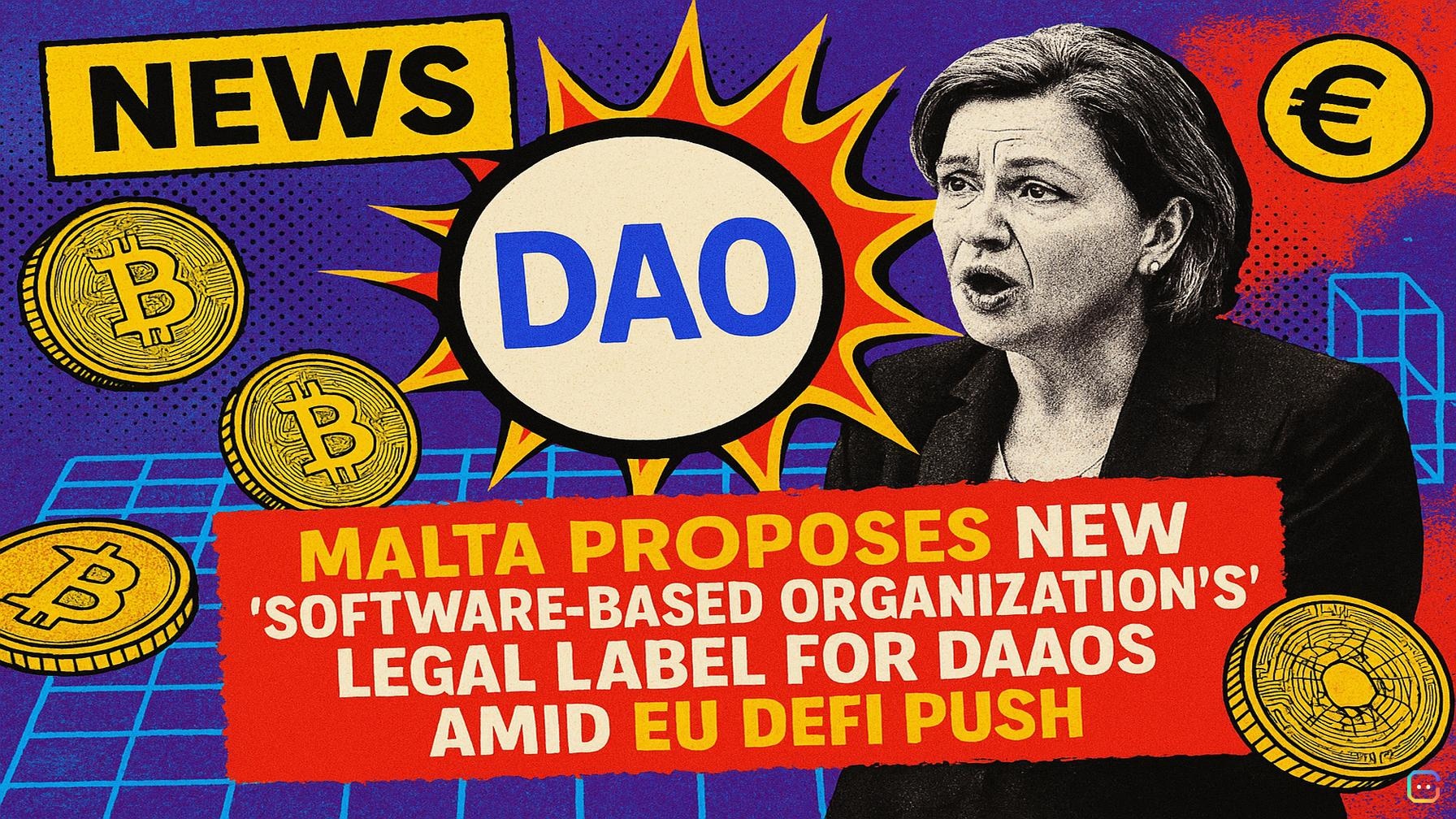
Malta’s financial regulator has taken a fresh step into the DeFi debate, proposing a new legal category designed for decentralized autonomous organizations (DAOs) and other blockchain-native entities. In a discussion paper published on June 12, the Malta Financial Services Authority (MFSA) launched a public consultation — open until July 10 — seeking industry feedback on a potential DeFi framework under the EU’s crypto rulebook.
What the MFSA is proposing
- The paper introduces “software-based organizations,” a legal concept intended to cover DAOs and similar entities governed primarily by code.
- Rather than creating an entirely separate statute for DAOs, the MFSA suggests this category would legally separate the organization from the underlying protocol and smart contract code.
- The regulator argues this distinction could help clarify governance and accountability — perennial pain points in DeFi projects where roles and liabilities are often blurred.
Why Malta is pushing this now
Malta has been an early mover in crypto regulation (it rolled out a pioneering framework in 2018). The MFSA’s paper responds to growing regulatory interest in how decentralized systems actually operate — and to research showing many so-called decentralized projects still retain centralized control points.
The MFSA highlights that the EU’s Markets in Crypto-Assets regulation (MiCA) deliberately excludes “fully decentralised models” from its scope. As the paper puts it: “MiCA excludes fully decentralised models from its regulatory scope, meaning that projects without intermediaries or central control may not need to comply with MiCA.” But the regulator notes it’s often hard to draw a bright line: many projects claiming decentralization still have identifiable intermediaries or concentrated governance.
Broader regulatory context in Europe
The MFSA’s consultation comes as EU authorities continue scrutinizing DeFi under MiCA. In March, the European Central Bank published a working paper finding governance and decision-making for four major DeFi protocols remained concentrated among a limited group — a factor that could prevent those projects from qualifying as “fully decentralized” under MiCA. In May, the European Commission opened a targeted review of MiCA, soliciting input on topics including DeFi activities, stablecoin-related issues, and possible regulatory gaps.
A looming compliance deadline
Regulators are also racing toward MiCA’s implementation milestones. A transition period ends on July 1, 2026: after that date, crypto exchanges, brokers and wallet providers operating in the EU without MiCA authorization will no longer be allowed to serve customers in the bloc. The European Securities and Markets Authority (ESMA) has warned that continuing to operate without a MiCA license after the deadline would breach EU law, urging unauthorized firms to prepare orderly wind-down plans and assist customers in moving assets to authorized providers or self custody.
Scale of the challenge
The enforcement task is significant. Law firm Hogan Lovells reported Europe had more than 3,000 virtual asset service providers (VASPs) in 2024 — yet by May 2026 only 194 authorized crypto-asset service providers, including credit institutions, had secured approval. That gap underscores the practical hurdles regulators and firms face as the rules take effect.
Why it matters
Malta’s consultation adds another piece to an evolving puzzle: how to regulate entities that operate through code but retain human governance structures. Creating a legal space for “software-based organizations” could offer a pragmatic route to attribute responsibility, protect users, and bring certain DeFi projects into legal visibility without stifling genuinely decentralized systems.
The MFSA’s consultation runs through July 10. The outcome could influence how DeFi projects structure governance and legal exposure across the EU as MiCA comes fully into force next year.
Disclosure: This article is for informational and educational purposes only and does not constitute investment advice.
Read more AI-generated news on: undefined/news