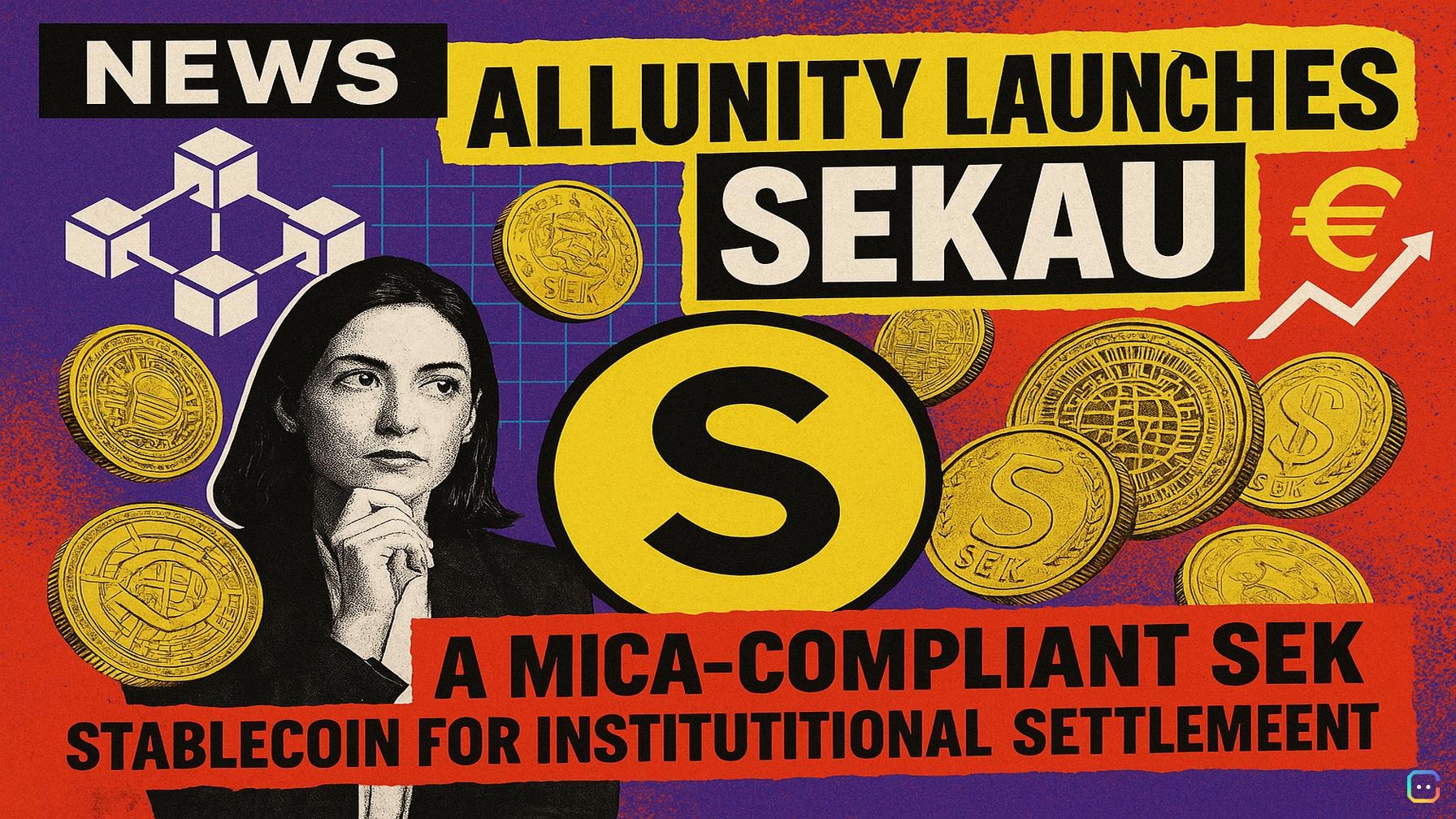
AllUnity has launched SEKAU, a Swedish krona–backed stablecoin aimed at institutional settlement and digital payments under the EU’s new Markets in Crypto‑Assets (MiCA) rules. The move expands Europe’s regulated stablecoin landscape beyond dollar- and euro‑centric offerings and marks a notable step in the continent’s push toward currency‑specific, compliant digital money.
What SEKAU is
- SEKAU is marketed as a fully reserved e‑money token (EMT) backed 1:1 by Swedish krona reserves and redeemable at par for holders.
- The token is issued by AllUnity, a regulated European stablecoin issuer backed by institutional investors and market players including DWS, Flow Traders and Galaxy.
- AllUnity had earlier said it intended to launch the world’s first fully reserved, MiCA‑compliant SEK stablecoin.
Why it matters
- MiCA gives e‑money tokens a clearer regulatory framework in Europe—setting rules on reserves, disclosures, redemption rights and issuer obligations. That framework doesn’t eliminate risk, but it creates a legal perimeter that many institutions prefer over the previously fragmented European landscape.
- Most stablecoin liquidity today remains concentrated in dollar‑pegged tokens, reflecting the dollar’s global role. SEKAU addresses a different need: a local‑currency rail for settlement, treasury operations and payments within a regulated European structure.
- For banks, fintechs and corporates the attraction is operational — not speculative. A regulated SEK token can enable settlement outside traditional banking hours, support programmable payments, and reduce friction in cross‑border or platform-based flows.
Why Sweden could benefit
- Sweden already has deep digital payments adoption. A regulated SEK token gives institutions a way to pilot blockchain settlement and programmable flows without relying solely on dollar or euro rails, and while operating inside a familiar legal regime.
Market implications
- SEKAU is part of a broader shift in stablecoin competition. The early market focused on dollar liquidity and crypto trading; the next phase is increasingly about regulated payment rails, corporate treasury use, cross‑border settlement and local fiat integration.
- That shift favors issuers who can pair regulatory permissions with real banking relationships, reserves and market‑making infrastructure — a combination AllUnity argues it can deliver given its ownership and partners.
The hard part: adoption
- Launching a regulated token is only the first step. Real-world success requires liquidity, exchange listings, market‑maker support, integrations with payment and treasury systems, and enterprise uptake. SEKAU’s long‑term utility will depend on whether institutions actually need and use a regulated SEK rail at scale.
Bottom line
SEKAU underlines a clear trend: Europe’s stablecoin market is moving beyond generic crypto trading pairs toward regulated, currency‑specific digital money infrastructure. Whether SEKAU becomes a widely used SEK settlement rail will depend on market adoption, but the product demonstrates how MiCA is enabling new, non‑dollar stablecoin offerings in Europe.
Source: AllUnity’s official communications and launch announcement on X. Written by the News Desk; edited by Samuel Rae. Originally published by AllUnity.
Read more AI-generated news on: undefined/news