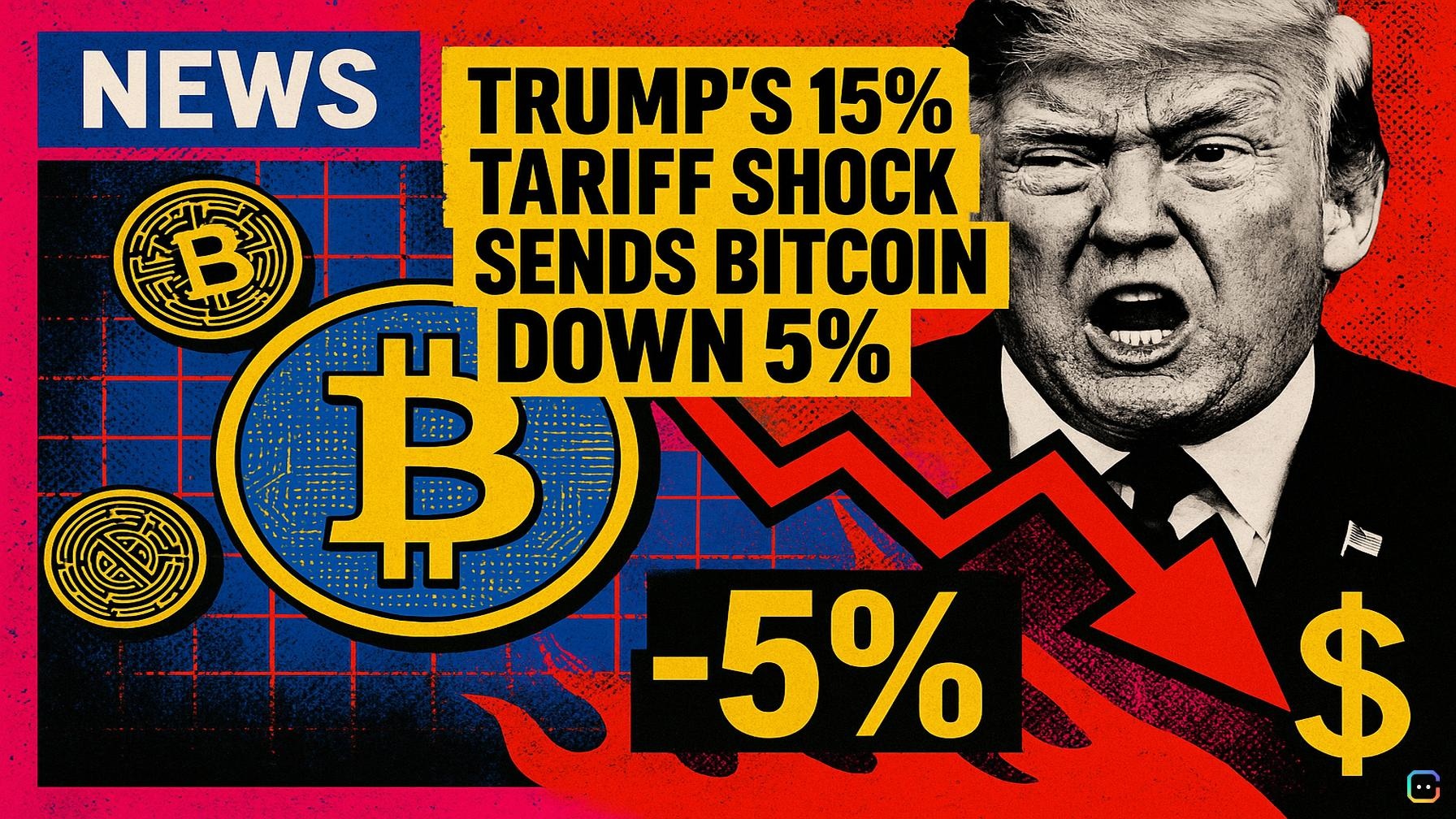
Bitcoin slid after Trump tariff shock, underscoring crypto’s headline sensitivity
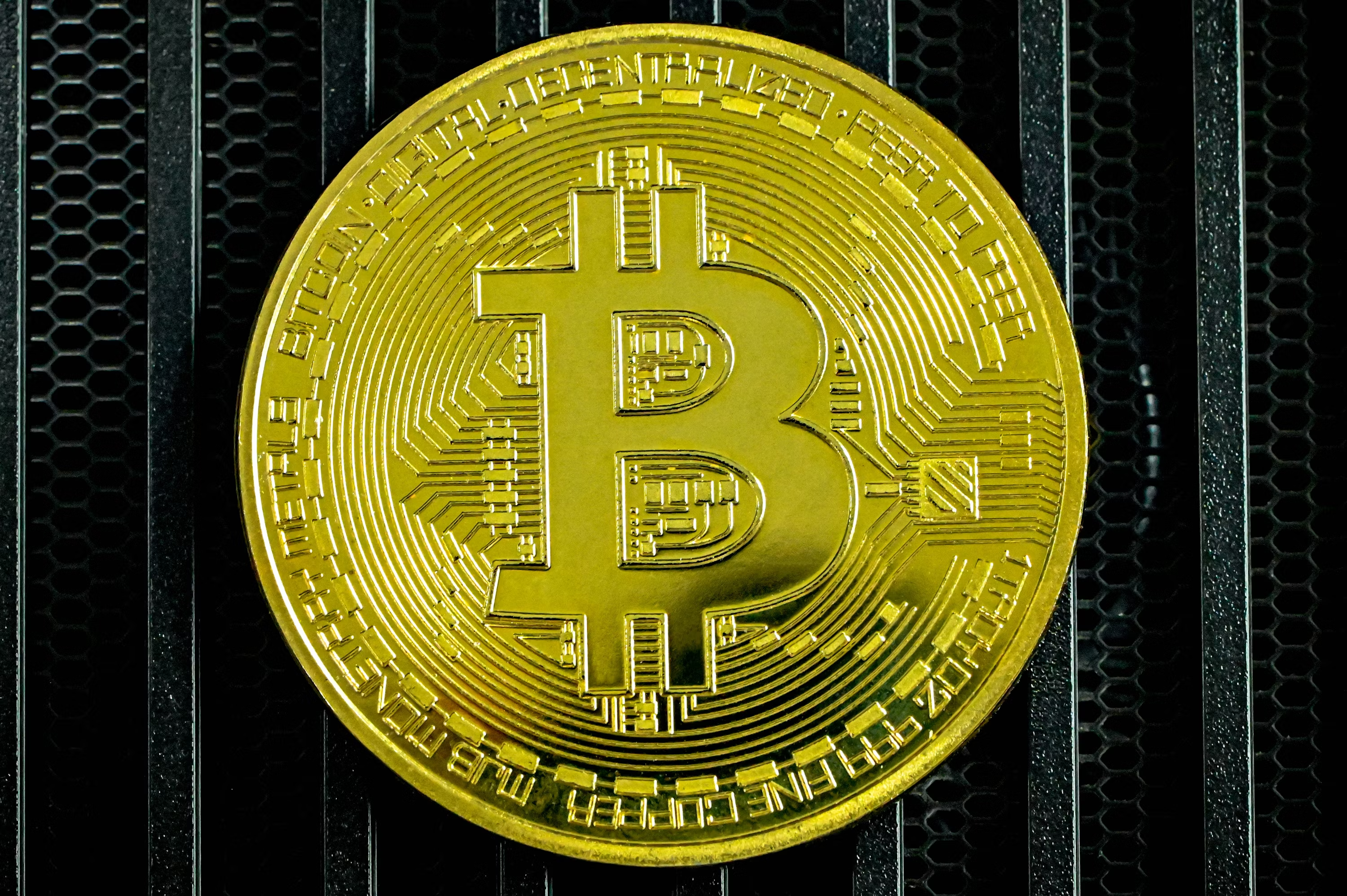
On Monday, Bitcoin (BTC) dipped roughly 5% to just under $65,000 after U.S. President Donald Trump announced plans to raise global tariffs to 15%. The move rattled crypto markets even as Asian equities gained in early trade, highlighting a sharp divergence between digital assets and regional stocks amid renewed trade-policy uncertainty.
Why tariffs matter for crypto
- Even the prospect of new or expanded U.S. tariffs unsettles markets: investors worry about higher costs for businesses, supply-chain disruptions and retaliatory measures from trading partners.
- Tariff announcements tend to boost the dollar and push investors toward safe havens like government bonds and cash — squeezing appetite for speculative assets such as cryptocurrencies.
- That dynamic helps explain why BTC often sells off quickly when macro risks spike.
Crypto’s growing macro sensitivity
Once viewed as largely detached from traditional finance, Bitcoin has become increasingly reactive to political and economic headlines over the past two years. Market strategists say BTC now moves to many of the same macro signals that drive equities, commodities and currencies.
Where BTC stands
- Since surpassing $125,000 in October, Bitcoin has tumbled sharply: it’s down about 26% year-to-date and more than 47% from its October high, erasing billions in market capitalisation and cooling the post-rally optimism from last year.
- The tariff-driven selloff is the latest factor weighing on sentiment and short-term price action.
Market reaction and outlook
- As investors sought safety, gold climbed while BTC and Ethereum (ETH) slipped; BTC later recovered slightly but remained lower on the day.
- Jeff Mei, COO at blockchain firm BTSE, summed up trader behavior: “We believe that the sudden uptick in tariff rates is causing investors to sell crypto assets in anticipation of a more serious market decline.”
- Looking ahead, analysts say crypto’s near-term direction may hinge more on policy clarity and macroeconomic cues than on blockchain-specific developments. Some long-term holders remain optimistic, viewing pullbacks as part of Bitcoin’s historically cyclical behavior.
Bottom line: the latest tariff headlines are a reminder that even decentralised assets are vulnerable to real-world policy shifts — and that volatility will likely remain the norm while macro uncertainty persists.
Read more AI-generated news on: undefined/news