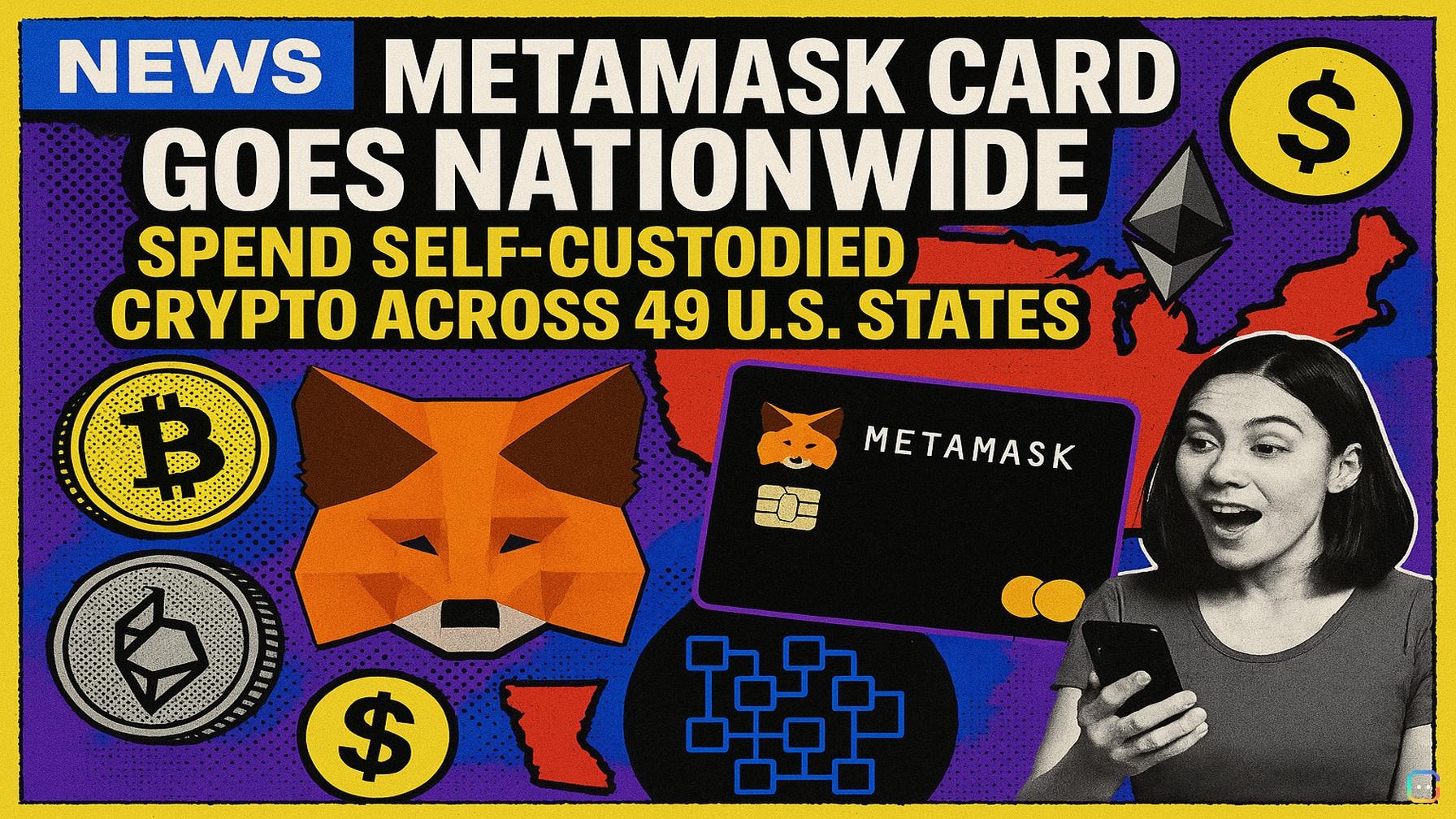
MetaMask Card goes nationwide: spend crypto straight from your wallet
MetaMask and Mastercard have officially launched the MetaMask Card across the United States, bringing self-custodied crypto spending into everyday commerce. After pilots in Europe and the UK and a year-long U.S. trial that began in late 2024, the card is now available in 49 states — notably including New York for the first time.
What it does
- The MetaMask Card links users’ self-custodied digital assets to Mastercard’s global payment rails, allowing crypto to be spent anywhere Mastercard is accepted, online or in-store.
- Funds remain under user control until the point of sale; conversion and payment are handled seamlessly at checkout, eliminating the need to pre-load balances into custodial accounts.
- The card is issued by FDIC-insured Cross River Bank and uses Mastercard’s network with infrastructure from Monavate (formerly Baanx). It’s compatible with Apple Pay and Google Pay for contactless digital wallet payments.
Why it matters
MetaMask positions the card as a bridge between onchain assets and offchain everyday purchases while preserving self-custody — a key tenet of Web3. “We designed MetaMask Card to make crypto disappear. Not go away, but become so seamlessly woven into daily life that the line between onchain and offchain fades away entirely,” said Gal Eldar, Product Lead at MetaMask.
Rewards and tiers
- Standard MetaMask Card holders earn up to 1% back in MetaMask’s stablecoin, mUSD, on purchases.
- MetaMask Metal, a premium tier priced at $199 per year, offers up to 3% back on the first $10,000 spent annually plus additional travel and spending benefits.
The rollout places MetaMask squarely among other crypto-native payment cards, expanding real-world utility for digital assets and pushing decentralized finance further into conventional payments infrastructure.
Read more AI-generated news on: undefined/news