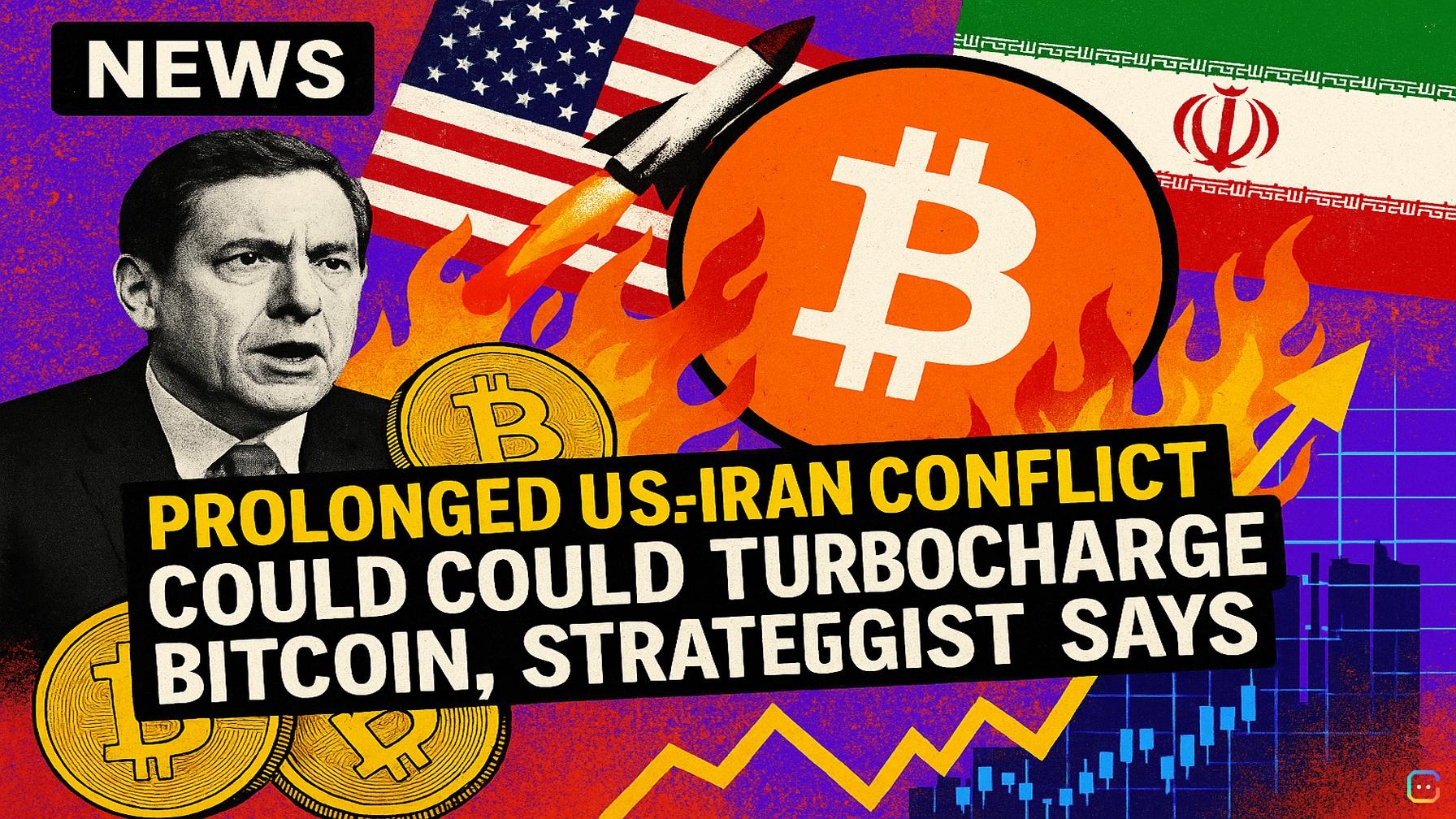
Headline: Prolonged U.S.-Iran conflict could turbocharge Bitcoin, strategist says
If the U.S.-Iran confrontation drags on for months, bitcoin could be one of the biggest market beneficiaries, macrostrategist Mark Connors tells CoinDesk. Connors — formerly head of research at 3iQ and global head of portfolio and risk advisory at Credit Suisse, now running a bitcoin advisory firm called Risk Dimensions — lays out a chain of forces that historically boosts non-dollar assets like bitcoin.
Why a longer war could help bitcoin
- Wars are costly. Financing extended military operations typically means bigger federal deficits and more Treasury issuance. That injects extra dollars into the financial system and, in Connors’ words, “debasement” of the existing currency stock — a dynamic that tends to help dollar-hedge assets such as bitcoin.
- “Liquidity drives bitcoin,” Connors said. With a prolonged conflict he expects deficit spending to accelerate as the U.S. pays for military operations. “If the war runs longer, that means more spending and more deficit spending. That’s constructive for bitcoin.”
Where U.S. debt stands
- Federal debt has been growing rapidly: Connors estimates it’s been rising at roughly a 14% annualized pace since mid-2025 and could be up about 15% year-over-year if that trend continues. He characterizes that pace as debasement of the currency.
Market reaction so far
- Bitcoin (BTC) has already shown sensitivity: trading around $68,908.15 at the time of the report, BTC rallied overnight into the U.S. morning as investors reduced equity exposure and repositioned for a potentially prolonged conflict. Since the first U.S. strike on Iran, bitcoin was up roughly 3.6%.
Complications — and why they may still favor BTC
- A war-driven spike in oil could lift inflation, complicating the outlook. But Connors argues that even stagflation — slowing growth with rising prices — could be supportive for bitcoin. In that environment, policymakers may prioritize financial stability and government financing over tight anti-inflation policy.
- The Federal Reserve, he says, already operates with an implicit extra mandate: keeping markets — especially the Treasury market — functioning smoothly. Events like the 2019 repo squeeze and the regional bank failures in 2023 showed how quickly financial plumbing can be stressed after aggressive rate hikes. “The Fed has to make sure the Treasury market functions,” Connors noted.
Policy tilt toward lower rates
- That imperative may push the Fed toward lower interest rates over time, particularly as the Treasury shifts toward issuing more short-term bills rather than long-dated bonds. Lower short-term rates would directly cut the government’s financing costs as existing debt rolls over quickly.
- Political appointments could reinforce that tilt: Connors pointed to Kevin Walsh, picked by President Trump and seen as relatively dovish, as a potential Fed chair in May pending Senate confirmation.
Net effect for bitcoin
- Connors’ thesis: if rates fall while deficits keep expanding, liquidity in markets should improve — and bitcoin historically performs well in that backdrop. “When rates go lower and debt keeps rising, that’s the backdrop where bitcoin tends to perform well,” he said.
Bottom line
A protracted U.S.-Iran conflict could set off a macro sequence — bigger deficits, more Treasury issuance, potential pressure on rates and elevated liquidity — that has historically favored bitcoin. That doesn’t mean bitcoin’s path will be smooth; oil-driven inflation, geopolitical risks and market sentiment can all complicate the picture. But for investors focused on how macro policy responses feed into crypto markets, Connors says the forces at play today are broadly constructive for bitcoin.
Read more AI-generated news on: undefined/news