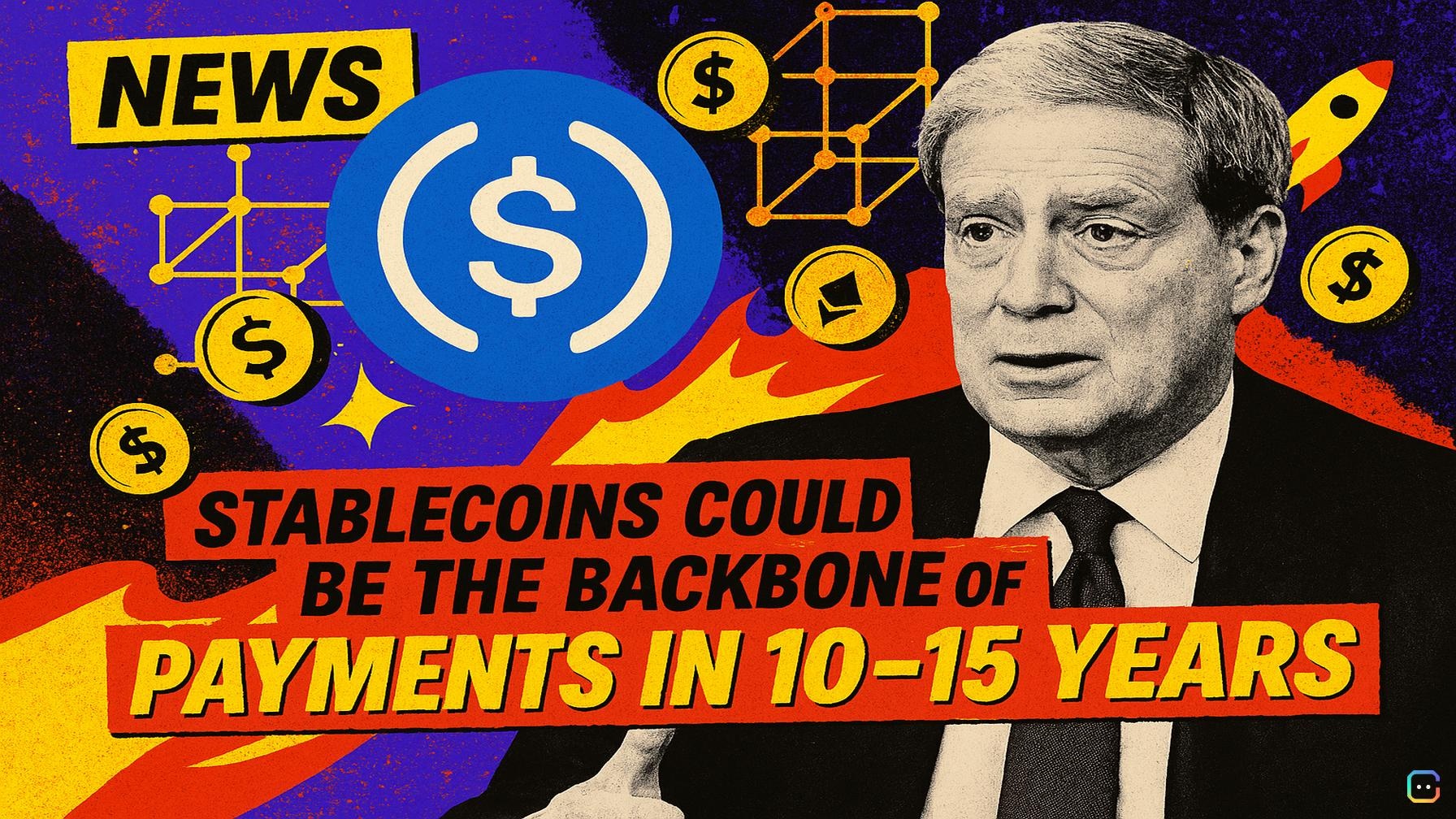
Billionaire investor Stanley Druckenmiller says stablecoins could become the backbone of payments — and he’s not shy about it.
In a recent Morgan Stanley video interview, the veteran hedge fund manager called fiat-pegged stablecoins “incredibly useful,” citing their efficiency and lower costs as reasons he expects them to dominate payments in the next decade or so. “I assume our whole payments systems will be stablecoins in 10 or 15 years,” he said.
Druckenmiller was far less charitable about the broader crypto narrative. Asked to associate one word with “crypto,” he called it “a solution looking for a problem,” and said he’s “very sad that it ever happened as a store of value, ’cause it wasn’t needed.” Still, he acknowledged crypto’s cultural momentum: “It’s a brand, and these people love it, so it’s going to be a store of value,” he added.
Those comments echo earlier views he expressed in 2020, when he said a bet on Bitcoin might outperform gold if the metal’s price rose — noting Bitcoin’s illiquidity and volatility as potential catalysts for an outsized run. Back then, Bitcoin traded near $15,000; today it’s roughly five times higher. As of Friday, Bitcoin changed hands around $71,520, putting its market cap near $1.4 trillion — up about 8.5% over the last 30 days but still about 43% below the October all-time high of $126,080.
Meanwhile, stablecoins have been steadily growing in market size. DeFiLlama data show the combined stablecoin market cap at roughly $315 billion, an increase of more than $180 billion since the start of 2024. Some high-profile market observers, including investor Scott Bessent, have suggested that the stablecoin supply could expand several-fold by 2030.
Why it matters: Druckenmiller’s bullishness highlights a practical use case for tokenized fiat that appeals to traditional investors — payment rails that are faster and cheaper than legacy systems. If stablecoins continue to scale, they could prompt broader adoption by fintechs and institutions, while also attracting greater regulatory scrutiny around reserve transparency and consumer protections. Watch for continued growth in issuance, regulatory moves in major economies, and whether banks and payment networks integrate stablecoins into mainstream rails.
Read more AI-generated news on: undefined/news