BMO brings tokenized dollars to CME and Google Cloud’s 24/7 settlement rails
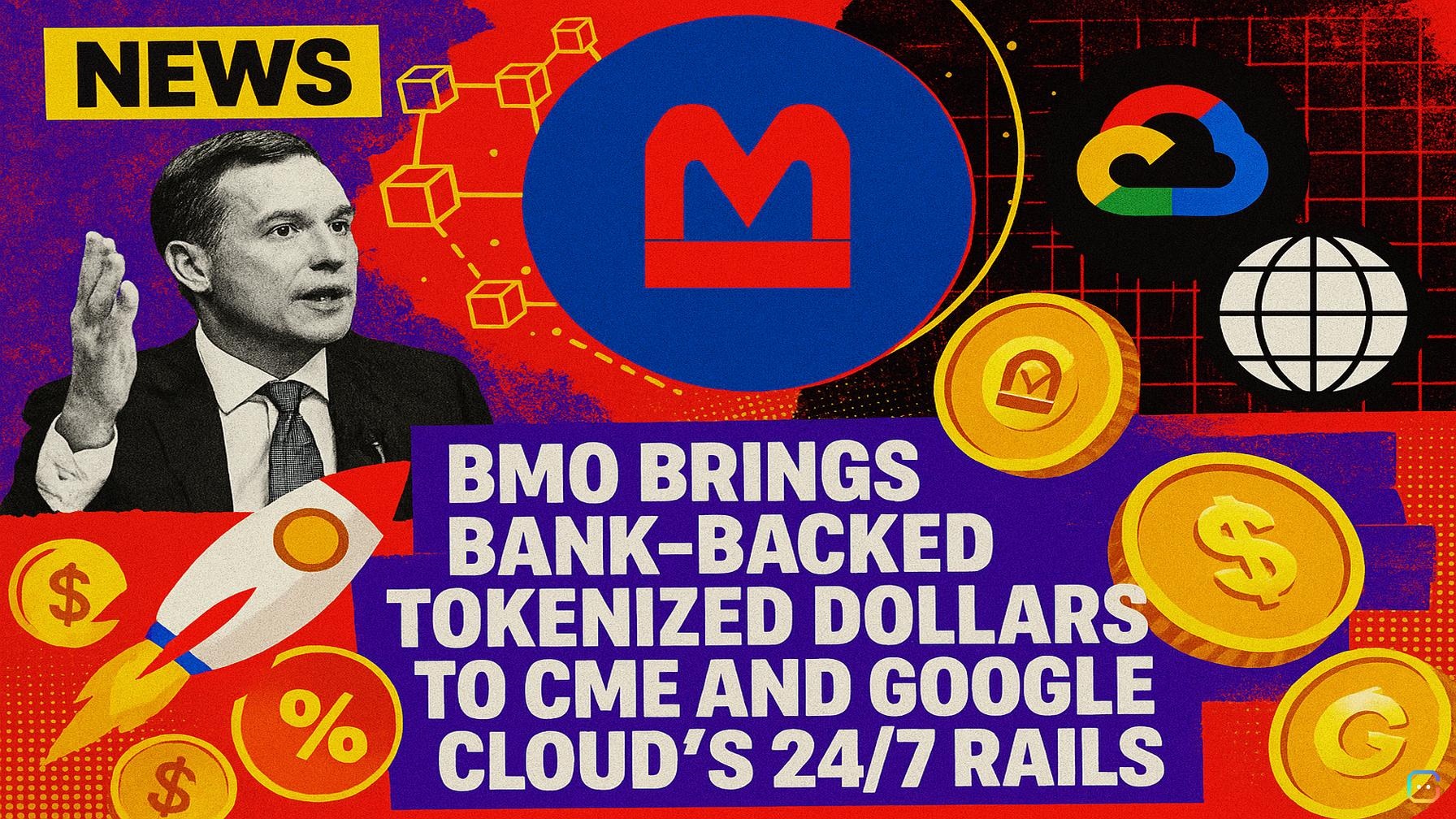
Bank of Montreal (BMO) on March 24 announced it will let clients convert U.S. dollars into tokenized cash and tokenized deposits on the Google Cloud Universal Ledger (GCUL), integrating with CME Group’s institutional settlement infrastructure. The move makes BMO the first bank to offer CME’s tokenized cash solution on GCUL — a private, permissioned distributed ledger built for traditional financial institutions — and marks the first live institutional deployment of that infrastructure.
What BMO is launching
- Tokenized cash: aimed at mutual clients of CME and BMO in capital markets and commercial banking. This institutional settlement instrument will let regulated market participants use tokenized dollars for margined products at CME — supporting real‑time margin calls, collateral movements and derivatives settlement around the clock. BMO plans to offer this product to regulated financial services firms in the second half of 2026, subject to regulatory approval.
- Tokenized deposits: a broader commercial product that turns traditional BMO deposit balances into digital tokens for B2B payments, treasury flows and programmable cash use cases. Together, the two offerings cover both institutional settlement needs and general-purpose commercial liquidity.
Why it matters
By tokenizing dollar balances on a permissioned ledger, BMO and CME are tackling a long-standing gap between traditional markets — constrained by end-of-day banking cutoffs — and crypto-native rails that settle 24/7. Tokenized cash on GCUL enables high-value, instantaneous settlement for margin and collateral, reducing friction and timing risk for derivatives trading.
This bank-anchored model also addresses regulator and market comfort: CME CEO Terry Duffy has signaled interest in tokenized collateral and even a CME-issued margin token, saying he’d prefer a token backed by a systemically important institution over one from a lower-tier issuer. BMO’s involvement fits that approach, anchoring tokenized dollars to a major regulated bank.
Regulatory backdrop
The announcement arrives as regulators build guardrails for tokenized collateral. In December 2025 the CFTC launched a supervised pilot allowing registered futures commission merchants to accept crypto and tokenized real-world assets as margin under federal oversight. Industry players such as Coinbase, Circle and Ripple hailed the move as a step toward faster, safer settlement. BMO’s platform is explicitly designed to operate within existing capital‑markets rules, offering a bank‑grade, permissioned instrument that can plug into that emerging regulatory framework.
Technical foundation
GCUL — the programmable, permissioned ledger developed by CME Group and Google Cloud — entered pilots for wholesale payments and capital markets settlement in March 2025. After integration and testing, the partners targeted 2026 for new services; BMO’s launch represents the first institutional use of that stack in production.
What to watch
- Regulatory approvals and the planned H2 2026 roll‑out timeline for institutional tokenized cash.
- Adoption by FCMs and other regulated firms participating in CME’s margin ecosystem.
- How tokenized deposits scale B2B and treasury use cases at commercial banks.
- CME’s broader strategy around tokenized collateral and any future native tokens.
Bottom line
BMO’s tokenized cash and deposit offerings bridge traditional banking deposits and 24/7 settlement rails, giving regulated market participants a bank‑backed path to immediate, programmable dollar liquidity. If regulators and institutional counterparties embrace the model, it could accelerate mainstream use of tokenized dollars for margin, collateral and corporate payments.
Read more AI-generated news on: undefined/news