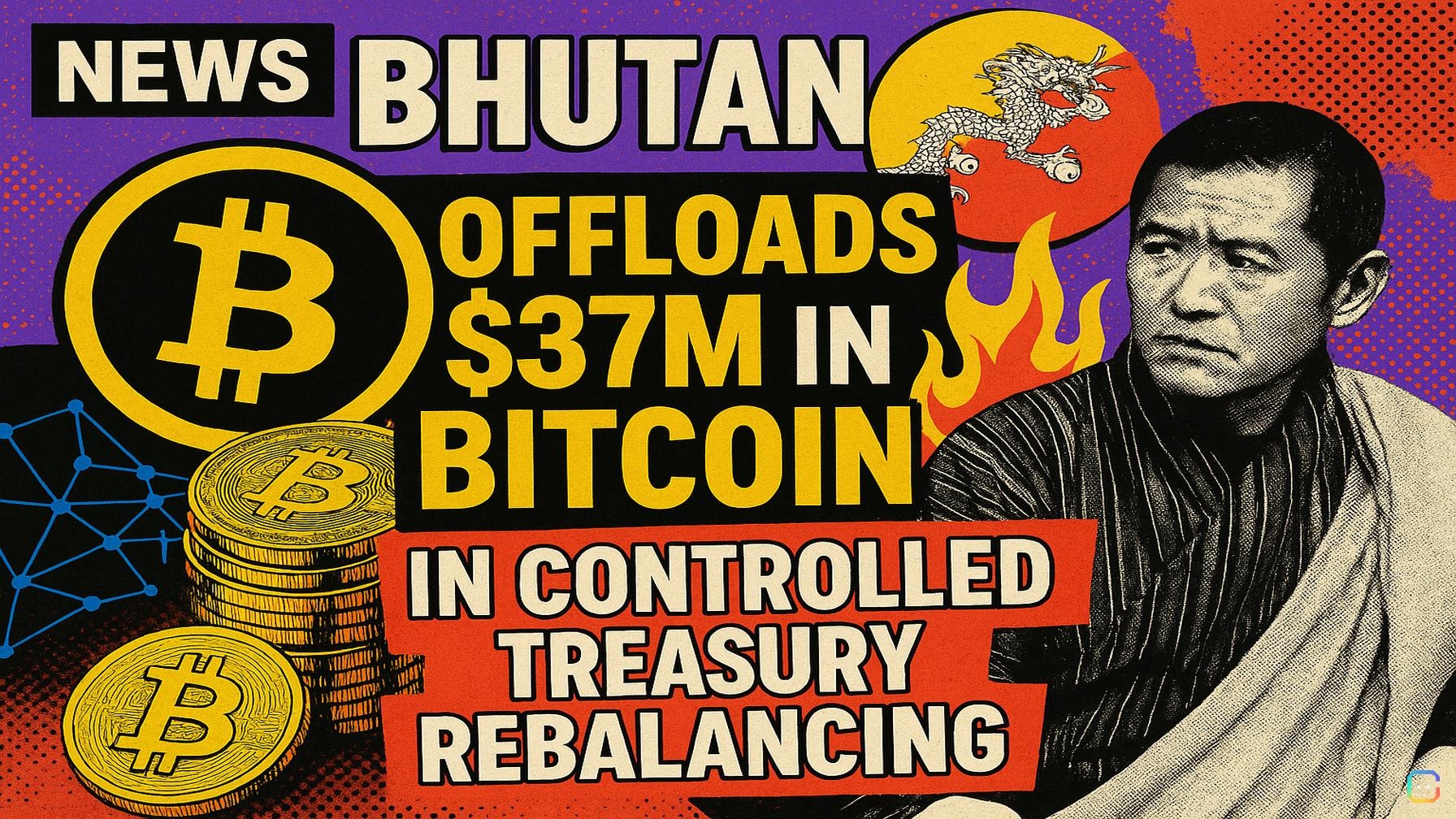
Headline: Bhutan offloads roughly $37M in Bitcoin as sovereign holdings shrink — signs of active treasury management
Key takeaways
- Bhutan moved about 519.7 BTC (≈ $36.7M), likely routing it through institutional channels for liquidation.
- The kingdom’s BTC reserves have fallen sharply from a peak near 13,000 BTC to an estimated 4,400–5,400 BTC — a decline of roughly 58% or more.
- Repeated, structured transfers point to deliberate portfolio rebalancing rather than panic selling, reflecting an institutional approach to managing digital-asset exposure.
What happened
On-chain data from blockchain analytics firms, including Arkham Intelligence, shows the Kingdom of Bhutan transferred roughly 519.7 BTC (around $36.7 million) from wallets tied to its state crypto-mining and treasury operations. One recipient address has been linked by analysts to a wallet believed to be associated with QCP Capital — a counterparty type commonly used for planned liquidations and over-the-counter trades rather than ad hoc sales.
Why it matters
These moves come amid a larger, measured reduction in Bhutan’s bitcoin stash. According to the analytics estimates, the country’s holdings dropped significantly in late 2024 from about 13,000 BTC to the current estimate of roughly 4,400–5,400 BTC. The latest transfer is a relatively modest slice of that total, reinforcing the view that Bhutan is conducting a staged rollout of assets—selling into strength, taking profits, and managing balance-sheet risk.
How Bhutan’s approach differs
Bhutan’s crypto reserve strategy has been distinctive: the kingdom built much of its BTC holdings via state-backed mining using abundant hydropower rather than large open-market purchases or enforcement seizures. That origin story gives its treasury unique flexibility but also creates operational choices about when and how to monetize mined BTC.
Broader context and implications
- Institutionalization: The pattern of transfers—multiple, structured movements involving custodians, exchanges, and OTC desks—mirrors broader institutional behavior in crypto markets as governments and large holders adopt more sophisticated treasury practices.
- Active management: Bhutan’s behavior suggests sovereigns are moving from passive accumulation toward active portfolio management: locking gains, managing volatility, and potentially reallocating capital to other fiscal priorities.
- Market signal: While not large enough to move global Bitcoin markets on its own, the sale is consistent with a larger trend of major holders engaging available liquidity through institutional channels.
Bottom line
Bhutan appears to be converting a portion of its mined bitcoin into fiat or other assets in a controlled, institutional manner. The kingdom’s repeated, measured transfers point to deliberate treasury rebalancing rather than a distressed exit—an example of how smaller economies can transition early crypto experimentation into formal financial management.
Read more AI-generated news on: undefined/news