Key points
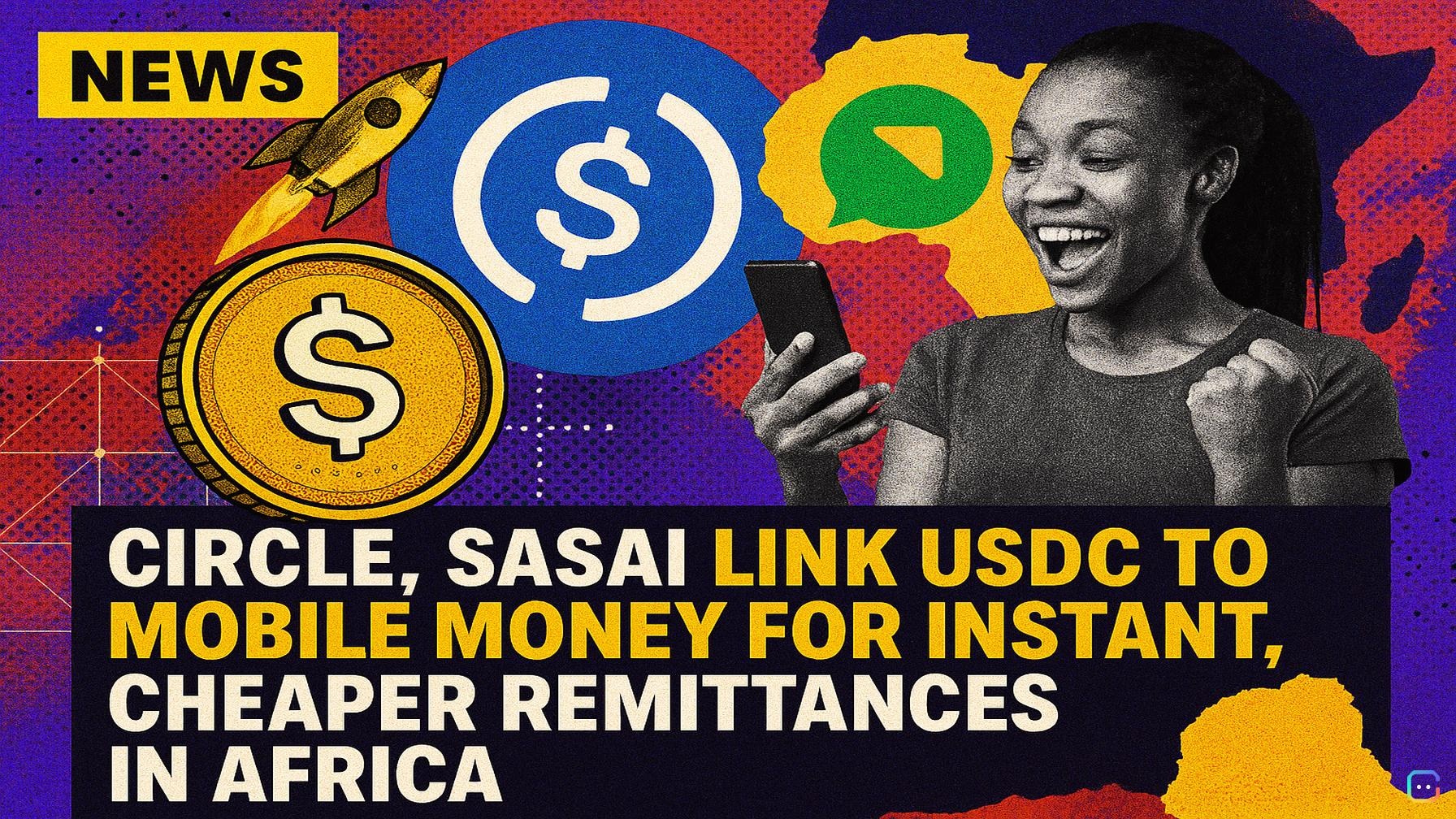
- Circle partners with African fintech Sasai to route USD Coin (USDC) into Sasai’s mobile wallet network, enabling faster, cheaper cross-border transfers.
- The integration lets users convert between local currencies and USDC, offering near-instant settlements and lower fees compared with correspondent banking.
- The move underscores growing institutional interest in African payments infrastructure as stablecoins shift from experimentation to real-world utility.
Circle and Sasai want to make remittances instant and affordable
Circle has teamed up with African fintech Sasai to push USD Coin (USDC) deeper into Africa’s payments stack. The partnership links Circle’s dollar-backed stablecoin rails with Sasai’s mobile wallet network, creating a direct on‑ramp between local mobile money ecosystems and blockchain-based dollars. The result: remittances and intra‑African transfers that previously took hours or days and passed through multiple intermediaries can now settle in minutes on-chain and often at lower cost.
How it works — and why it matters
Sasai’s wallets will let users hold, send and convert between local currencies and USDC. For users that already rely on mobile-first financial services, USDC becomes an additional tool for moving value across borders without routing through the traditional correspondent banking system. That reduces operational complexity, cuts counterparty layers and shortens settlement cycles — benefits that matter most to migrant workers and small businesses who depend on predictable cash flow.
The economics: lower fees, faster settlements, and a hedge against volatility
Cross‑border payments into Sub‑Saharan Africa have some of the highest remittance costs globally — often in the 6–8% range, according to World Bank estimates — and settlement times can stretch from hours to days. Circle and Sasai say pilot corridors, particularly between Southern Africa and diaspora hubs, have shown transaction cost reductions of up to 50% compared with traditional channels. Faster settlement improves cash flow for SMEs, while USDC provides a dollar‑pegged store of value that can be used to temporarily shield recipients from local currency swings.
Why Africa is attractive for stablecoin rails
Mobile money is deeply embedded across many African markets — more than 800 million mobile money accounts continent‑wide — but formal banking access remains uneven. That combination makes mobile wallets a natural distribution layer for blockchain‑based dollars. Analytics firms report rising stablecoin activity in emerging markets, where usage is increasingly payment‑ and utility‑driven rather than purely speculative. Institutional players are taking notice: payment providers and fintechs are exploring stablecoin integrations to reduce costs and speed up cross‑border flows.
Regulatory and ecosystem considerations
While the tech and user demand are clear, regulatory frameworks across African countries are uneven. Several nations are studying digital asset rules to balance innovation with financial stability, but uncertainty persists. For stablecoins to scale, reliable liquidity, robust on/off ramps, anti‑money‑laundering safeguards, and clear oversight will be essential.
What to watch next
- Expansion of Sasai–Circle corridors and whether the partnership scales beyond pilots.
- Adoption among SMEs and remittance corridors where cost savings are greatest.
- Regulatory responses across African markets and any emerging standards for stablecoin use.
- Competition from other stablecoin providers and local fintechs looking to connect mobile money with on‑chain rails.
Bottom line
The Circle–Sasai tie-up marks a pragmatic step in moving stablecoins from proof‑of‑concept to payments infrastructure. By combining USDC’s global liquidity with Sasai’s mobile distribution, the partnership could materially lower remittance costs and speed up settlement for users across Africa — provided the technical, liquidity and regulatory pieces fall into place.
Read more AI-generated news on: undefined/news