Ethereum is trading below $2,200, volatility is high — and beneath the noise a dramatic supply-side shift is quietly reshaping the market.
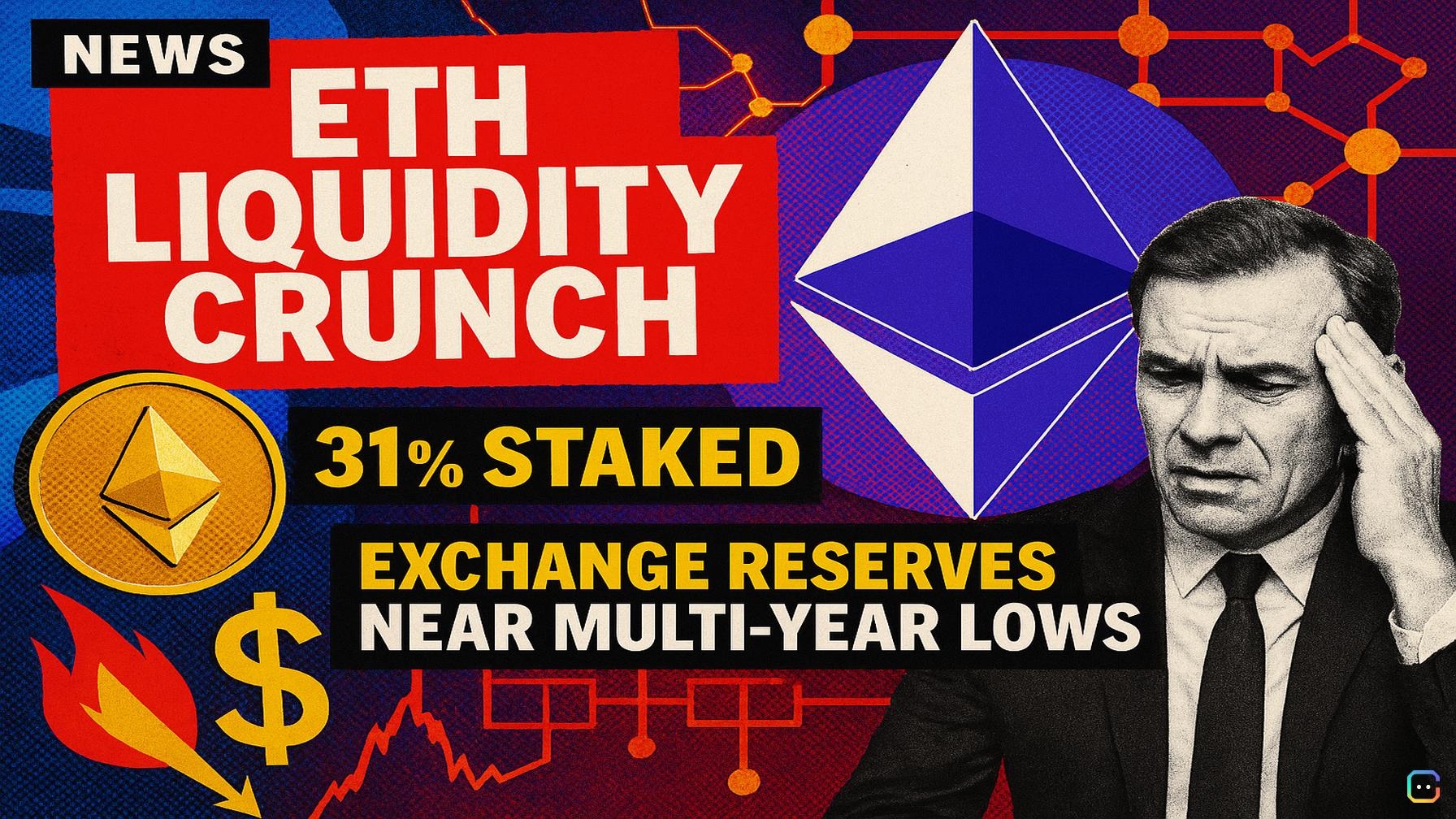
CryptoQuant’s latest report shows 38.31 million ETH — roughly 31.4% of the total supply — is now locked in staking, an all-time high. That means nearly one in three Ether is effectively removed from the pool of immediately sellable tokens. At the same time, exchange reserves are near historic lows: circulating supply on Binance is down to its lowest level since 2020, while total Ethereum held on exchanges has plunged to levels not seen since 2016. Those twin trends are compressing liquidity from both ends.
Why it matters
- With a growing share of ETH staked, available supply has contracted materially. Staked ETH isn’t immediately tradeable, and lower exchange reserves mean fewer coins available to meet buy or sell orders.
- A thinner order book amplifies price moves: relatively modest buy pressure can produce outsized rallies, just as modest selling can trigger disproportionate declines.
- The behavioral picture is clear: sellers are becoming holders, holders are becoming stakers — and stakers don’t contribute to exchange liquidity. This is a structural change, not a short-term blip.
Price and technical backdrop
Ethereum is around $2,180 (up about 6.2% for the week), but remains in a technically precarious position. The weekly candle opened at $2,053 and hit a high of $2,198 without reclaiming it decisively. After peaking near $4,800 in early 2025, ETH has retraced more than 50% over roughly a year, and it now sits below the short-, mid-, and long-term moving averages — a configuration that typically signals distribution rather than accumulation.
Support and risk
Historically, $2,000 has acted as a structural floor, and last week’s wick down to $1,700 was bought aggressively — volume spiked on that dip, suggesting buyers defended the level. But until ETH can reclaim $2,500 and push back above the key moving averages, rallies are likely to be tests rather than confirmations of a sustained uptrend.
Bottom line
The market’s current volatility masks a meaningful supply-side squeeze: a record share of ETH is locked in staking while exchange inventories sit at multi-year lows. That combination makes the market more susceptible to sharp moves, and the price has not yet fully reflected this structural tightening. The key near-term question for traders and investors is whether demand can overcome the thinner market and drive ETH back above $2,500 — only then would the technical picture begin to tilt toward a durable recovery.
Read more AI-generated news on: undefined/news