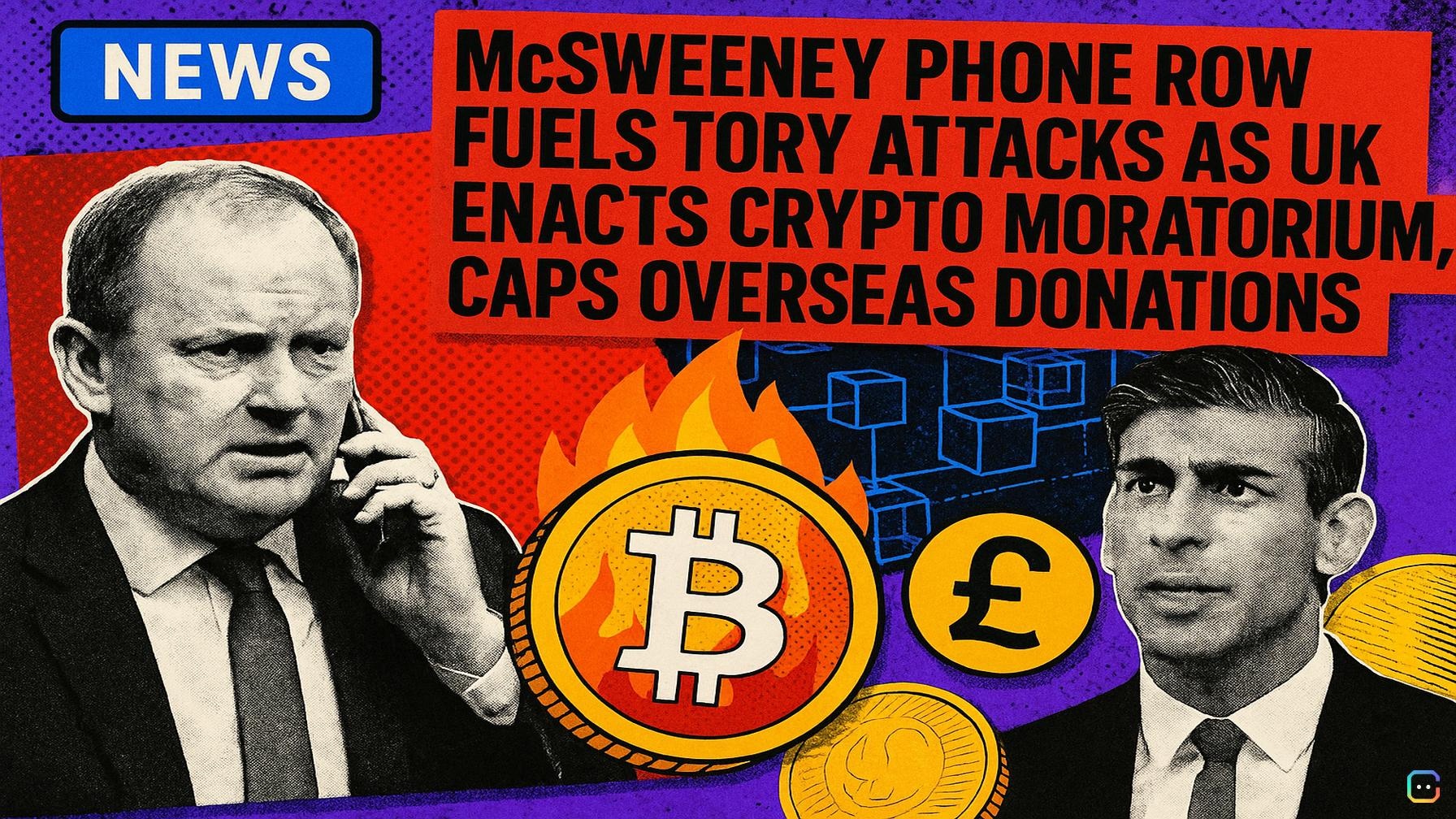
Headline: McSweeney phone row fuels Tory attacks as UK government moves to clamp down on crypto and overseas political donations
The fallout from Labour chief of staff Morgan McSweeney’s “stolen” phone escalated today after the Metropolitan Police published the full transcript of his 999 call. The release has given the Conservatives fresh ammunition to accuse Labour of a cover‑up — even as ministers insist there’s no conspiracy.
What the transcript shows
- McSweeney told the operator the device was a government phone but did not disclose his Downing Street role or job title.
- That omission has stoked speculation the phone may have contained messages between McSweeney and Peter Mandelson — messages now subject to a Commons humble address passed more than three months after the theft was originally reported.
- Critics ask why McSweeney didn’t flag the phone contained sensitive information, why he didn’t correct location details on the call, and why he asked for updates at a personal email address. Supporters describe a string of human errors rather than deliberate wrongdoing.
Political reactions
- The Conservatives issued a press release demanding answers, quoting shadow Cabinet Office minister Alex Burghart: “This whole thing stinks to high heaven,” accusing the government of failing to recover CCTV or back up messages and alleging a pattern of secrecy over the Mandelson appointment.
- Kemi Badenoch expressed scepticism about the timing of the theft; Wes Streeting, the health secretary, dismissed talk of a cover-up as conspiracy thinking.
- Journalists and commentators urged caution: some argued McSweeney made plausible mistakes (location confusion, not explicitly flagging the phone’s sensitivity, assuming Downing Street security and the Met would coordinate) and that disposing of a device would be a risky, implausible way to avoid disclosure.
Why this matters for crypto-watchers
While the phone story dominates headlines, today’s other big development is directly relevant to the crypto community and anyone tracking political finance:
New limits and a crypto moratorium
- From Wednesday, political donations from British citizens living abroad will be capped at £100,000 a year — a change likely to curb contributions from high-profile overseas donors, including Reform UK backer Christopher Harborne, who lives in Thailand.
- The government has also announced a moratorium on cryptocurrency donations in line with recommendations from the Rycroft review, part of measures to be taken forward in the representation of the people bill.
Why campaigners want more than a moratorium
Civil society and transparency groups broadly welcomed the Rycroft recommendations but say they don’t go far enough:
- Tom Brake (Unlock Democracy) warned crypto donations are “hard to trace and easy to move across borders,” and called for the moratorium to remain until secure safeguards exist.
- Duncan Hames (Transparency International UK) argued for a meaningful cap on individual donations to prevent an “arms race” for funds.
- Jess Garland (Electoral Reform Society) urged an absolute cap on all donors — domestic and foreign — to prevent politics being swamped by multi‑million‑pound contributions.
Opacity in corporate donations
A CenTax analysis cited in Commons debate adds pressure for tougher measures:
- Around a quarter of corporate donors are “opaque” (control unclear), accounting for 25% of corporate donation value.
- Nearly one in every ten pounds donated by companies likely originates from individuals who would be ineligible to donate directly. These opaque donations are, on average, almost twice as large as those from clearly eligible UK‑owned companies.
Government response in Parliament
- Steve Reed, speaking in the Commons, said the new rules will be applied “without fear or favour” to members of all parties and that the Electoral Commission will be given resources “adequate to any new demands.” He signalled elements of the Rycroft report will be implemented through the representation of the people bill and suggested more action may be needed to close loopholes such as shell companies used to funnel dark money.
- Reform UK reacted angrily, claiming the crackdown shows the government is “absolutely terrified” of its rise; deputy leader Richard Tice said the party would repeal the measures if it wins office.
Broader political context (brief)
- The McSweeney saga sits alongside other Westminster stories: calls for a state apology over Britain’s role in slavery and an inquiry into colonial legacies; a government pilot to trial social media time‑limits for teens; and a contentious Scottish political scene where many MSPs are standing down ahead of May elections. There were also headlines about a Reform Scotland leader’s offensive joke and former Tory minister Crispin Blunt being fined for drug possession.
What to watch next
- Will the representation of the people bill enshrine a lasting ban or just a temporary moratorium on crypto donations?
- Will Parliament adopt a fixed cap on individual and corporate donations to reduce the risk of opaque or foreign influence?
- And on the McSweeney affair: will further disclosures or police inquiries confirm human error, or deepen suspicions about the loss of potentially politically sensitive material?
For readers focused on crypto and political finance: today’s moves signal a UK government increasingly wary of digital and cross‑border money flows into politics. The debate now shifts from emergency restrictions to long‑term reform — and that will determine whether crypto is effectively excluded from political funding or regulated into a traceable, compliant channel.
Read more AI-generated news on: undefined/news