Headline: How Project Maven became the Pentagon’s AI engine accelerating U.S. strikes on Iran
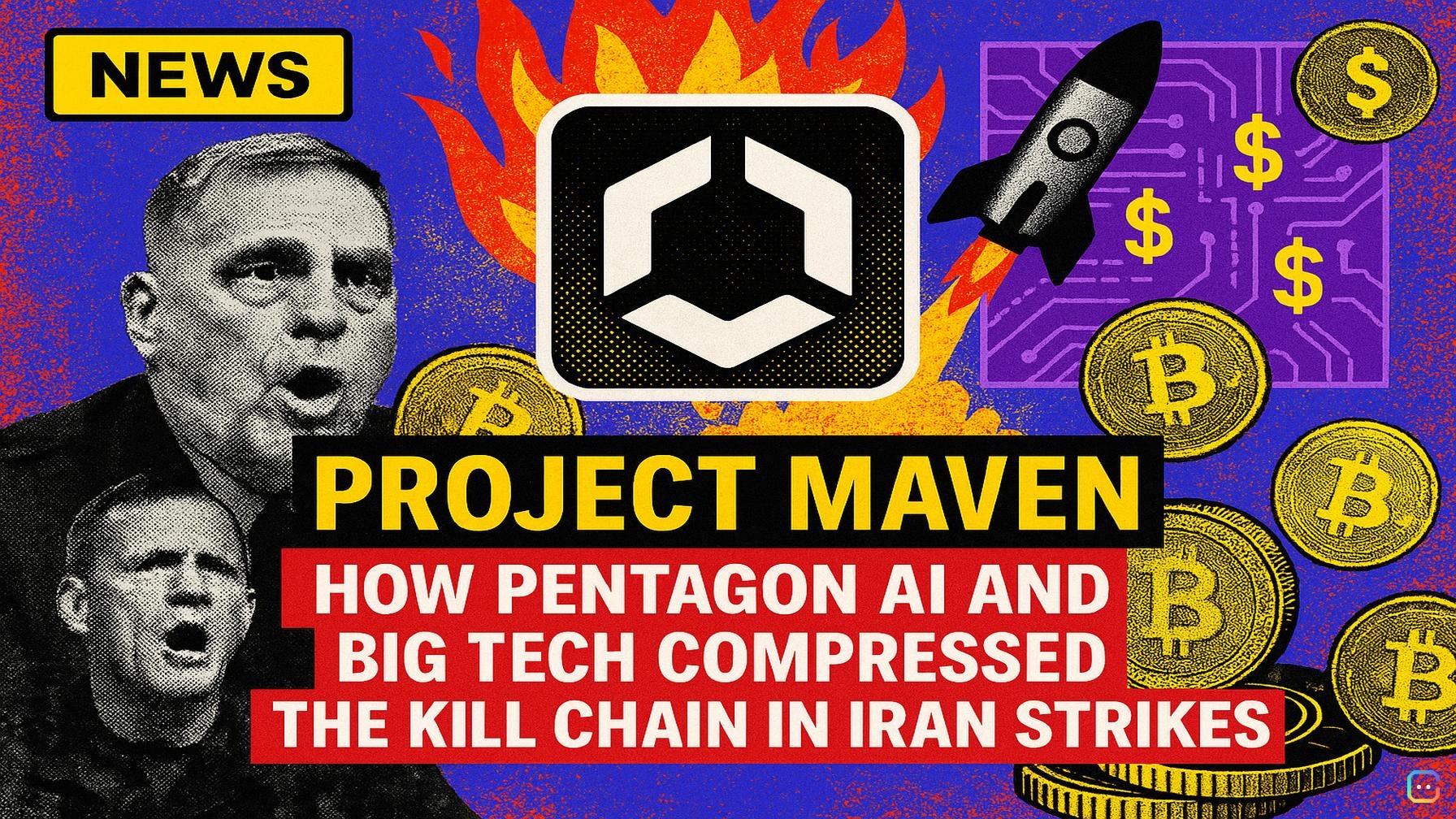
The U.S. military’s recent high-tempo operations linked to tensions with Iran have shone a spotlight on Project Maven — the Pentagon’s flagship artificial intelligence program — which officials and reporters say has become central to speeding target identification and strike decisions.
What Maven was built for
- Launched in 2017, Project Maven began as a practical answer to a simple but growing problem: analysts were drowning in drone and surveillance video, forced to scan hours of footage frame by frame to spot fleeting objects of interest.
- Maven applied machine learning to “find the needle in the haystack,” automating detection across massive imagery streams so human analysts could focus on higher-level decisions.
How it evolved into a battlefield tool
- Over time, Maven expanded beyond analyst assistance into an AI-assisted targeting and battlefield management system that compresses the “kill chain” — the sequence from target detection to strike execution.
- The platform operates as an “overlay” that fuses satellite imagery, drone feeds, sensor inputs, signals intelligence and troop-deployment data, producing rapid snapshots of the operational theater and turning observations into actionable targeting workflows.
- A Pentagon official described a demonstration in which Maven “magically” converts an observed threat into a targeting workflow, evaluates available assets, and presents commanders with options.
Generative AI, interfaces and industry partners
- Advances in generative AI and natural-language interfaces have made the system more intuitive for operators; reports say technologies such as Anthropic’s Claude have been used to interact with the platform. That relationship, however, has been strained over disagreements about restrictions on automated strikes and surveillance use.
- Google was Maven’s original AI contractor but pulled back after a 2018 internal revolt — more than 3,000 employees signed an open letter opposing involvement in military applications, several engineers resigned, and Google later adopted AI principles ruling out participation in weapons systems.
- Since then, Google has softened its stance and is reportedly among companies being considered — along with xAI and OpenAI — to provide capabilities for the program. In 2024, Palantir Technologies stepped into a leading role after Google’s retreat; Palantir’s long-standing ties to intelligence work have made its tech a core part of Maven’s operational backbone. CEO Alex Karp framed the stakes bluntly: compressing the kill chain from hours to seconds can render adversaries “obsolete.”
Operational tempo and consequences
- Officials have declined to detail Maven’s performance in the Iran-related operations, but the tempo of strikes hints at the program’s impact. The Center for Strategic and International Studies reports the campaign stabilized at roughly 300–500 targets per day after the initial phase.
- In the opening 24 hours of Operation Epic Fury, U.S. forces reportedly struck more than 1,000 targets. Iranian authorities said one attack hit a school in a building previously used as a military complex and resulted in the deaths of over a hundred children and many more injured.
Why this matters to the tech community
- Maven’s evolution underscores a broader tension familiar to tech and crypto communities: the trade-offs between powerful, efficiency-boosting capabilities and ethical limits on their use. The Silicon Valley pushback that unseated Google in 2018 illustrated a split between engineers wary of autonomous targeting and defense officials who view such AI capabilities as operationally essential.
- As major AI firms — and defense-focused vendors like Palantir — jockey to supply the next generation of tools, the debate over oversight, permissible use, and the pace of adoption is only intensifying.
Bottom line: Project Maven has moved from an imagery-filtering tool to a central AI layer in U.S. strike operations. That shift has accelerated targeting decisions and raised hard questions about industry responsibility, oversight, and the human costs that can follow.
Read more AI-generated news on: undefined/news