Headline: Biden-era crypto policy left a legacy of enforcement over rules — and real-world costs
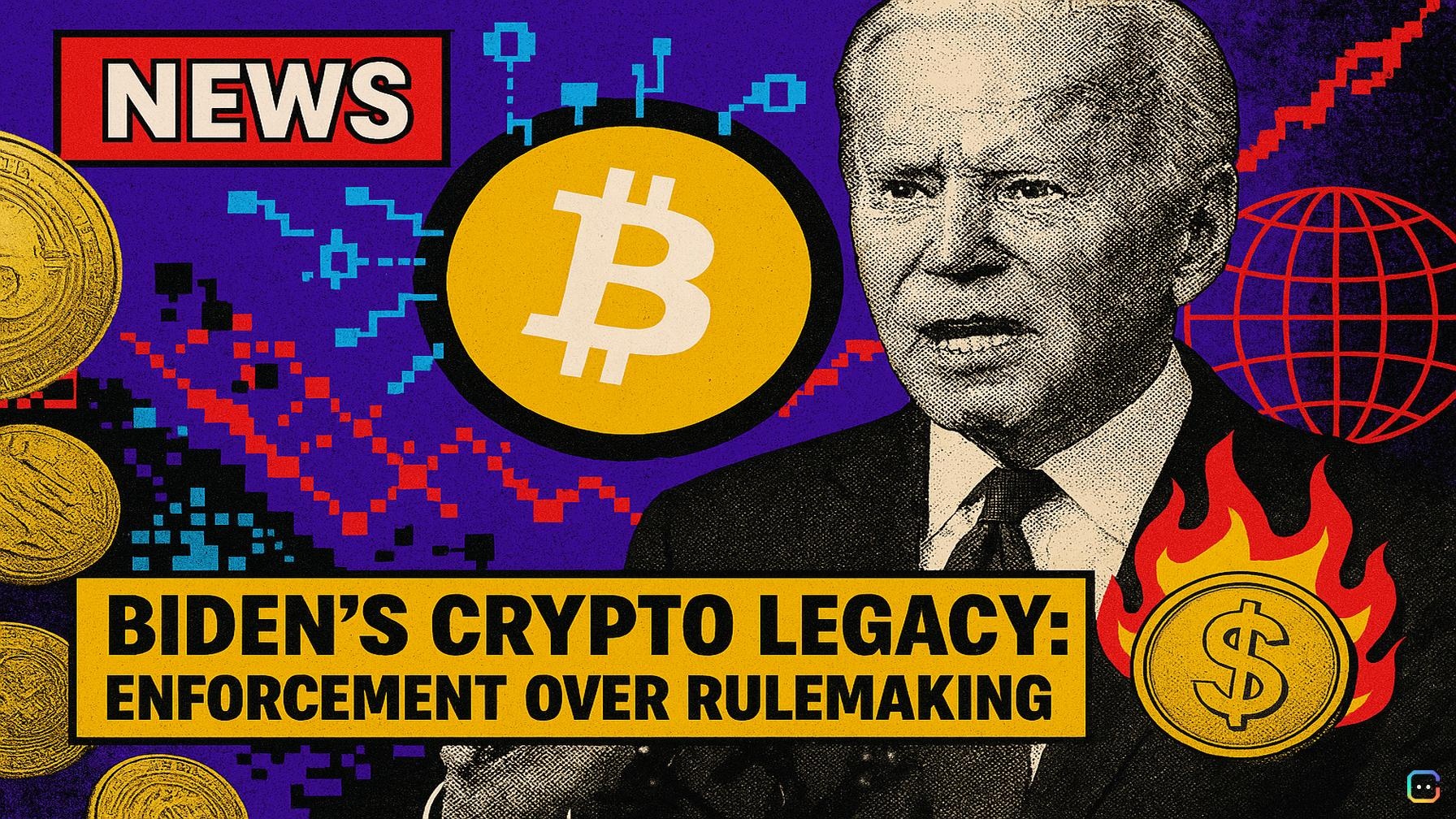
Ryan Cummings and Jared Bernstein recently argued in a Feb. 26 New York Times op-ed that bitcoin’s post‑2025 price decline vindicates the Biden administration’s approach to crypto. But that view omits the most important fact about the administration’s record: it largely relied on enforcement instead of writing clear, democratically adopted rules — and that approach had predictable consequences.
What the op-ed praises
- The authors credit the administration with “increasingly aggressive regulatory efforts to curb scams and fraud.”
- They use bitcoin’s price drop as evidence that the market (and by implication, the industry) is fundamentally flawed.
What it leaves out
- Major frauds like FTX expanded during the Biden years. Sam Bankman‑Fried, a prominent Democratic donor, met with senior officials — including then‑SEC Chair Gary Gensler — while running what became one of the largest financial frauds in history.
- Rather than establishing a clear, notice‑and‑comment rulemaking regime, the administration favored a strategy of regulation‑by‑enforcement. That incentivized compliant firms to move offshore or shutter operations, harmed consumers, and slowed U.S. innovation — while opportunistic bad actors navigated the political confusion to their advantage.
“Operation Choke Point 2.0” and debanking
- Under pressure from federal regulators, many banks curtailed services for lawful crypto businesses and individuals — a process critics have dubbed “Operation Choke Point 2.0.”
- These debanking actions often occurred without formal rulemaking or clear legal authority, cutting off ordinary customers and small businesses who had turned to crypto because traditional banking left them underserved.
Real use cases that matter
- The op-ed dismisses crypto as a “painfully slow and expensive database” with “almost no practical use,” conceding only that crypto is used for international wiring and then minimizing that benefit.
- That downplays a concrete impact: global remittance fees average roughly 6.5%, which costs migrant workers and their families billions annually. Stablecoins on blockchain networks can move value in minutes for a fraction of those fees — a tangible improvement for many households.
- Beyond remittances, an expanding institutional ecosystem is building on blockchain rails: Fidelity, JPMorgan, BlackRock, BNY Mellon, Morgan Stanley, Visa, Mastercard, Meta, Stripe, Block Inc., and Franklin Templeton are among major firms investing in or developing on blockchain infrastructure. The claim that no “giant tech firms” are using the technology is inaccurate.
Price volatility ≠ worthlessness
- Using short‑term bitcoin price moves as a counternarrative is analytically weak. Volatility is a hallmark of emerging markets — Amazon’s stock, for example, plunged roughly 94% from its peak in the dotcom bust before becoming dominant.
- Bitcoin’s tradeoffs—slower settlement versus high security and censorship resistance—are deliberate. Its decentralized ledger resists unilateral confiscation or reversal of transactions, a feature that matters in jurisdictions where citizens face political targeting. Other chains prioritize speed where needed.
On bailouts and hypocrisy
- The op-ed invokes fears of taxpayer bailouts of crypto. In reality, stablecoin proposals on the table envision fully reserved payment instruments backed by highly liquid government bonds; some alternative proposals (cited by the authors) would not require new taxpayer spending.
- By contrast, when Silicon Valley Bank failed in 2023, the administration authorized extraordinary measures to protect all depositors — a move critics say reveals selective concern about moral hazard.
Politics, donations and participation
- The piece highlights crypto’s political donations as evidence of corruption. But political advocacy and donations are how industries seek regulatory change across the U.S. economy. Facing an unfriendly regulatory environment, crypto firms and proponents turned to the political process as a last resort. It’s worth noting that Bankman‑Fried’s contributions largely favored Democrats.
Bottom line
The Biden administration had an opportunity to craft a transparent, enforceable U.S. framework for digital assets that protected consumers while keeping innovation domestic. Instead, critics argue it chose enforcement-driven pressure tactics — including bank de‑risking — that pushed compliant companies away, left consumers worse off, and ceded regulatory clarity to the marketplace. If anyone owes an explanation for crypto’s current state, the article contends, it’s the administration’s skeptics — not the technology’s defenders.
Read more AI-generated news on: undefined/news