Crypto analyst Zynx has published a long-term roadmap for Bitcoin’s price on X (formerly Twitter), using the so-called “Bitcoin Power Law” to project where BTC could trade over the coming decade. The model, which fits past market moves to a long-term growth curve, delivers a bullish set of multi-year targets — and suggests upside measured in multiples rather than single-digit gains.
What Zynx projects (mid-year targets)
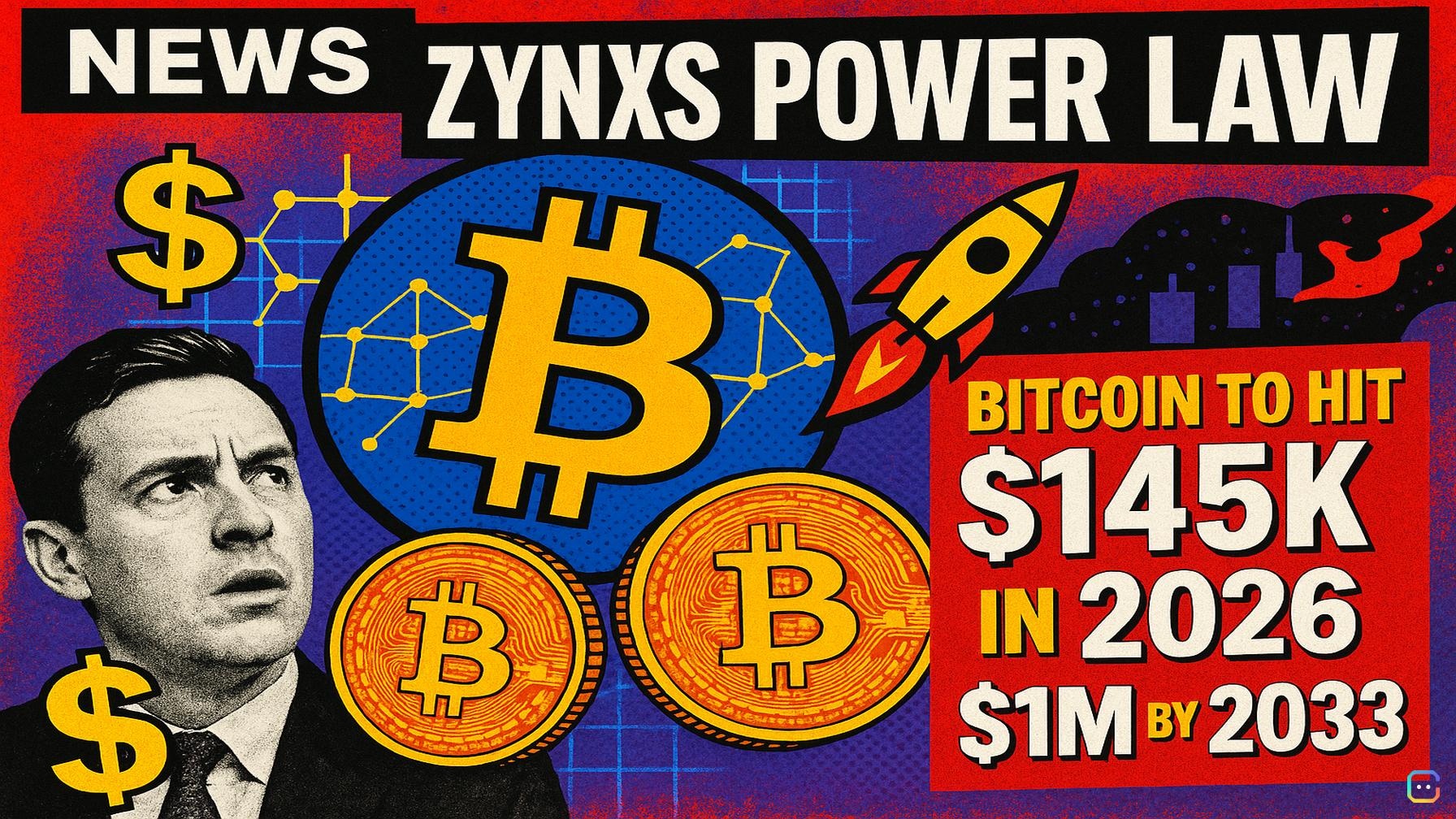
- 2026: ~$145,000 (≈1.9× current price)
- 2027: ~$200,000 (≈2.7×)
- 2028: ~$265,000 (≈3.5×)
- 2029: ~$350,000 (≈4.7×)
- 2030: ~$470,000 (≈6.3×)
- 2033: ~$1,000,000 (≈13.3×)
Context and numbers
- Zynx published the thread on April 20, 2026, noting the then-current BTC price around $75,200 and calling the market “historically undervalued.”
- The Power Law approach has previously flagged milestones such as BTC’s eventual break above $100,000; sites like Bitbo plot the same kind of trajectory back to 2011 to visualize the long-term trend.
What the Bitcoin Power Law is
- It’s a curve-fit method that uses Bitcoin’s historical price action to estimate a long-term growth line. Because it smooths out short-term volatility, the Power Law often produces steadily rising targets that assume an ongoing upward trend over many years.
Why readers should be cautious
- The Power Law is a retrospective curve fit — informative for long-horizon scenarios but not a prediction tool that accounts for macro shocks, regulatory changes, or sudden market stress.
- Zynx’s projections imply limited room for prolonged bear markets (a near-continuous bull run), which runs counter to Bitcoin’s history of sharp cyclical drawdowns. Use these forecasts as one data point among many, not a guaranteed path.
Bottom line
Zynx’s Power Law update is bullish and frames Bitcoin’s future returns in exponential terms. It’s a useful long-range viewpoint for investors who buy into the idea that BTC’s multi-year trend will continue upward, but it’s not a substitute for risk-aware portfolio planning.
Read more AI-generated news on: undefined/news