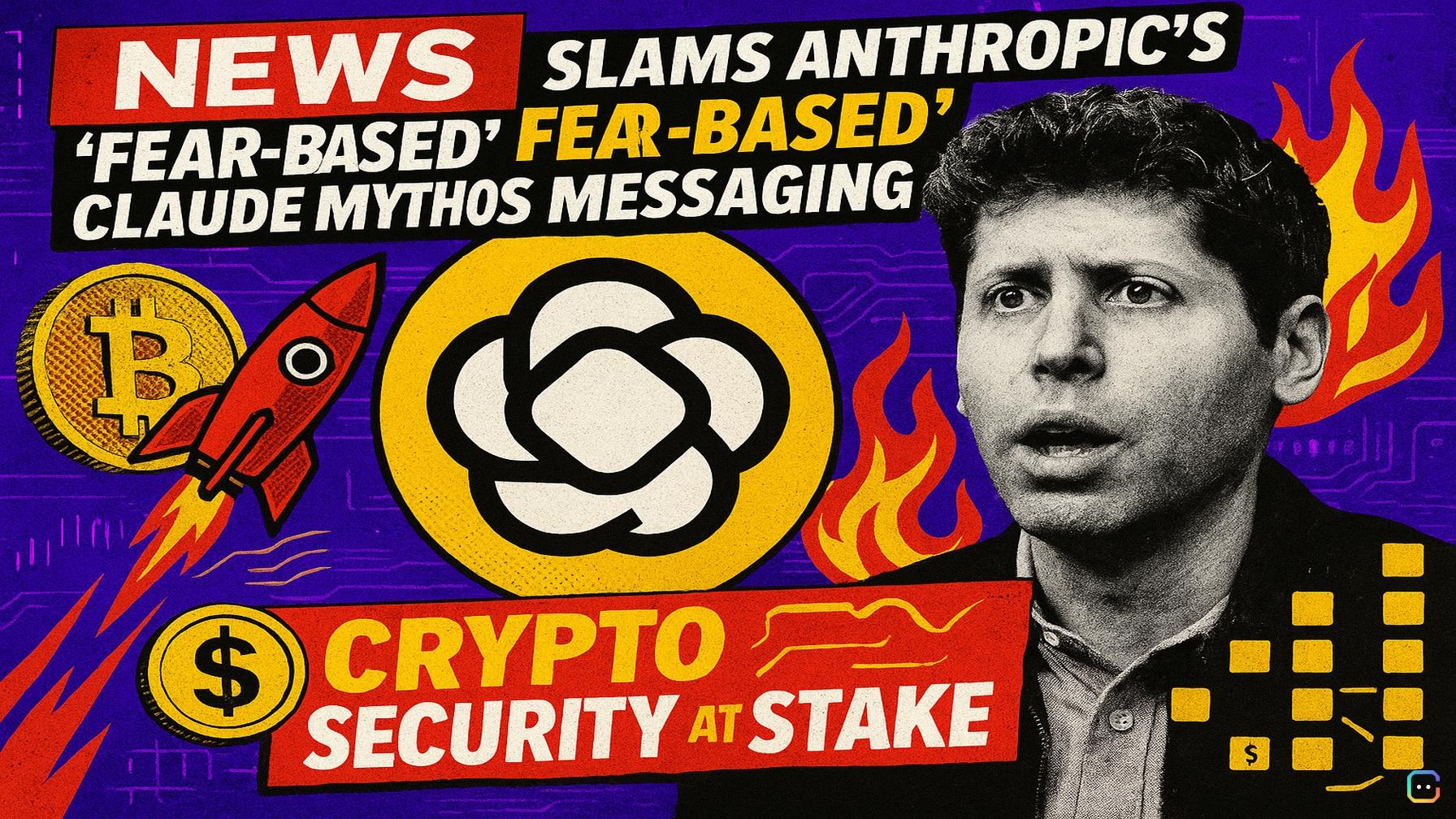
OpenAI CEO Sam Altman fired back at what he called “fear-based marketing” around Anthropic’s new AI, Claude Mythos, arguing the rival’s safety rhetoric is being used to justify tight control over the technology.
Speaking on the Core Memory podcast with Ashlee Vance, Altman acknowledged genuine safety concerns around advanced models but said some of the alarmism serves another purpose: “If what you want is like ‘we need control of AI, just us, because we’re the trustworthy people,’ I think fear-based marketing is probably the most effective way to justify that.” He likened the messaging to announcing “we have built a bomb” and then offering an expensive shelter only to a chosen few.
Claude Mythos, revealed last month, has become the flashpoint in an industry debate over access to powerful systems. Anthropic positions Mythos as a defensive breakthrough — able to find software flaws and speed up security work — but also warns of offensive misuse if the model falls into the wrong hands. In testing, Mythos reportedly found hundreds of vulnerabilities in Mozilla’s Firefox and simulated multi-stage cyberattacks, raising alarm among researchers, governments and security teams.
Anthropic is distributing Mythos selectively through Project Glasswing, letting a small group of companies — including Amazon, Apple and Microsoft — test the model under controlled conditions. The company says it’s also investing in open-source security tools so defenders can benefit before the tech becomes widely available. Anthropic has further acknowledged that many existing cybersecurity benchmarks no longer measure up to Mythos’ capabilities.
That claim didn’t go unchallenged: a group of researchers said they could reproduce Mythos-like findings with publicly available models. Meanwhile, despite calls from some U.S. officials to pause deployment over fears of misuse in warfare or surveillance, the NSA reportedly started testing a preview version on classified networks.
The story has even crossed into crypto-adjacent channels: prediction market Myriad — owned by Decrypt’s parent company Dastan — currently prices a ~49% chance that Claude Mythos will be released to the wider public by June 30. For crypto projects and infrastructure teams, the model’s ability to autonomously identify vulnerabilities is a double-edged sword: it could accelerate defensive security work, but it also raises the stakes for safeguarding smart contracts, wallets and node software.
Altman warned that rhetoric around “too dangerous to release” models will increase as capabilities grow, but he urged skepticism toward every dramatic claim. He also pushed back against reports that OpenAI is cutting back infrastructure spending, saying the company will continue expanding computing capacity even as narratives about pullbacks circulate.
Bottom line: Mythos has intensified an already fierce industry split — controlled access versus broad distribution — and has thrust software security, government scrutiny and even crypto infrastructure into the conversation about how powerful AI should be rolled out.
Read more AI-generated news on: undefined/news