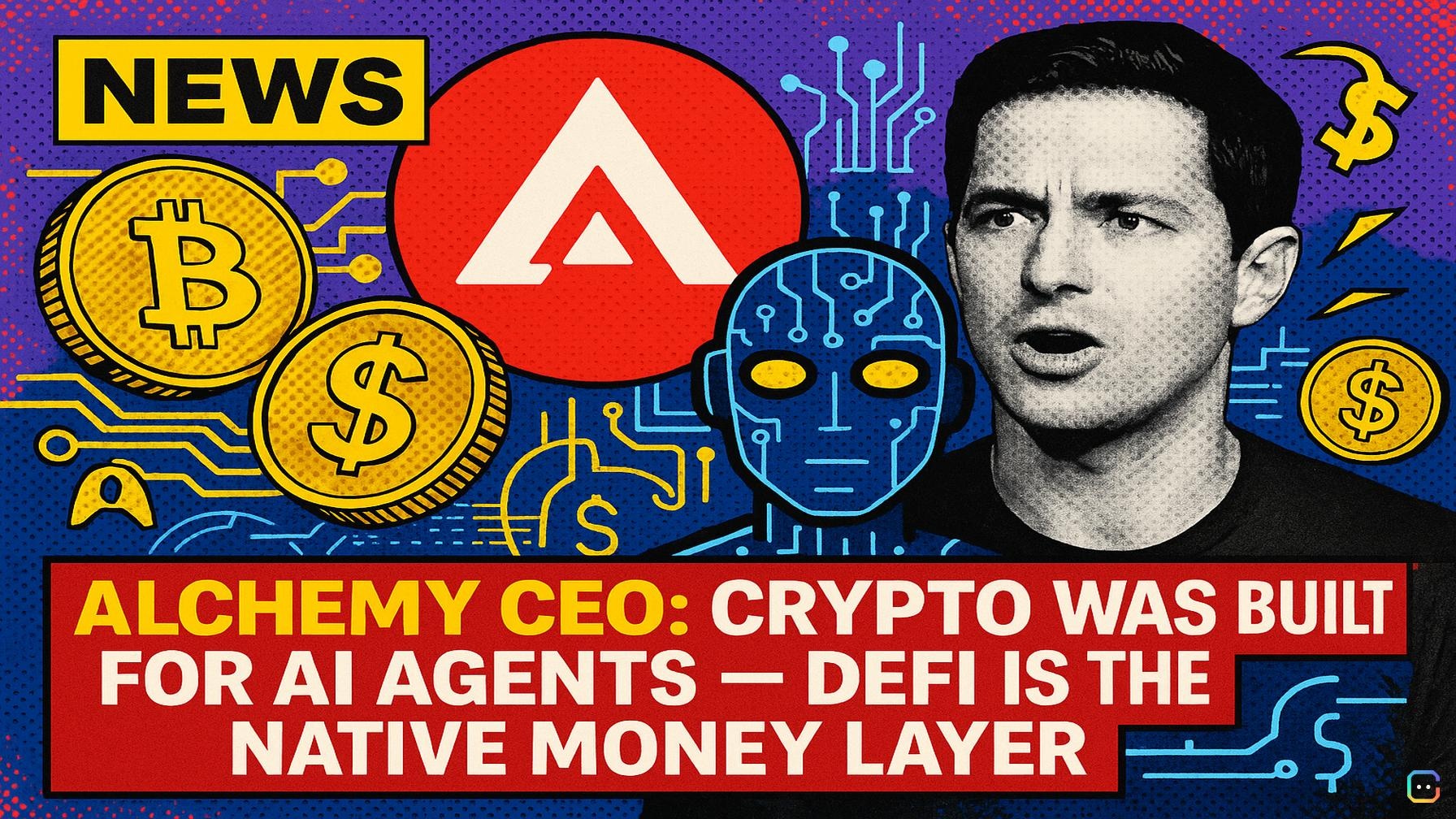
“Crypto was built for AI agents, not humans,” argues Nikil Viswanathan, co‑founder and CEO of blockchain infrastructure firm Alchemy — and he thinks that insight explains why decentralized finance may be the native money layer for an AI‑driven economy.
In an interview with CoinDesk ahead of his appearance at Consensus Miami next month, Viswanathan laid out a simple mismatch: the modern financial system was designed around human constraints — geography, business hours, paperwork, physical identity — while AI agents operate without those constraints. “Banks have operating hours because humans do. Payments are tied to countries because people live in them. Credit cards assume physical identity and presence,” he said. AI agents, by contrast, don’t sleep, don’t live in a jurisdiction, don’t carry cards — and increasingly, they don’t just assist, they transact.
That difference matters. Traditional payments assume friction: currency conversion, intermediaries, delays and fees are tolerable when humans make payments. For autonomous agents, these frictions are unacceptable. Agents need instant, cross‑border, programmable transfers that can happen any time, in tiny increments, and under direct programmatic control. Crypto, Viswanathan argues, delivers exactly that: a global, always‑on financial layer where value moves as fluidly as data. “Crypto is the global infrastructure for money that agents need,” he said.
Alchemy, which provides APIs, node infrastructure and data services that let developers build and scale blockchain apps — from financial products to NFTs and games — sits squarely in the middle of this transition. What many humans find cumbersome about crypto (seed phrases, private keys, direct interaction with code) is precisely what makes it powerful for machines. “Agents read in zeros and ones. That’s their native language. That's also the language of crypto,” Viswanathan said.
He compares the shift to the move from postal mail to email: the postal system was built for human workflows; email, by contrast, is designed for machines and is dramatically faster and more composable. Likewise, crypto’s architecture is better suited for programmatic actors than for manual human use. Over time, Viswanathan expects AI agents to sit on top of crypto rails, managing wallets, executing transactions, optimizing capital flows in real time — automating the complexity so people can retain control of their funds without handling every detail. “You can write code to manage a crypto wallet. You can’t write code to manage a bank account in the same way,” he said.
Viswanathan envisions a layered future: traditional finance and crypto as the base rails, an agent layer operating on top, and a human interface above that. “Just like computers operate the internet and humans use it, agents will operate finance,” he said — suggesting a future where finance is more global, programmable and autonomous because it was built for code, not collars.
For more on how AI and crypto are converging in product and policy, see related coverage such as Sam Altman’s World project updates on combatting deepfakes and bots.
Read more AI-generated news on: undefined/news