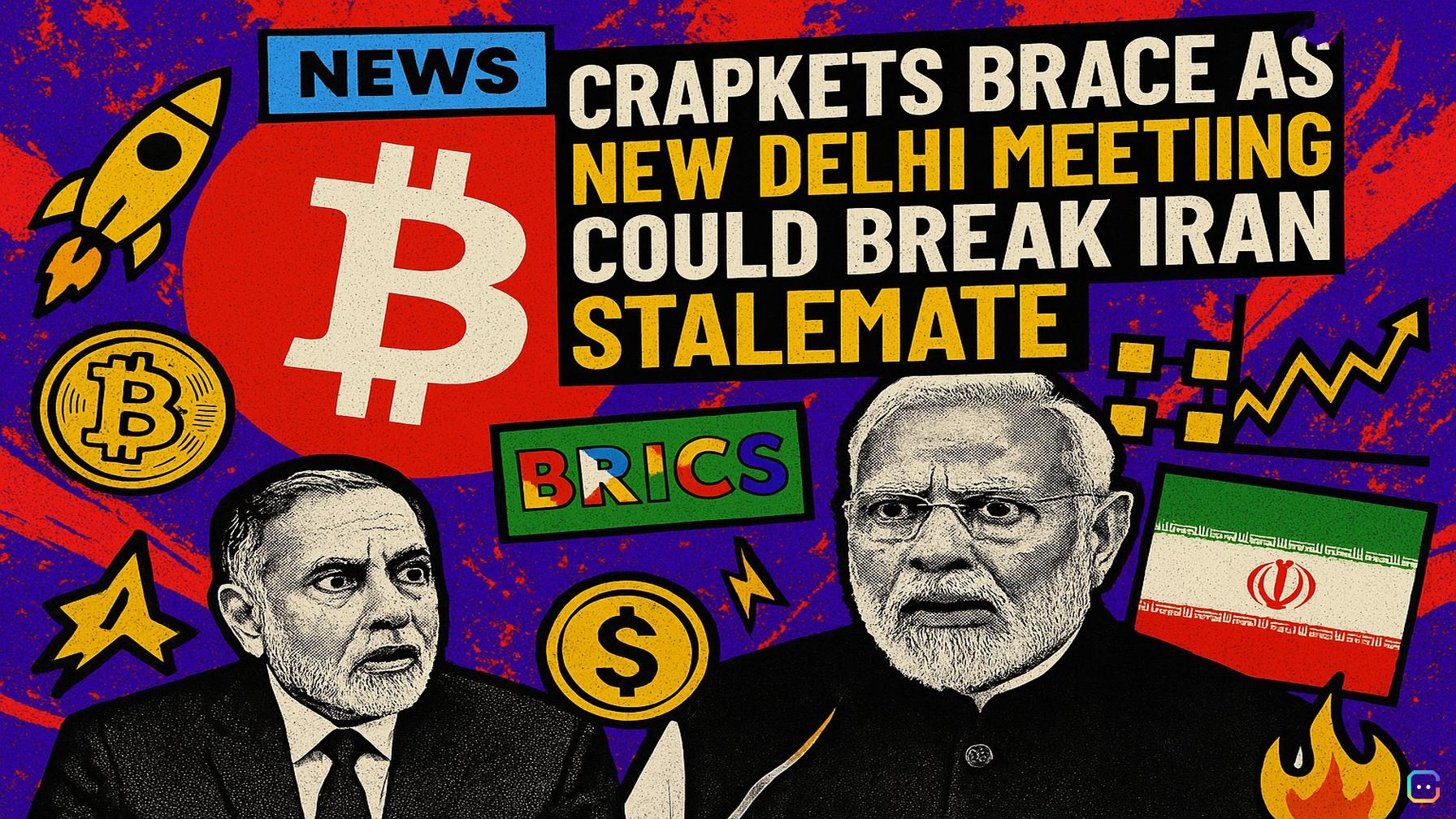
India’s hosting of the BRICS foreign ministers meeting in New Delhi on May 14–15 has taken on an unusually high-profile cast. Since US‑Israeli strikes hit Iran in late February, the bloc — which added Iran as a member in 2024 — has issued no joint statement, no condemnation and no unified call for restraint. That silence, and Tehran’s growing impatience with it, have made the New Delhi gathering a potential inflection point.
Why it matters
For the first time since the conflict began, foreign ministers from Tehran, Riyadh and Abu Dhabi will share a room — and India currently holds the BRICS chair. New Delhi’s stewardship makes this meeting a test of whether BRICS can translate its growing global footprint into tangible diplomacy amid a regional crisis.
India’s explanation for the muted response has been blunt: the bloc could not reach consensus because “some members of the BRICS are directly involved in the current situation in the West Asia region,” India’s foreign ministry said. But that defence is losing traction. Iranian Foreign Minister Seyed Abbas Araghchi publicly pressed India’s external affairs minister — a call India did not hide — arguing that BRICS must “play a constructive role at the current juncture in supporting regional and global stability and security.”
New Delhi has itself urged “dialogue and diplomacy.” Prime Minister Narendra Modi spoke with Iranian President Masoud Pezeshkian to express “deep concern over the escalation of tensions and the loss of civilian lives.” Still, the BRICS meeting now represents the moment when that quiet engagement either becomes visible through a joint initiative or falls short.
Economic and strategic fallout
The conflict’s economic consequences have been rapid and severe. QatarEnergy’s CEO told Reuters Iranian attacks disabled roughly one-sixth of Qatar’s liquefied natural gas export capacity — a hit valued at about $20 billion a year — with repairs expected to take three to five years. Iran has also moved to restrict passage through the Strait of Hormuz; operators have rerouted over 1,000 vessels so far, sending global freight costs higher.
Political ripples in the Gulf have been significant, too. Iranian missiles struck the UAE during the fighting, and Gulf Cooperation Council governments said they were not consulted ahead of US strikes on Iran. That sense of strategic drift has prompted Bahrain and Kuwait to signal interest in joining BRICS. Saudi Arabia appears listed as a member on BRICS’ website — and Riyadh continued to send ministerial delegations after a 2023 invitation — but it has yet to formally confirm membership. The tug-of-war over regional alignment is pushing Gulf states to reassess how much they want from BRICS.
Diplomatic pressure on India
India’s low-profile posture has drawn criticism at home and abroad. Pakistan hosted US‑Iran talks in Islamabad — a move that provoked political backlash domestically and raised questions internationally about which regional actors can convene talks. Analysts told The Federal that India was well placed to mediate, given its repeated calls for diplomacy. One expert suggested New Delhi could use the BRICS foreign ministers meeting — and the summit that follows — to gather parties and convert crisis into opportunity, potentially producing a historic outcome.
Timing gives New Delhi leverage
The meeting also coincides with a Quad foreign ministers session that the US plans to attend, giving India an unusual diplomatic window: simultaneous access to Washington, Tehran, Riyadh and Beijing in the same diplomatic stretch. New Delhi’s long-standing playbook — talk to everyone, align with no one — is on full display, and the May schedule amplifies the stakes.
What’s next for BRICS
BRICS has weathered skepticism before, surviving labels like the “disparate quartet.” Whether the present standoff over Iran becomes a rupture or an impetus for more frequent, meaningful BRICS diplomacy will depend on what emerges from New Delhi. If India’s months of quiet engagement can be converted into a tangible, collective response, the meeting could mark a turning point. If not, the bloc’s silence will be exposed as a strategic liability — with consequences for regional stability and global markets that watch these developments closely, including crypto markets sensitive to geopolitical risk.
Read more AI-generated news on: undefined/news