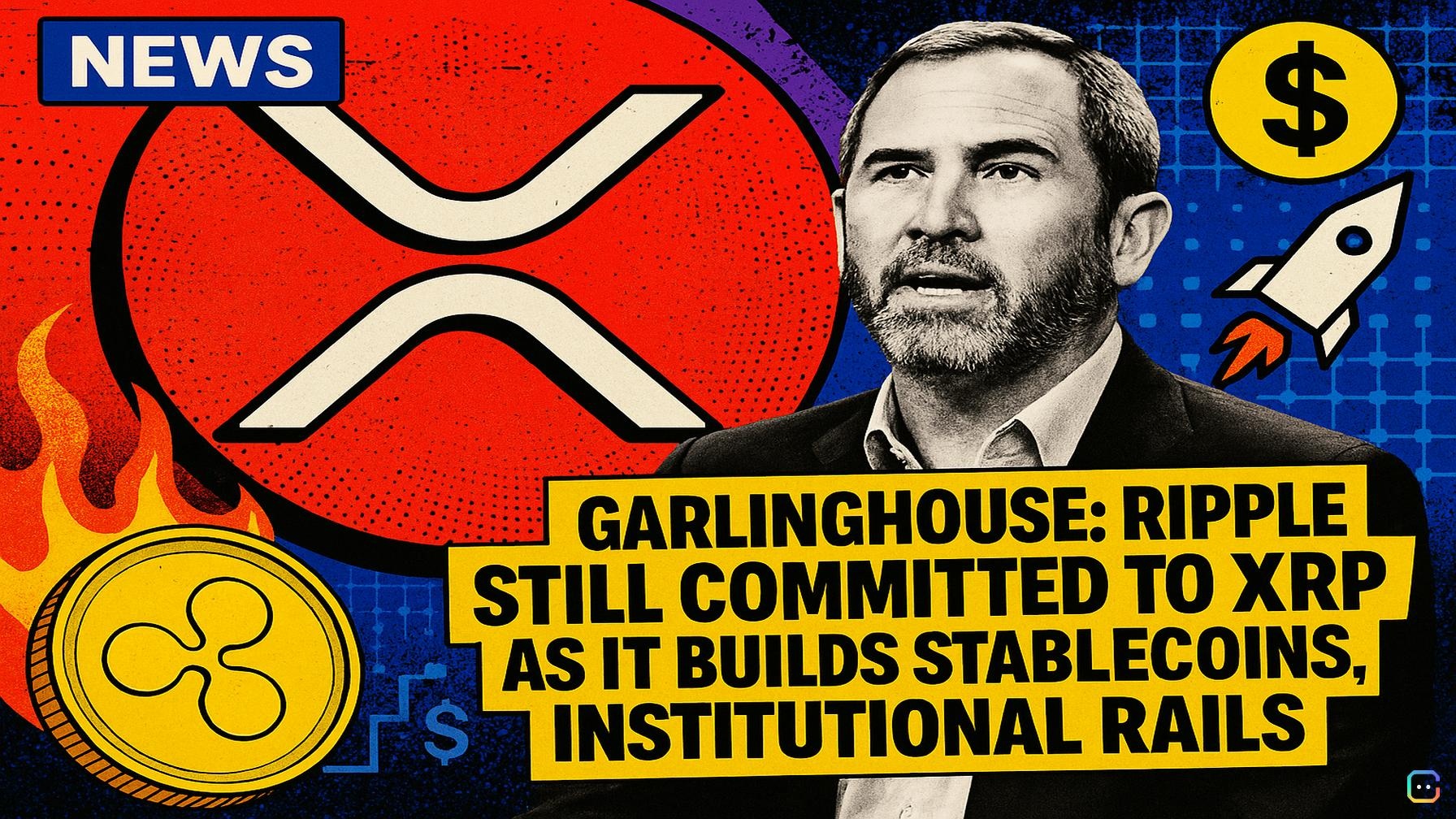
At XRP Las Vegas on April 30, Ripple CEO Brad Garlinghouse forcefully rejected suggestions that the company has drifted away from XRP — arguing that even as Ripple expands into institutional finance, stablecoins and regulated U.S. infrastructure, XRP remains central to the firm’s strategy and economic interests.
“You don’t have to take my word for it: Ripple is still the largest holder of XRP on the planet,” Garlinghouse said onstage. “We are the most interested party in seeing XRP be successful.” He called criticism that Ripple is no longer aligned with XRP “funny and strange,” given the company’s direct exposure to the token and its work building liquidity, utility and trust around it.
A broader playbook, not abandonment
Garlinghouse framed Ripple’s roadmap around three explicit goals for XRP: make it the most useful, the most liquid and the most trusted digital asset. That mission extends across Ripple’s enterprise offerings — from custody and treasury services to institutional market infrastructure under the Ripple Prime banner and its Treasury unit.
Addressing worries that Ripple’s stablecoin projects (including RLUSD) could sideline XRP, Garlinghouse said Ripple sometimes keeps strategic moves opaque to avoid tipping off competitors. Still, he insisted even seemingly indirect initiatives are intended to bolster XRP over the long run. “We’re going to do things that may not at first blush make crystal clear sense,” he said. “But … it’s all in service of how do we do things that expand, grow, and drive in liquidity, utility, and trust in XRP.”
Business growth and tokenization opportunities
Garlinghouse said Ripple employs roughly 1,500 people and is having a record year across multiple lines of business. He pointed to tokenization as an area where the XRP Ledger could be especially valuable — even when Ripple isn’t the direct operator. Bond settlement, he argued, is an example of a slow, legacy market ripe for on-chain transformation: “Bond settlement is slow, it is arcane … it is absurd to think about how that works in a world of the internet,” he said, adding he thinks it’s only a matter of time before such assets move on-chain.
Regulation, the Clarity Act and legal clarity for XRP
Policy discussions at the session focused on the Clarity Act and whether federal crypto market-structure legislation can advance before potential disruption from the midterm cycle. Garlinghouse said Ripple had been close to helping move the legislation forward months earlier, but momentum slowed after Coinbase and CEO Brian Armstrong urged caution.
He made a distinction between industry-wide regulatory needs and XRP’s own legal standing. “XRP has clarity. XRP fought a very painful fight to get clarity,” Garlinghouse said, pointing to the federal judge’s opinion that “XRP in and of itself is not a security.” While Ripple supports the Clarity Act as a broader boost for U.S. industry adoption and institutional engagement, Garlinghouse stressed that XRP’s legal footing is already clearer than many other tokens’.
Still, he warned the legislative window is tight: if the bill doesn’t move out of the Senate Banking Committee by the end of the third week of May, “we’re in real trouble.” If it clears committee, Garlinghouse believes bipartisan support could carry it through the Senate.
Stablecoins, oversight and a Fed master account
Garlinghouse confirmed that Ripple’s conditional OCC trust charter approval is connected to its stablecoin plans — particularly RLUSD — and described the combination of New York Department of Financial Services (NYDFS) and OCC supervision as “belt and suspenders.” He emphasized Ripple’s aim to be “the most white hat around stablecoins as possible,” given its institutional client base.
He also said securing a Federal Reserve master account is “very much on our radar,” calling it a potential “big unlock” that would improve financial services infrastructure and benefit the U.S.
What it means for XRP holders
Taken together, Garlinghouse’s remarks portray Ripple as balancing multiple, interlocking bets: defending XRP’s legal status, building regulated stablecoin and institutional rails, and positioning the XRP Ledger as core infrastructure for tokenization and liquidity. The company asks the XRP community to view these efforts as part of a single liquidity and utility strategy, not divergent priorities.
Market snapshot
At press time, XRP traded at $1.37.
Read more AI-generated news on: undefined/news