Forget lunar gold mines and pet rocks — here’s bitcoin’s more credible, and far more consequential, new story.
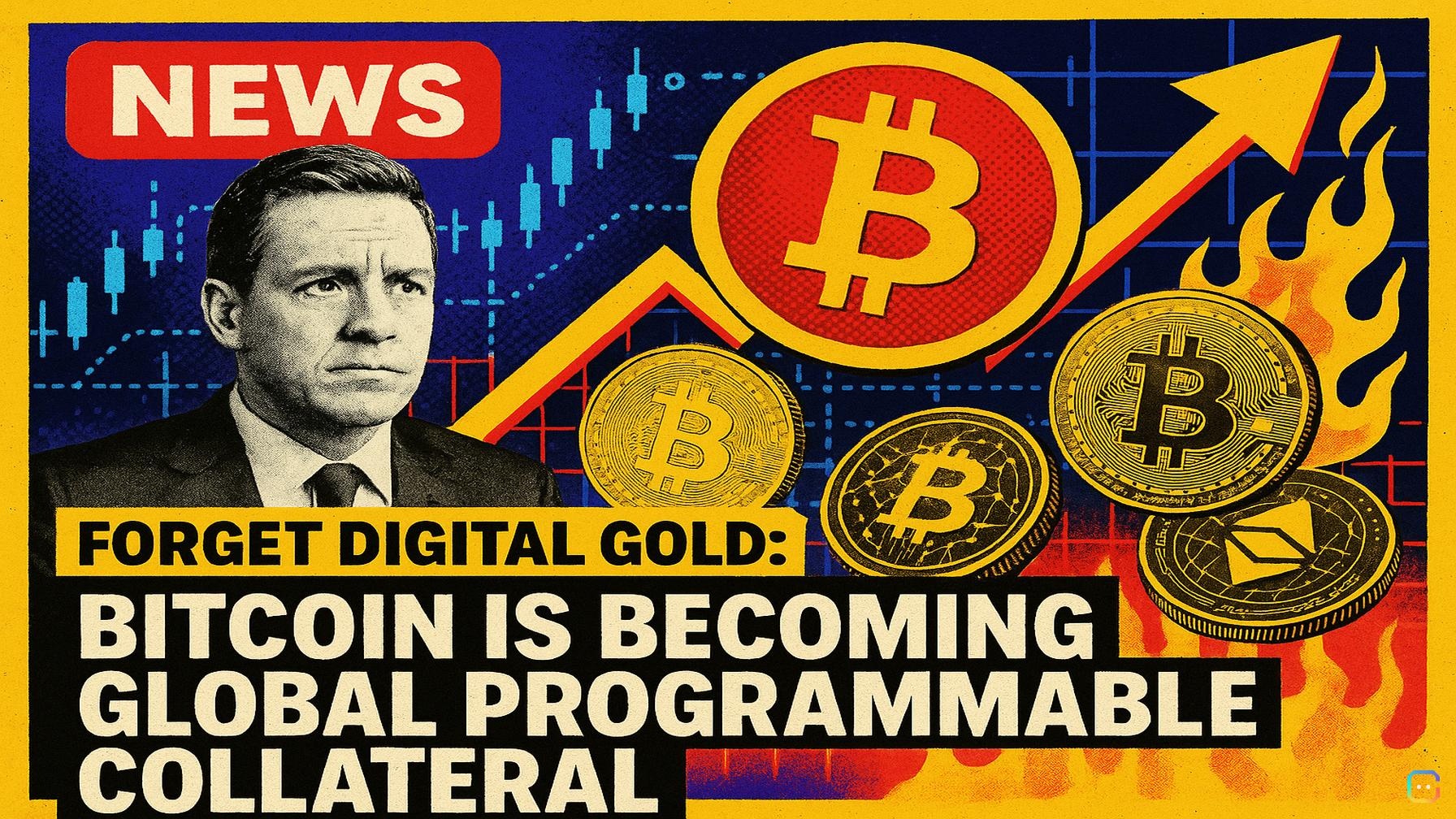
The moon-mining jokes and other fanciful explanations for bitcoin’s future highlight a deeper shift: bitcoin is no longer primarily being debated as “digital gold” or an inflation hedge. Instead, it’s quietly becoming a core piece of global financial plumbing — a tradable, programmable form of collateral — and that change helps explain much of its recent price behavior.
Why the narrative matters
- Outlandish takes are proliferating (one popular X account even suggested bitcoin will displace gold once we build moon data centers and mine asteroids). That kind of hype obscures the real development underway: legacy finance is integrating bitcoin into lending, margining, and structured products.
- Big names are already moving: JPMorgan has begun allowing clients to use bitcoin-linked assets (and potentially bitcoin itself) as collateral for loans. Morgan Stanley, BlackRock and others are folding bitcoin exposure into lending frameworks, structured products and portfolio margin systems. Cheaper ETFs and retail solutions — like a recent offering from Charles Schwab — are bringing bitcoin deeper into mainstream balance sheets. More Wall Street adoption is coming.
What this integration changes
When an asset is used as collateral, its market dynamics shift dramatically. It isn’t just bought and held — it’s borrowed against, levered, rehypothecated and, crucially, liquidated when margins break. That creates a feedback loop familiarly seen in equities, real estate and commodities:
1. Prices fall → collateral values drop.
2. Margin calls follow → forced selling.
3. Forced selling drives prices lower → more margin calls.
Bitcoin is increasingly behaving like that collateralized asset. Instead of reliably hedging risk, it often amplifies liquidity stress — falling early and sharply when financial conditions tighten. In multiple recent episodes, bitcoin has led broader markets lower by days or weeks, acting less like protection and more like a forward indicator of systemic stress.
Why past narratives don’t fit
- Inflation hedge: Despite high inflation since 2021, bitcoin has failed to deliver consistent real returns.
- Digital gold/geopolitical safe haven: Gold has outperformed bitcoin during recent macro shocks; bitcoin continues to show large, equity-like drawdowns.
- Tracking money supply or equities: Relationships are unstable. Bitcoin’s correlation with global M2 or with traditional assets swings wildly — at times strongly positive, at times strongly negative. Recent data showed correlations with gold dipping as low as -0.9 in certain regimes, while correlations with equities have ranged from near zero to as high as 0.8 during institution-driven risk-on periods.
A clearer, less romantic label
The more durable, evidence-based narrative is that bitcoin is the world’s first globally traded, neutral, programmable collateral asset: high-duration, zero-cash-flow, and acutely sensitive to liquidity cycles. That makes it a leveraged barometer of global risk appetite — capable of explosive gains when liquidity expands, but prone to sharp, early declines when liquidity tightens.
Why that matters for markets and investors
- Volatility and reflexivity are likely to persist as bitcoin becomes more embedded in leveraged financial structures.
- Institutional adoption may increase liquidity in normal times, but it also creates channels for rapid deleveraging in stress scenarios.
- Understanding bitcoin as collateral — not as a pure store of value — is essential for realistic risk management and for anticipating how it will behave in future market cycles.
Bottom line
Asteroid-mining fantasies are fun, but the more consequential development for bitcoin’s future is less glamorous and more structural. As it becomes a form of programmable collateral inside traditional finance, bitcoin’s role is transforming — and so are the risks and behaviors investors need to understand.
Read more AI-generated news on: undefined/news