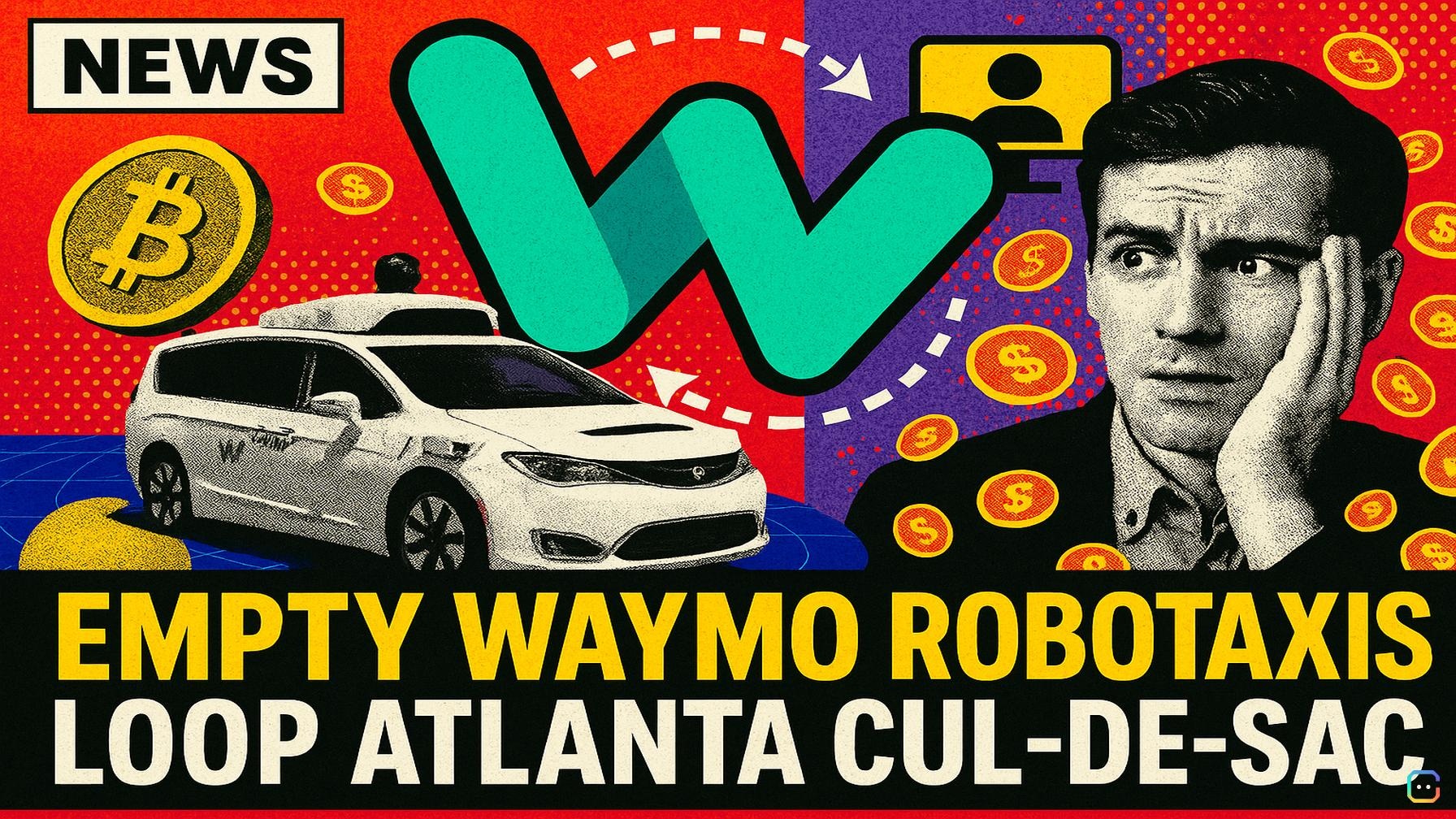
A neighborhood in northwest Atlanta is waking up to a strange new morning ritual: empty Waymo robotaxis slowly looping a dead-end street before sunrise.
WSBTV reported that residents on Battleview Drive have watched fleets of driverless cars circle their cul-de-sac in recent weeks, often between about 6 a.m. and 7 a.m. One neighbor estimated roughly 50 Waymo vehicles passed through in a single hour. “On a dead-end street, Waymo after Waymo after Waymo drive on, usually early in the morning,” a resident told WSBTV. Locals say the pattern began around two months ago and has intensified recently — and the vehicles appear to be unoccupied, not picking up passengers.
One frustrated homeowner tried to deter the cars by planting a children’s street sign near the turnaround; the stunt backfired when several Waymos got confused trying to navigate around it. “We had, at one point, eight Waymos that were stuck trying to figure out how to turn around,” another resident said.
Waymo told Decrypt that it uses a third-party partner to manage fleet positioning in Atlanta and that it has already engaged the partner to stop the unusual routing. “At Waymo, we are committed to being good neighbors,” the company said. “We take community feedback seriously and have already worked with our fleet partner to address this routing behavior.”
The Atlanta episode echoes earlier community complaints in 2024 when San Francisco residents reported Waymo cars clustering near parking lots and honking through the night. Those incidents — and the Atlanta loops — land amid growing scrutiny of autonomous-vehicle operators over how their systems behave in public spaces and how much human intervention occurs behind the scenes. Lawmakers have pressed Waymo about its use of remote human assistance operators, including staff located overseas. Waymo maintains its cars make driving decisions autonomously and that remote operators provide guidance rather than direct control.
“Users of autonomous vehicle services are currently in the dark about their safety and privacy when it comes to [Remote Assistance Operators],” Rep. Buddy Carter (R-GA) told Decrypt earlier this year, adding that past crashes make transparency urgent.
For cities and communities, the Waymo sightings raise familiar questions: who monitors autonomous fleets, how are routing decisions made, and how quickly will operators fix disruptive or unsafe behavior? As AV deployments scale, those operational and governance issues will matter as much to neighbors as they do to regulators and tech watchers — including readers used to debating transparency and accountability in decentralized systems.
Read more AI-generated news on: undefined/news