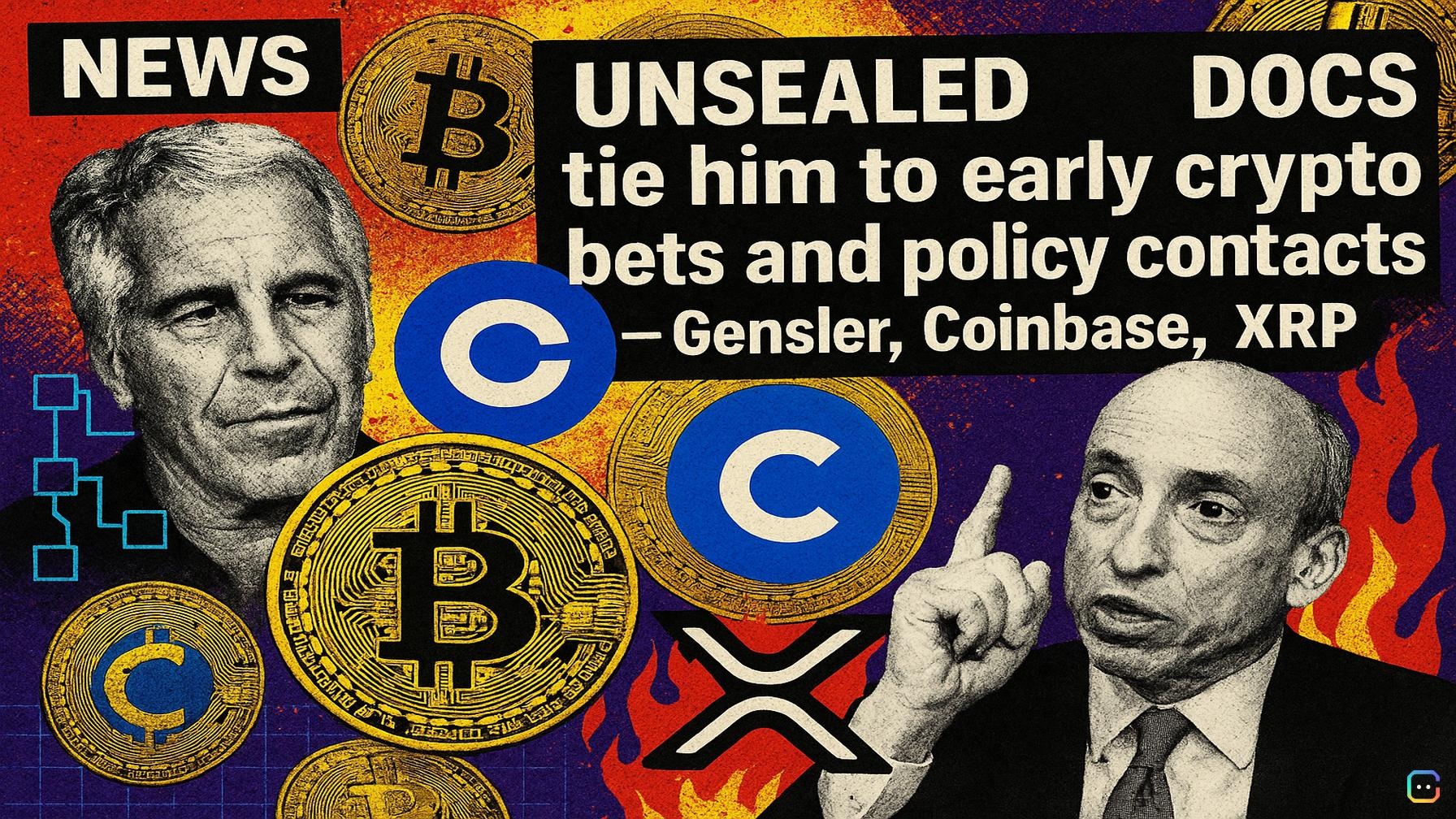
Headline: Newly released Epstein documents link him to early crypto bets and policy contacts — including references to Gensler, Coinbase, XRP, XLM and Circle
A batch of documents unsealed in the Jeffrey Epstein case has prompted fresh scrutiny of the financier’s ties to the nascent crypto world. Reports this week say the files contain email threads and notes from the 2010s that tie Epstein to early crypto investments and to conversations with people who were active in academic and policy circles around digital currency.
What the documents reportedly show
- Emails dated around 2018 reference discussions about cryptocurrency policy and name Gary Gensler — who later served as Chair of the U.S. Securities and Exchange Commission — among the individuals mentioned. One thread reportedly indicates Epstein discussed arranging a meeting with Gensler on crypto topics.
- An exchange reportedly shows Epstein telling former Treasury Secretary Lawrence Summers that Gensler had arrived early for crypto-related discussions; Summers replied that he knew Gensler and “considered him intelligent.”
- The records suggest Epstein invested in early crypto ventures, reportedly including about $3 million in Coinbase in 2014. Other messages reportedly mention XRP (Ripple) and XLM (Stellar), which has spurred speculation about additional investments, though those references don’t confirm direct stakes.
- Some reports claim Epstein provided funding tied to central bank digital currency (CBDC) pilot work routed through MIT and certain Federal Reserve Banks; Gensler was teaching at MIT in that period and had ties to academic policy circles.
- The files also allegedly link Epstein to early stablecoin-related interest, including connections to Circle through associates of Brock Pierce, who reportedly sought Epstein’s help making introductions to policy figures such as Summers.
Caveats and context
- To date, outlets reporting on the documents emphasize that nothing in the released materials has established a direct link between Epstein and any particular cryptocurrency policy decision or project. The evidence is primarily correspondence and investment records that suggest contact and influence rather than concrete operational involvement.
- The timing of the contacts — in the pre-mainstream phase of crypto’s growth — is notable because early capital and access to policymakers can shape industry trajectories. Analysts reviewing the materials describe Epstein as maintaining private crypto investments while cultivating relationships with academics and policy influencers.
Why it matters for crypto readers
- The reporting illustrates how early institutional and private funding streams intersected with the policy and academic ecosystems that later helped shape U.S. crypto regulation and research into CBDCs and stablecoins.
- It renews questions about transparency, influence and the provenance of early capital in projects that are now central to today’s digital-asset landscape.
Next steps
- Journalists and researchers are continuing to parse the newly released files for further detail. Coverage is likely to follow if documents directly tie investments or funding to specific programs, policy decisions or industry actors.
If you’d like, I can draft a shorter alert for publication or a longer investigative-style piece exploring what this could mean for current regulatory debates.
Read more AI-generated news on: undefined/news