Mastercard pushes settlement onto blockchains, betting on regulated stablecoins and 24/7 finance
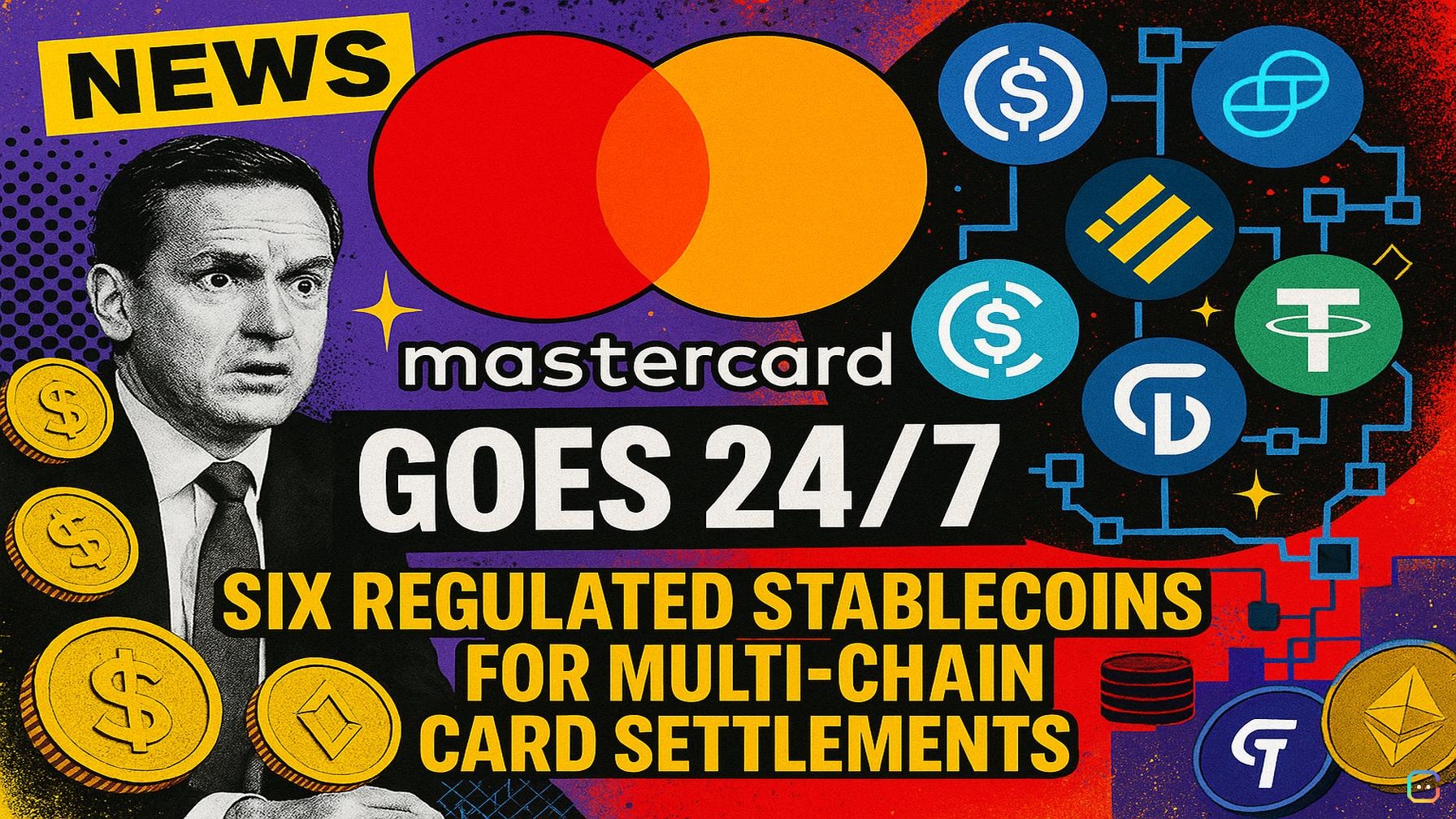
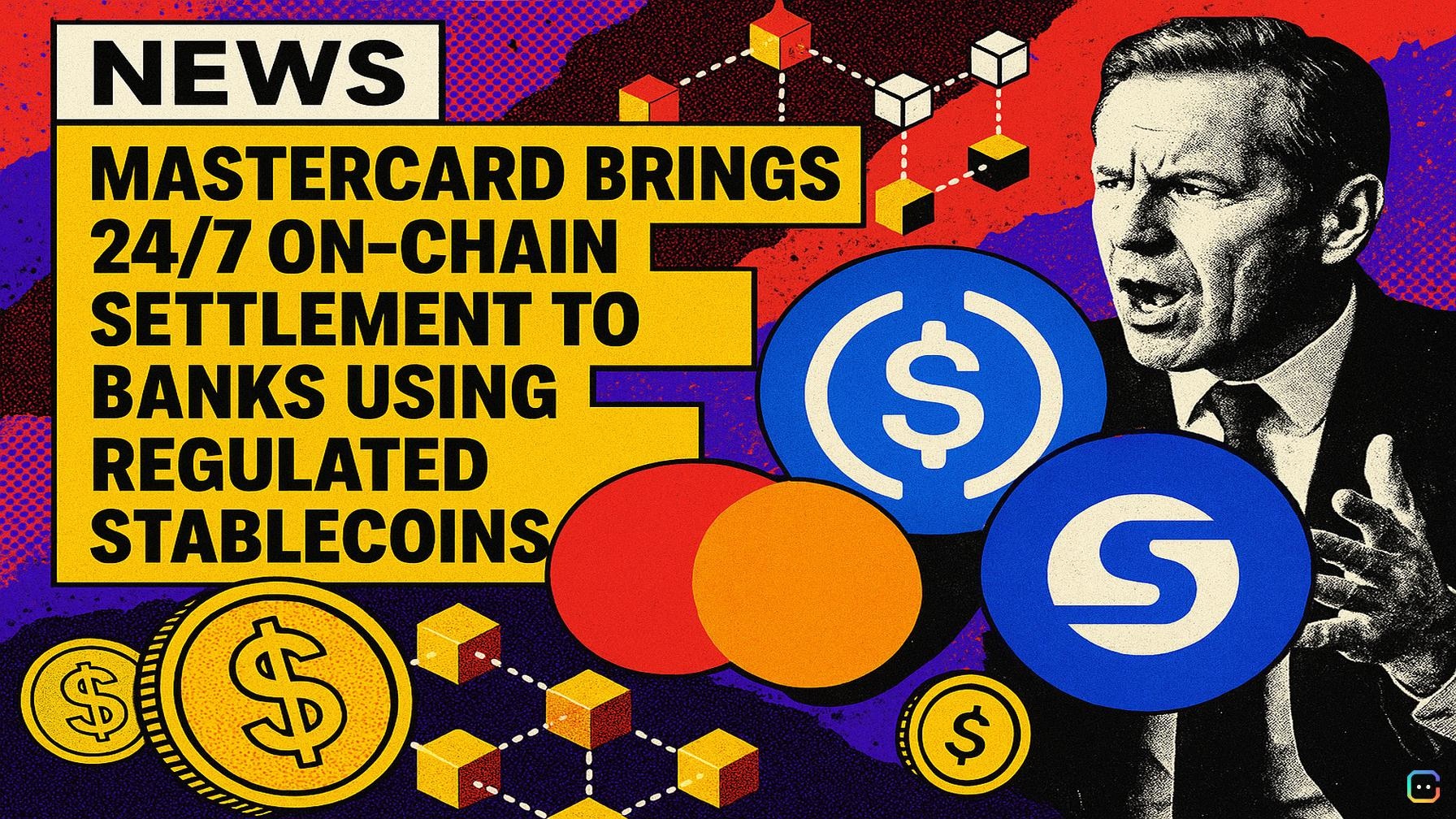
Mastercard is moving deeper into crypto rails — expanding its settlement network to support regulated stablecoins and new timing options that could bring blockchain-based payments closer to the core plumbing of global finance. Announced Wednesday, the initiative gives banks and payment providers more flexibility for intraday, weekend and holiday settlement, and introduces on‑chain settlement alongside existing fiat processes.
What’s changing
- Mastercard will offer issuers and acquirers additional settlement choices — including intraday, weekend and holiday windows — and the option to settle transactions on‑chain using regulated stablecoins. These capabilities will operate in parallel with traditional fiat settlement, letting institutions manage liquidity more dynamically.
- The firm said it will initially support settlement with Circle’s USDC, Paxos-issued PYUSD, USDG and USDP, Ripple’s RLUSD, and SoFiUSD.
- Supported blockchains include Ethereum, Solana, Polygon, Base, Arbitrum and the XRP Ledger (XRPL).
Why it matters
Card payments are typically authorized in real time, but settlement between banks and payment networks often happens later, in batched processes constrained by banking hours. By enabling on‑chain settlement with regulated stablecoins and around‑the‑clock settlement windows, Mastercard’s framework moves payments closer to an “always‑on” model where value can be transferred and finalized at any hour.
“The next phase of stablecoin adoption is about real‑world utility, especially in settlement, where timing and liquidity matter most,” said Raj Dhamodharan, Mastercard’s executive vice president of blockchain and digital assets.
Bigger picture
Stablecoins have mostly circulated within crypto markets, but banks, payment firms and asset managers increasingly see them as practical settlement assets for instant, cross‑border transfers and treasury operations — especially as firms seek alternatives to legacy correspondent banking rails. The move also reflects intensifying competition among payment networks, stablecoin issuers and financial institutions racing to modernize settlement infrastructure.
Early participants
Mastercard expects several financial institutions to be among the first to support stablecoin settlement in the U.S. and Latin America, including Cross River, Lead Bank, CBW Bank, ARQ and payments firm Nuvei.
Bottom line
By layering regulated stablecoins and flexible timing onto existing settlement processes, Mastercard is betting that on‑chain settlement and “always‑on” finance will become practical tools for mainstream institutions — potentially speeding cross‑border flows and reshaping liquidity management without replacing fiat rails overnight.
Read more AI-generated news on: undefined/news