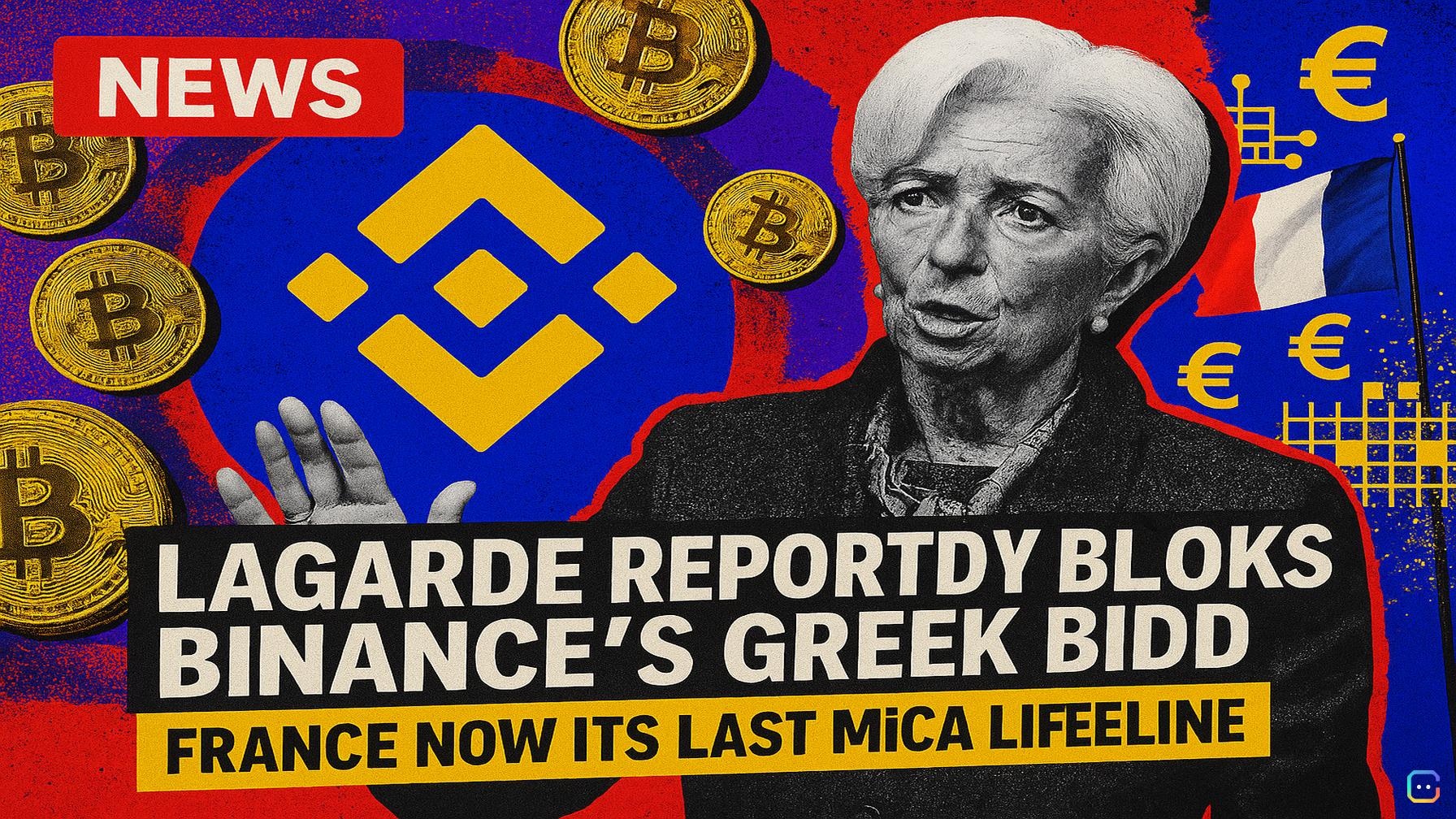
Binance is scrambling to secure an EU-wide lifeline after a reported setback in Greece left France as its last realistic path to authorization under the EU’s new Markets in Crypto-Assets (MiCA) regime.
According to a Wednesday report in The Big Whale, sources say European Central Bank President Christine Lagarde intervened at a political level to block Binance’s Greek application — even after the exchange had cleared most technical regulatory checks. The reported objections centered on stablecoin risks and concerns about Binance’s influence in Europe’s crypto ecosystem.
Why it matters
- MiCA’s transition period ends June 30. To keep serving EU customers via MiCA’s passporting system, crypto firms must be authorized by a single member-state regulator by that deadline. Approval in one country allows services across the entire bloc.
- If Greece does not approve Binance’s filing, the passport route through Greece would be closed and, per the report, France would be the only jurisdiction viewed as able to act in time.
- Binance is said to be in talks with France’s markets regulator, the AMF, but no formal application has yet been filed.
Binance’s response
The exchange told reporters it has taken a “prudent” approach during the MiCA transition, working with regulators for 18 months and seeking to minimize user disruption. Binance also said its understanding was that the Greek regulator had completed its review and found the application compliant with MiCA, and that the filing had been examined at the European Securities and Markets Authority (ESMA) level. The firm warned that authorization delays could damage European crypto liquidity, lessen competition and push activity outside the EU.
Regulatory backdrop
This episode adds to a string of licensing challenges for Binance globally. Earlier this year the Bangko Sentral ng Pilipinas said neither Binance nor its local partner had the virtual asset service provider license required for certain Philippine crypto services.
Still, Binance has publicly backed MiCA as a positive for the industry, arguing the framework brings legal clarity, better consumer protections and a more structured market for crypto firms operating across Europe.
What comes next
With the June 30 deadline looming, attention will be on whether Binance can convert discussions with the AMF into a formal application and swift approval — or whether the exchange will face disruptions to its EU operations if no member state grants authorization in time. Binance says it will provide further updates before the deadline.
Read more AI-generated news on: undefined/news