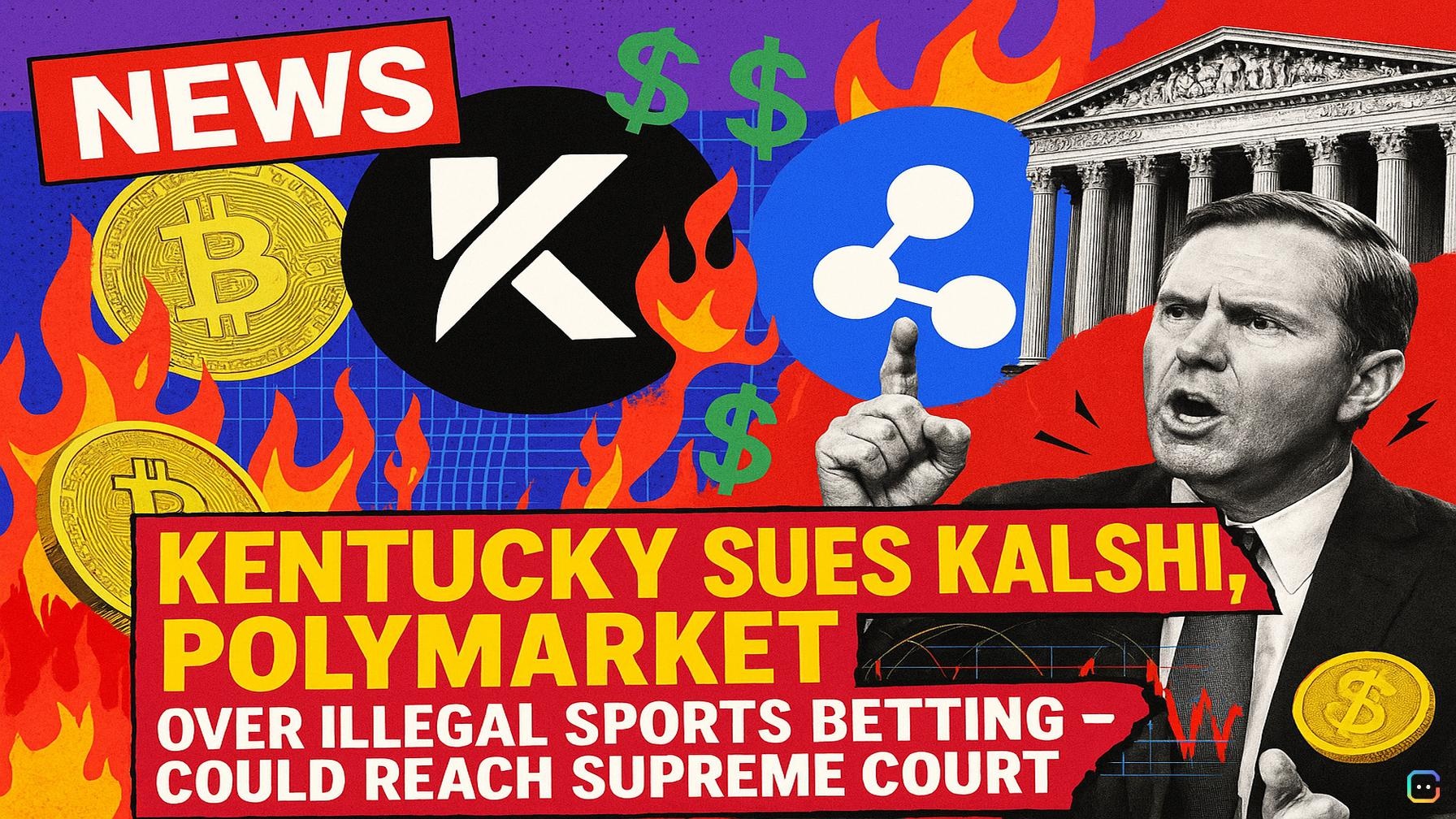
Kentucky has become the latest state to target prediction-market platforms, filing suit this week against industry leaders Kalshi and Polymarket and accusing them of running illegal sports betting operations.
“Kalshi and Polymarket are operating illegal sportsbooks in Kentucky and breaking our laws,” Attorney General Russell Coleman said in a statement. “These multi-billion dollar corporations and their legal fictions don’t pass the sniff test.” The suit contends the platforms have skirted state gambling rules by treating wagers that look and act like sports bets as something else.
That “something else” is the central legal flashpoint: Kalshi and Polymarket maintain that many of their contracts should be classified as swaps, which fall under the Commodity Futures Trading Commission’s (CFTC) federal jurisdiction — not state gambling regulators. The federal position, backed by the Trump administration, has been aggressive in defending that view, with the CFTC and Department of Justice suing several states that tried to regulate the platforms and warning they will take action against others.
Kentucky’s complaint argues those federal protections don’t free the companies from state obligations tied to gambling operations. By avoiding registration as gambling platforms, the state says, Kalshi and Polymarket have sidestepped requirements such as funding or offering resources to address problem gambling. The filing comes alongside a separate suit against VGW, an online casino operator accused of running illegal sweepstakes in Kentucky.
Legal outcomes so far have been mixed. Within the Sixth Circuit — which covers Kentucky, Ohio, Tennessee, and Michigan — two district court judges have preliminarily sided with state regulators, while one has ruled for the prediction markets. With split decisions across lower courts and mounting suits from both states and the federal government, the dispute appears headed for a higher-stakes venue: the U.S. Supreme Court.
For crypto and decentralized finance observers, the litigation has major implications. How courts ultimately classify prediction-market contracts will shape whether these platforms operate under federal derivatives law, state gambling statutes, or a hybrid regulatory regime — a ruling that could define the industry’s legal boundaries for years to come.
Read more AI-generated news on: undefined/news