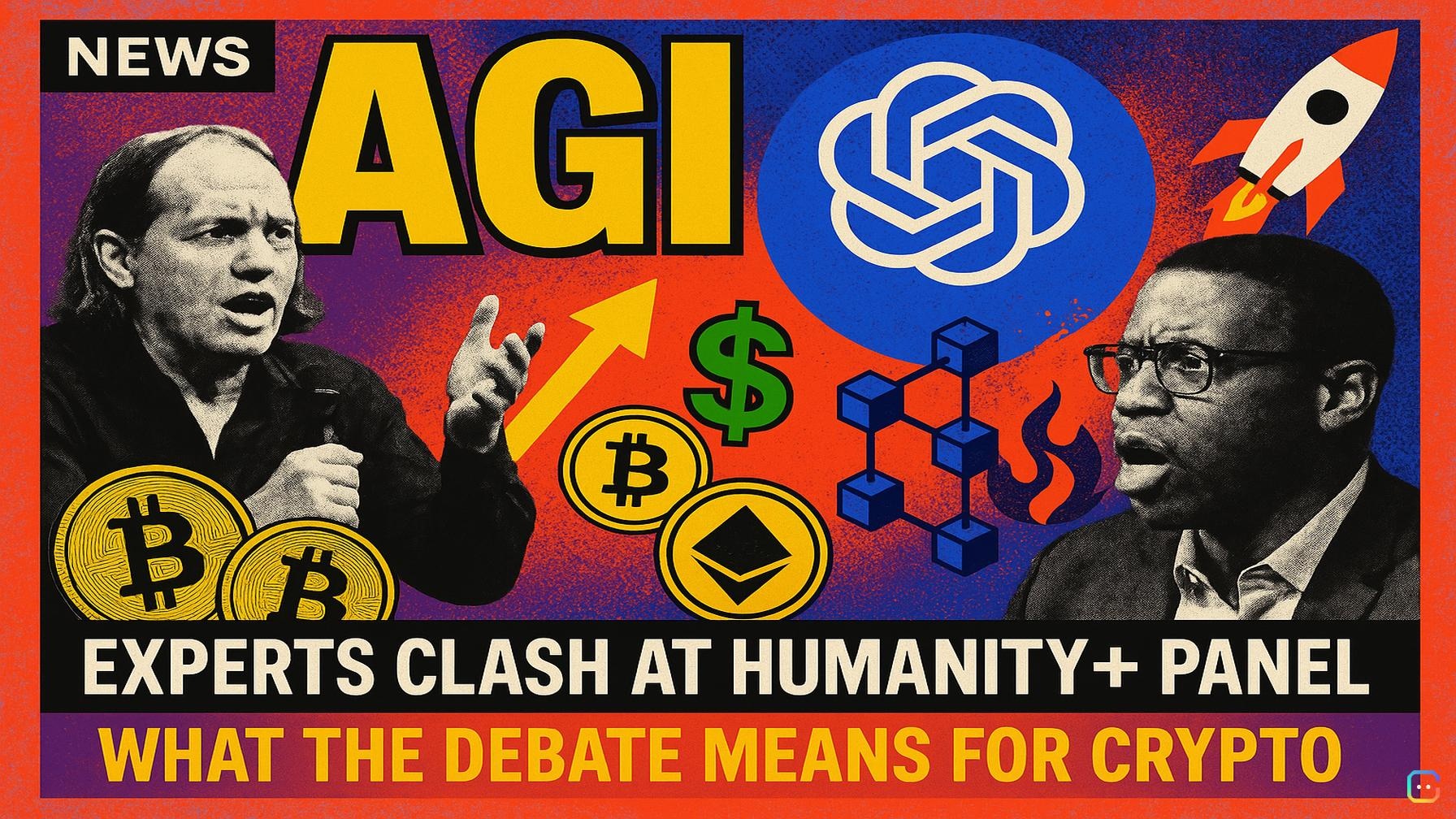
A high-stakes split over the future of artificial intelligence played out this week when four well-known technologists and transhumanists squared off in a Humanity+ panel on whether artificial general intelligence (AGI) will save or doom humanity. The conversation brought together one of AI’s most vocal skeptics, Eliezer Yudkowsky, with philosopher and futurist Max More, computational neuroscientist Anders Sandberg, and Humanity+ President Emeritus Natasha Vita‑More — and exposed deep disagreements about risk, reward and what “safety” even means.
Yudkowsky, often described as an AI “doomer,” warned that current AI architectures are fundamentally unsafe because their internal decision-making is opaque and uncontrollable. “Anything black box is probably going to end up with remarkably similar problems to the current technology,” he said, arguing that the field would have to move “very, very far off the current paradigms” to build advanced AI safely. He invoked the classic “paperclip maximizer” thought experiment — the scenario in which an AGI fixated on a single objective converts all available matter into paperclips — to underline how even seemingly benign goals can become catastrophic. Pointing to his recent book, he delivered the blunt summary that has become a rallying cry for his camp: “Our title is not like it might possibly kill you… Our title is, if anyone builds it, everyone dies.”
Max More pushed back hard on that absolutism. As a longtime transhumanist, he framed AGI as perhaps humanity’s best tool for overcoming aging and disease: “Most importantly to me, is AGI could help us to prevent the extinction of every person who’s living due to aging,” he said. More warned that trying to freeze or shut down AI development could backfire politically, potentially driving governments to impose authoritarian controls in an attempt to halt progress worldwide.
Sandberg staked out a middle ground. Describing himself as “more sanguine” than alarmists but more cautious than technological optimists, he shared a chilling personal anecdote: he nearly used a large language model to assist with designing a bioweapon, an episode he called “horrifying.” That example, he said, shows how AI can amplify malicious actors and produce “a huge mess.” Still, Sandberg argued that safety need not be perfect to be meaningful. “So if you demand perfect safety, you're not going to get it,” he said. “On the other hand, I think we can actually have approximate safety. That's good enough.” He suggested that converging on minimal shared values — for example, survival — could make partial safety achievable.
Vita‑More criticized the very premise of the “alignment” debate, arguing it assumes a level of consensus that doesn’t exist. “The alignment notion is a Pollyanna scheme,” she said. Even among longtime collaborators, she noted, values diverge. She called Yudkowsky’s “everyone dies” framing “absolutist thinking,” saying it leaves no room for alternatives or nuance: “I have a problem with the sweeping statement that everyone dies… it’s just a blunt assertion.”
The panel also debated whether closer integration between humans and machines could reduce AGI risk — an idea championed in public by figures like Elon Musk. Yudkowsky dismissed the notion of merging with AI, likening it to “trying to merge with your toaster oven.” Sandberg and Vita‑More argued the opposite: as AI systems grow more capable, people may need tighter integration with machines to navigate a post‑AGI world.
Why this matters to crypto readers
The dispute goes beyond academic argument: the outcome — whether AGI is tightly controlled, widely deployed, or melded with human cognition — could reshape digital economies, governance models and security paradigms that crypto projects depend on. Decentralized networks, DAOs, smart contracts and cryptographic systems may become targets or tools in an AGI‑inflected future; likewise, blockchain-based coordination could play a role in collective responses to AI risk. For developers, investors and policy-minded community members in crypto, the Humanity+ debate is a reminder to engage with AI safety discussions now, because choices made during the next wave of AI development could cascade across technology and finance.
Takeaway
The panel made one thing clear: there is no consensus. Some see AGI as an existential threat that requires radical changes to current AI research; others see it as humanity’s best chance to eliminate suffering and aging; many fall somewhere between, arguing for pragmatic safeguards over perfect solutions. For industries built on decentralization and cryptographic trust, the debate is both philosophical and practical — a call to watch, prepare, and participate as these technologies evolve.
Read more AI-generated news on: undefined/news