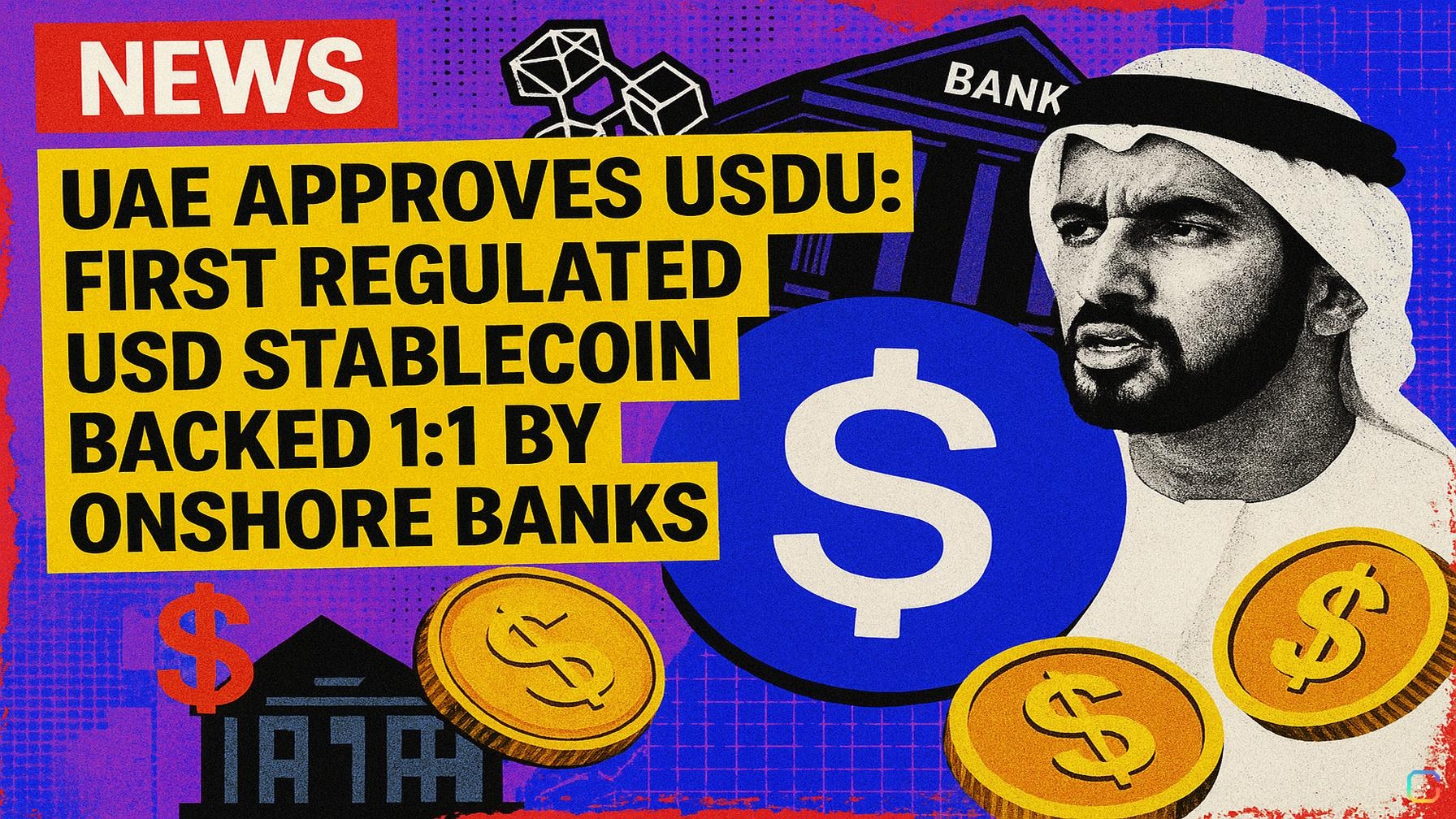
The Central Bank of the UAE has greenlit the country’s first USD-backed stablecoin, marking a notable regulatory milestone for the region’s digital-asset market.
Under the Central Bank of the UAE’s Payment Token Services Regulation (PTSR), the USDU token has been approved for issuance and operation. Universal Digital — regulated by the Financial Services Regulatory Authority (FSRA) of Abu Dhabi Global Market (ADGM) — will manage USDU. Reserves backing the token are held 1:1 in safeguarded onshore accounts at Universal’s banking partners: Emirates NBD, Mashreq and Mbank.
The approval puts a fully backed USD stablecoin live and operational under a central-bank payments framework — a development the press release says positions the UAE ahead of many jurisdictions, including the U.S., EU and parts of Asia.
“USDU sets a new benchmark for regulated digital value,” said Juha Viitala, senior executive officer of Universal. “Being the first Foreign Payment Token registered by the UAE Central Bank — and supported by leading UAE banks — gives institutions the clarity and confidence they have been waiting for. It lays the groundwork for a more transparent and efficient digital-asset market in the UAE and beyond.”
Universal also named digital-asset infrastructure firm Aquanow as a global distribution partner to support institutional access to USDU outside the UAE, where permitted. Mashreq’s Joel Van Dusen, Group Head of Corporate and Investment Banking, added: “We see growing institutional interest in regulated digital-value instruments, and Universal’s introduction of USDU is a timely step that supports this market’s maturation.”
What this means: regulated, onshore reserve backing and formal central-bank oversight could increase institutional confidence and liquidity for USD-denominated digital payments and settlements in the region — and potentially influence how other jurisdictions approach stablecoin regulation.
Read more AI-generated news on: undefined/news