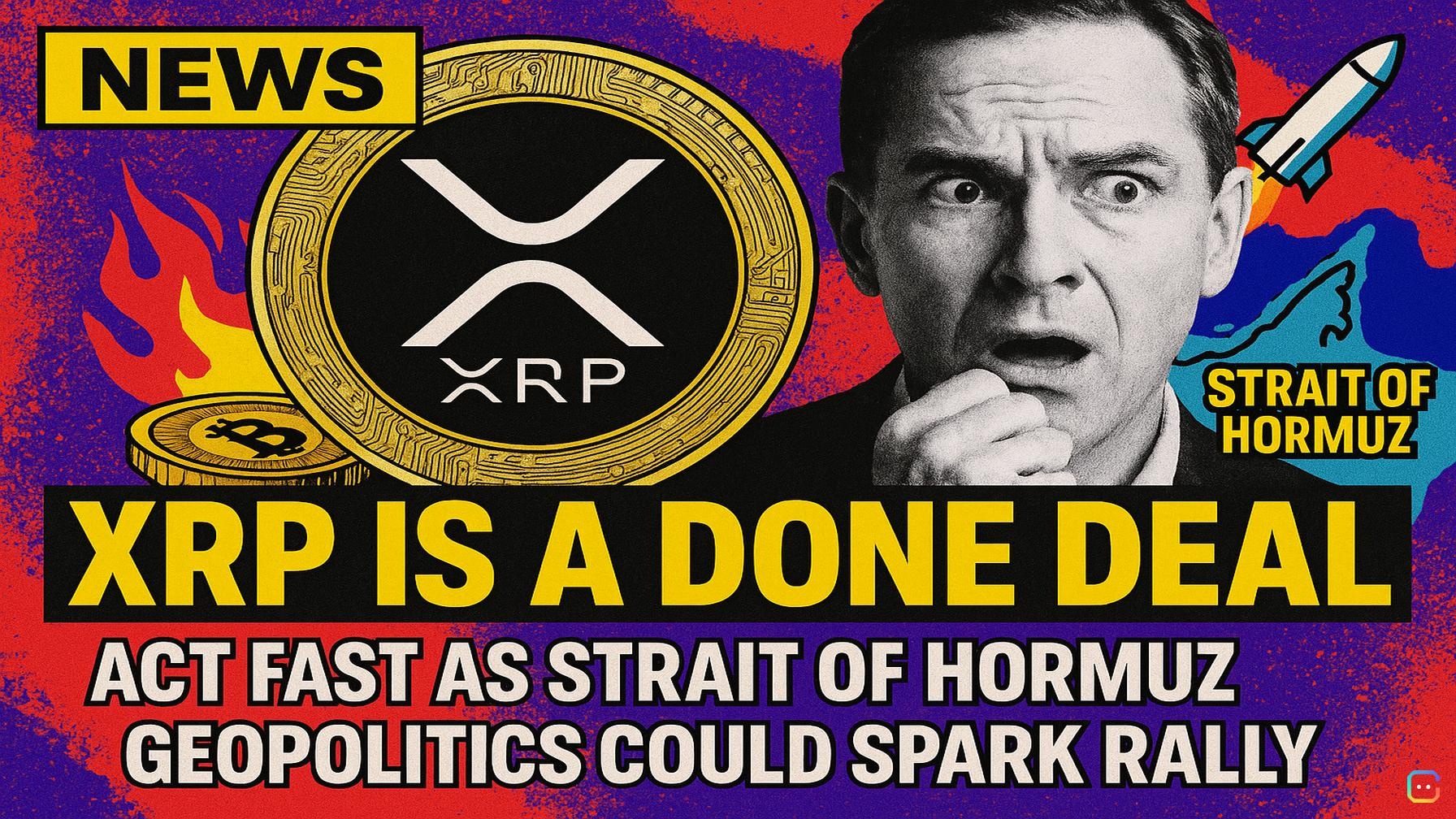
Analyst: “XRP is a done deal” — but act fast, he warns
Levi Rietveld of Crypto Crusaders is sounding the alarm: in his view, XRP’s next big move is already in motion and holders should reposition “before the window closes.” His case hinges less on tokenomics or recent partnership news and more on shifting geopolitical signals that he says are already being priced into crypto markets.
Why Rietveld thinks this is urgent
- Rietveld points to reports around the Strait of Hormuz suggesting Iran may back supervised maritime transit arrangements with Oman and other regional actors. No government has officially confirmed anything, but the ambiguity itself is, he argues, a catalyst for price re-rating rather than a risk.
- He frames the move as a classic positioning trade: crypto often runs ahead of formal announcements, and when the right headline drops, sentiment can compress sharply and quickly.
Market backdrop and data points
- XRP has lost more than 35% since January and is trading around $1.30–$1.33 — a range that has acted as both support and resistance since peace-talk optimism faded.
- Institutional adoption has kept progressing: Deutsche Bank integration, Aviva Investors (managing about £246 billion), and Société Générale launching on XRPL all arrived within a short window, yet failed to push XRP sustainably higher.
- XRP ETF cumulative inflows have reached roughly $1.25 billion, but flows alone haven’t driven price appreciation recently.
The March 4 flashpoint
Rietveld highlights March 4 as illustrative: an unverified report that Iran contacted the CIA sparked an intraday move from entrenched support up to about $1.46 in roughly four hours. He says that event shows what truly moves XRP today — geopolitical headlines — more than partnership announcements or ETF metrics.
Weekend timing and crypto’s vulnerability
Rietveld and other analysts note a pattern: major conflict developments often coincided with weekends (Feb. 28, March 2, March 22). Because crypto trades 24/7, initial shocks are absorbed before traditional markets open, magnifying weekend headline-driven volatility and explaining part of XRP’s rapid drawdowns relative to fundamentals.
Other structural tailwinds — and the risk
- Rietveld also flags potential structural boosts, such as proposed 401(k) crypto access and a broader institutional shift into crypto retirement products. He called that “a huge green signal for XRP and for the entire crypto industry.”
- He referenced comments from BlackRock’s fixed-income chief Rick Rieder — who expects rate cuts despite inflationary pressures — as another macro datapoint suggesting de-escalation and possible liquidity tailwinds that could change near-term price dynamics.
Bottom line: positioning trade with binary risk
Rietveld’s “done deal” thesis is ultimately a positioning argument: get in before a headline flips market sentiment and the price gap between XRP’s current level and its institutional-adoption case closes. But he and other analysts stress the binary nature of the setup — if diplomatic talks stall, XRP could face another leg down. If concrete progress appears, the gap could close far faster than fundamentals alone would suggest.
What to watch
- Geopolitical headlines around the Strait of Hormuz and regional diplomatic developments
- Weekend market moves and how quickly headlines are priced in
- Continued ETF inflows and any retail/institutional retirement-product rollouts
- Any official confirmations from governments or major institutions
Rietveld’s call is bold and time-sensitive: it reframes the story for XRP away from product partnerships and ETF flows and toward macro-geopolitical positioning. Investors should weigh the potential upside of rapid sentiment reversal against the clearly present downside if talks falter.
Read more AI-generated news on: undefined/news