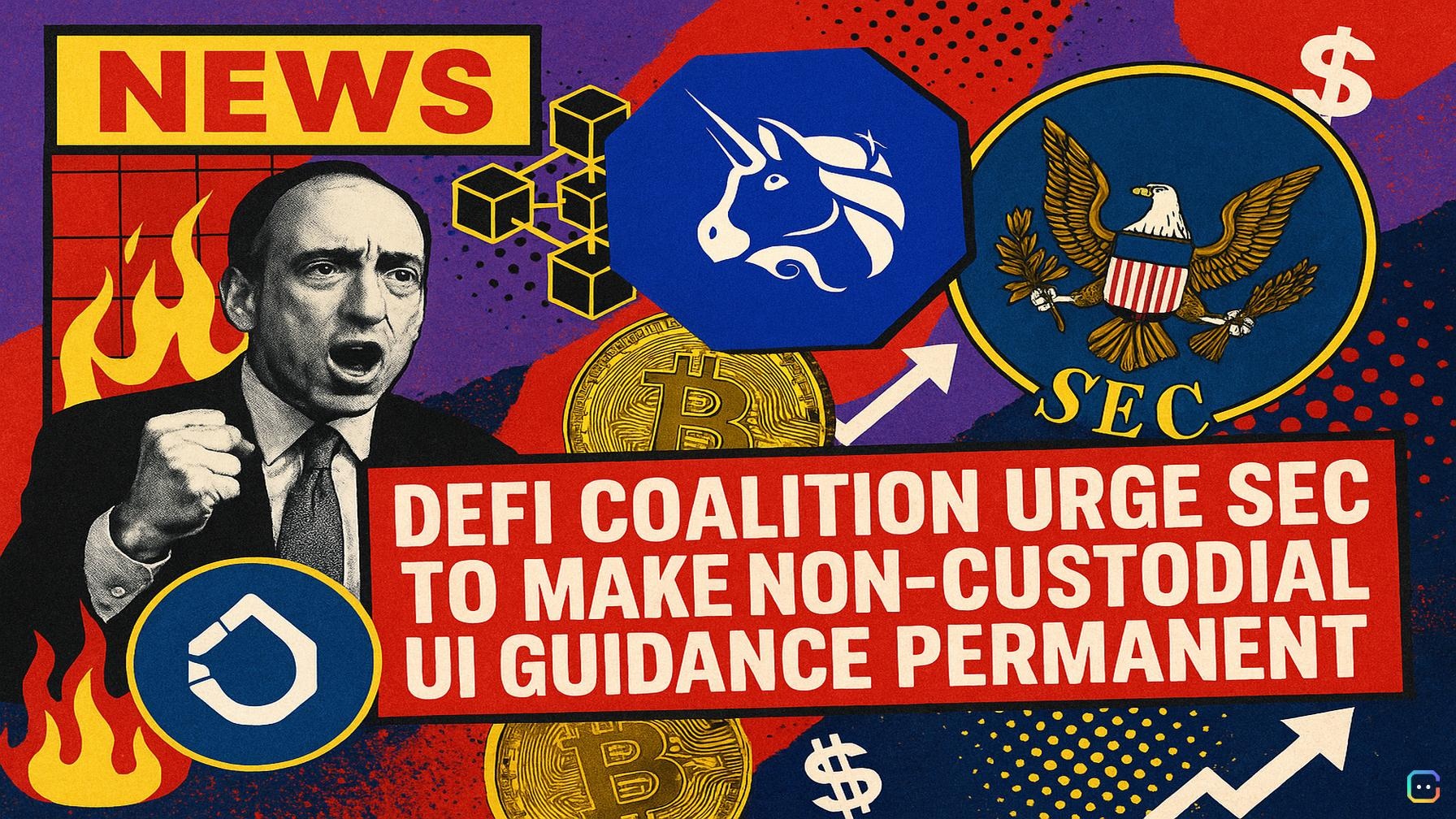
A major coalition of DeFi builders and investors is urging the U.S. Securities and Exchange Commission to turn recent staff guidance on “non‑custodial user interfaces” into permanent rules — arguing temporary safe harbors won’t protect neutral infrastructure from being regulated away.
Who’s pushing: signatories include the DeFi Education Fund, Aave Labs, Uniswap Labs, Paradigm, Andreessen Horowitz and other industry players. In a letter filed this week, they responded to an April 13 staff statement from the SEC’s Division of Trading and Markets that outlined when crypto front ends must register as brokers.
What the SEC said: the staff concluded that a “non‑custodial user interface” — a front end that simply converts user‑initiated instructions into blockchain‑legible commands while leaving users in full control of their assets — does not require broker‑dealer registration. The guidance set up a five‑year no‑action framework for so‑called “Covered User Interface Providers” that meet 12 conditions, including strict limits on discretion, order handling and recommendations.
Notable departures from prior practice: the staff said it would not object to transaction‑based fees for these providers so long as compensation is flat, objective and agnostic to product or trading venue. At the same time, payment for order flow remains banned.
Why industry wants more: the SEC’s safe harbor is explicitly temporary and sunsets in 2031 unless the Commission acts. The DeFi coalition warns that a time‑limited staff statement is insufficient for companies making multi‑year infrastructure investments. They are asking the SEC to open a notice‑and‑comment rulemaking to codify a modern, technology‑neutral broker definition that would explicitly exclude neutral software providers, validators, RPC/API operators, oracle networks and cloud infrastructure that neither take custody nor exercise trading discretion.
The risk, the groups say, is that ad hoc guidance can be reversed by future staff or Commissions — chilling innovation and pushing critical U.S. DeFi infrastructure offshore.
Political and legal context: Congress has not yet delivered statutory clarity. The CLARITY Act, the principal federal crypto market‑structure bill, remains stalled in the Senate Banking Committee and faces a hard end‑of‑May deadline set by Senator Bernie Moreno, increasing pressure on the SEC’s rulebook as the near‑term path to regulatory certainty. Legal memos from firms including Sidley, Jones Day and Deloitte have framed the April 13 statement as a “path” for DeFi interfaces, but stressed it only addresses broker‑dealer rules — not exchange registration, anti‑money‑laundering obligations or anti‑fraud liability.
Industry reaction: in its weekly “DeFi Debrief,” the DeFi Education Fund called the staff statement “a significant first step,” but echoed the coalition’s central point: lasting certainty requires Commission‑level rulemaking, not just temporary staff guidance.
Bottom line: until Congress acts or the SEC formalizes a modern broker definition through notice‑and‑comment rulemaking, the future of U.S. DeFi infrastructure remains uncertain — hinging on how a roughly 90‑year‑old broker statute is applied to lines of code.
Read more AI-generated news on: undefined/news