Why Kevin Warsh’s potential Fed nomination rattled bitcoin markets
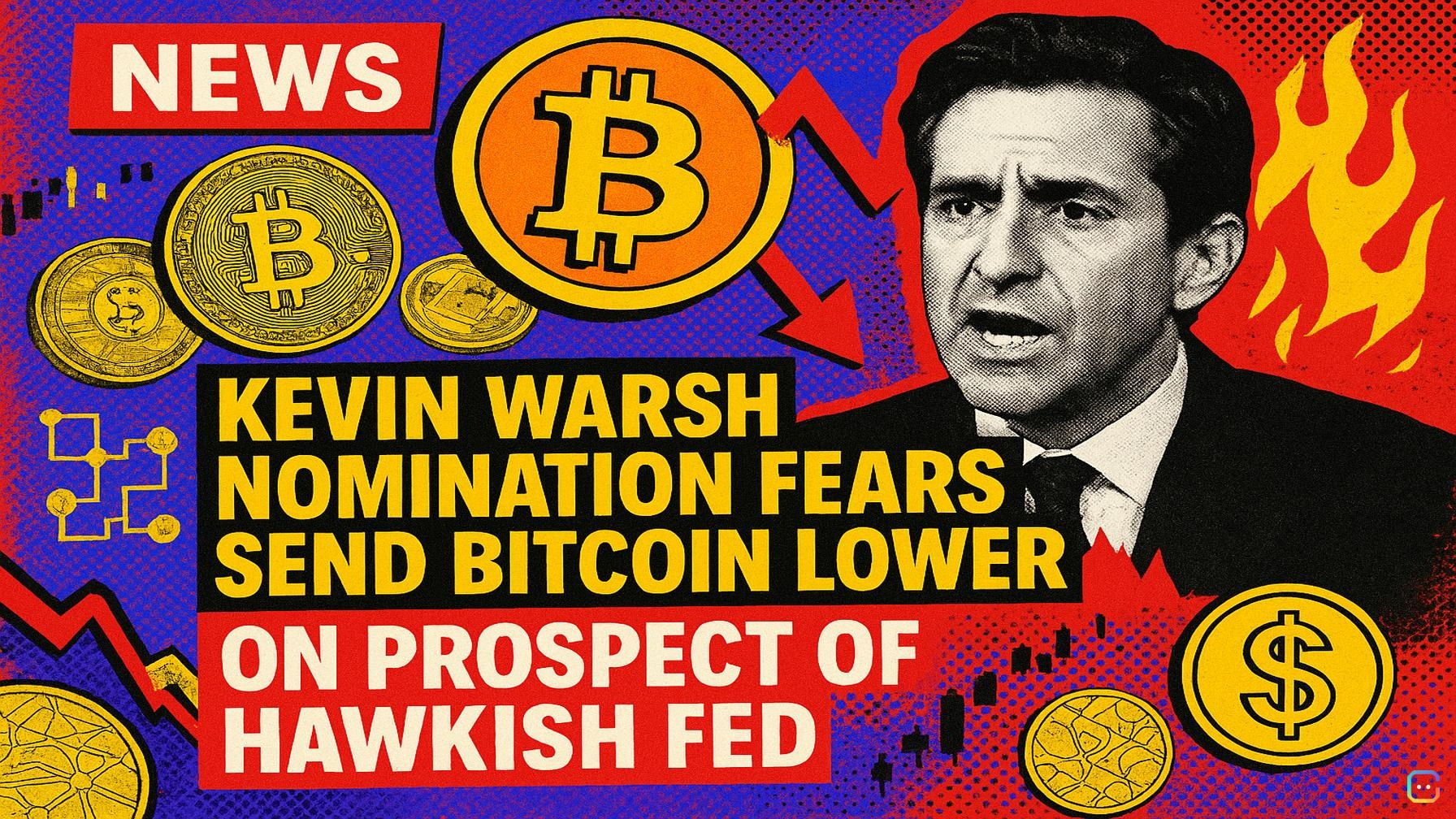
President Donald Trump said Thursday he will announce his pick to replace Jerome Powell as Federal Reserve chair when Powell’s term ends in May. Media reports say the administration is preparing to nominate Kevin Warsh, a former Fed governor (2006–2011). The mere prospect sent volatility through crypto markets: bitcoin (BTC) slid from roughly $82,463 to near $81,000 late Thursday as Warsh’s odds rose on betting sites.
Why the market sees Warsh as bearish for bitcoin
On the surface, Warsh has at times spoken positively about cryptocurrencies. But many traders and analysts view a return of his influence at the Fed as a negative for risk assets, including bitcoin. Markus Thielen, founder of 10x Research, told CoinDesk that markets “generally view a resurgence of Warsh’s influence as bearish for Bitcoin,” because his emphasis on monetary discipline, higher real rates and reduced liquidity would recast crypto as “speculative excess” that suffers when easy money is withdrawn.
A quick primer: higher real interest rates — the cost of borrowing after accounting for inflation — make riskier, non-yielding assets less attractive. When real rates rise and central banks drain liquidity, investors tend to cut exposure to assets like bitcoin.
Warsh’s hawkish record during the financial crisis
Part of the concern is Warsh’s record during the global financial crisis (GFC). Even as the economy teetered and deflation risk loomed, Warsh repeatedly warned about inflation. In September 2008, the month Lehman collapsed, he said, “I'm still not ready to relinquish my concerns on the inflation front.” Seven months later, with the Fed’s preferred inflation gauge at just 0.8% and unemployment near 9%, he said, “I continue to be more worried about upside risks to inflation than downside risks.”
Critics argue that stance—seen as excessively hawkish at a time when policy pivot toward stimulus was arguably needed—would have prolonged pain in labor markets and slowed recovery. Thielen says that perspective feeds the view Warsh’s approach would be contractionary for risk assets.
Political irony and market implications
Warsh’s potential nomination would be politically ironic. President Trump has publicly pressured the Fed for rapid rate cuts, repeatedly criticizing Powell for keeping rates elevated and urging rates as low as 1% from the current federal funds range of roughly 3.5%–3.7%. Observers say Warsh’s hawkish history doesn’t line up with Trump’s reflationary, pro-risk-asset agenda. Renaissance Macro Research warned on X that “Kevin Warsh has been a monetary policy hawk his entire career… His dovishness today stems from convenience. The President risks getting duped.” Bloomberg’s chief U.S. economist Ana Wong added that Warsh’s GFC-era FOMC quotes “scared” her.
A single chair can’t set policy alone
It’s important to remember that even a Fed chair cannot unilaterally set rates; policy is determined collectively by the Federal Open Market Committee, and the Fed Board’s votes dilute any single voice. Still, markets react quickly to the tone and likely policy direction signaled by a chair pick.
What to watch next
The nomination isn’t official yet. But insofar as Warsh’s reputation signals tighter policy and higher real rates, his candidacy could continue to weigh on bitcoin and other risk assets while supporting the dollar in the near term. Crypto traders will be watching confirmation developments, FOMC composition and any shifts in market-implied rate expectations closely.
Read more AI-generated news on: undefined/news