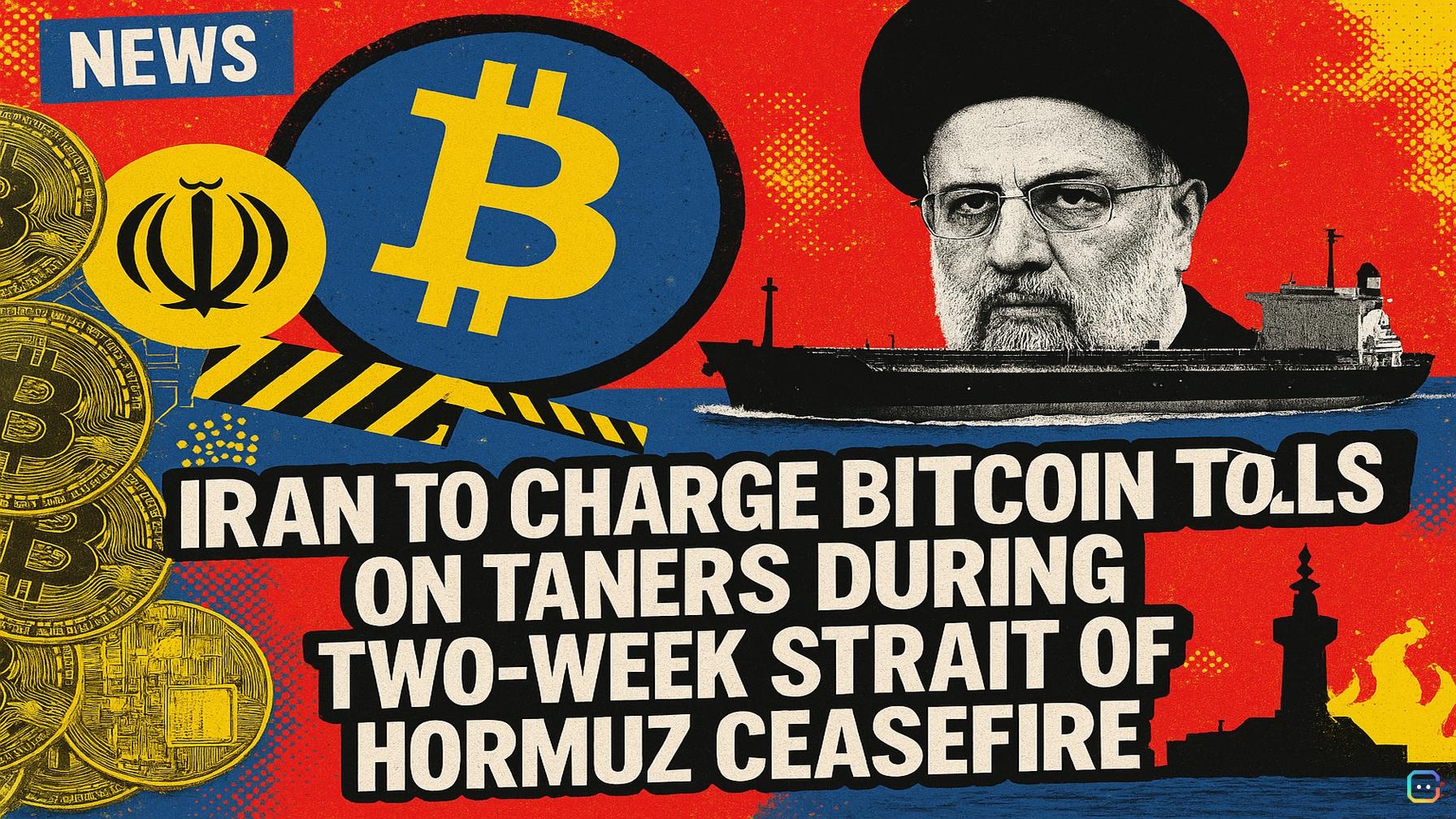
Iran says it will start charging crypto tolls — primarily in Bitcoin — for tankers transiting the Strait of Hormuz during a two‑week ceasefire, a move that immediately caught traders’ attention and sparked debate over a novel sovereign use of digital assets.
What Iran says it will do
- Hamid Hosseini, a spokesperson for Iran’s Oil, Gas and Petrochemical Products Exporters’ Union, told the Financial Times Tehran will assess each vessel requesting passage, email a fee, and demand payment in cryptocurrency.
- Hosseini said ship operators must first email cargo details; Iran will set the toll and give the vessel “only a few seconds” to complete payment in Bitcoin so the transaction can’t be traced or seized under sanctions. He framed the measure as a way to monitor movement through the strait and prevent the transfer of weapons during the pause in hostilities.
Diplomatic backdrop
- The announcement follows a post by former U.S. President Donald Trump on Truth Social saying he would suspend strikes on Iran for two weeks provided Tehran agreed to the “COMPLETE, IMMEDIATE, and SAFE OPENING of the Strait of Hormuz.” Trump said conversations with Pakistan’s leaders helped shape the decision.
- Iran’s Supreme National Security Council has published a 10‑point framework for negotiations, including a new “protocol for secure passage” developed with the armed forces — signaling Tehran wants to keep leverage over the waterway even while talks proceed. Only a handful of vessels, mainly those linked to Iran, have been given restricted-route approvals over the past fortnight.
Why crypto matters here
- Accepting Bitcoin for strategic tolls would be an unusual and highly visible example of a state-level use of a censorship‑resistant asset to collect revenues and bypass traditional dollar-based rails. Crypto analysts reacted quickly: TFTC posted on X that the move represents “the largest real‑world stablecoin use case ever recorded,” contrasting sovereign adoption with prior industry activity such as DeFi yield farming and NFTs.
- The broader point echoed by crypto proponents: when a country faces exclusion from the dollar system or sanctions, it may turn to alternative payment rails — including digital currencies — to sustain trade and revenue flows.
Market reaction
- Crypto markets responded to the news and the ceasefire unexpectedly. Bitcoin traded around $71,570 at the time of reporting, up about 4.6% over 24 hours. Ethereum, XRP and Solana posted gains of roughly 6%, 4% and 5% respectively.
What to watch next
- Implementation details will be crucial: how Iran verifies cargo and identity via email, which wallets or on‑ramps it accepts, and whether third parties are willing to facilitate or refuse payments under sanctions.
- The development raises questions about enforcement, traceability, and how exchanges and custodians might react — and it could prompt increased regulatory and compliance scrutiny if sovereign actors more widely adopt crypto for cross‑border revenue collection.
Sources: Financial Times reporting and public statements cited by Iran’s Oil, Gas and Petrochemical Products Exporters’ Union; Trump’s Truth Social post; social posts from TFTC; price data from TradingView. Featured image: OpenArt.
Read more AI-generated news on: undefined/news