Headline: Milei Bribery Allegations Rock Argentina’s Crypto Boom — $Libra Pump-and-Dump, $5m Deal and a Hit to Regulatory Momentum
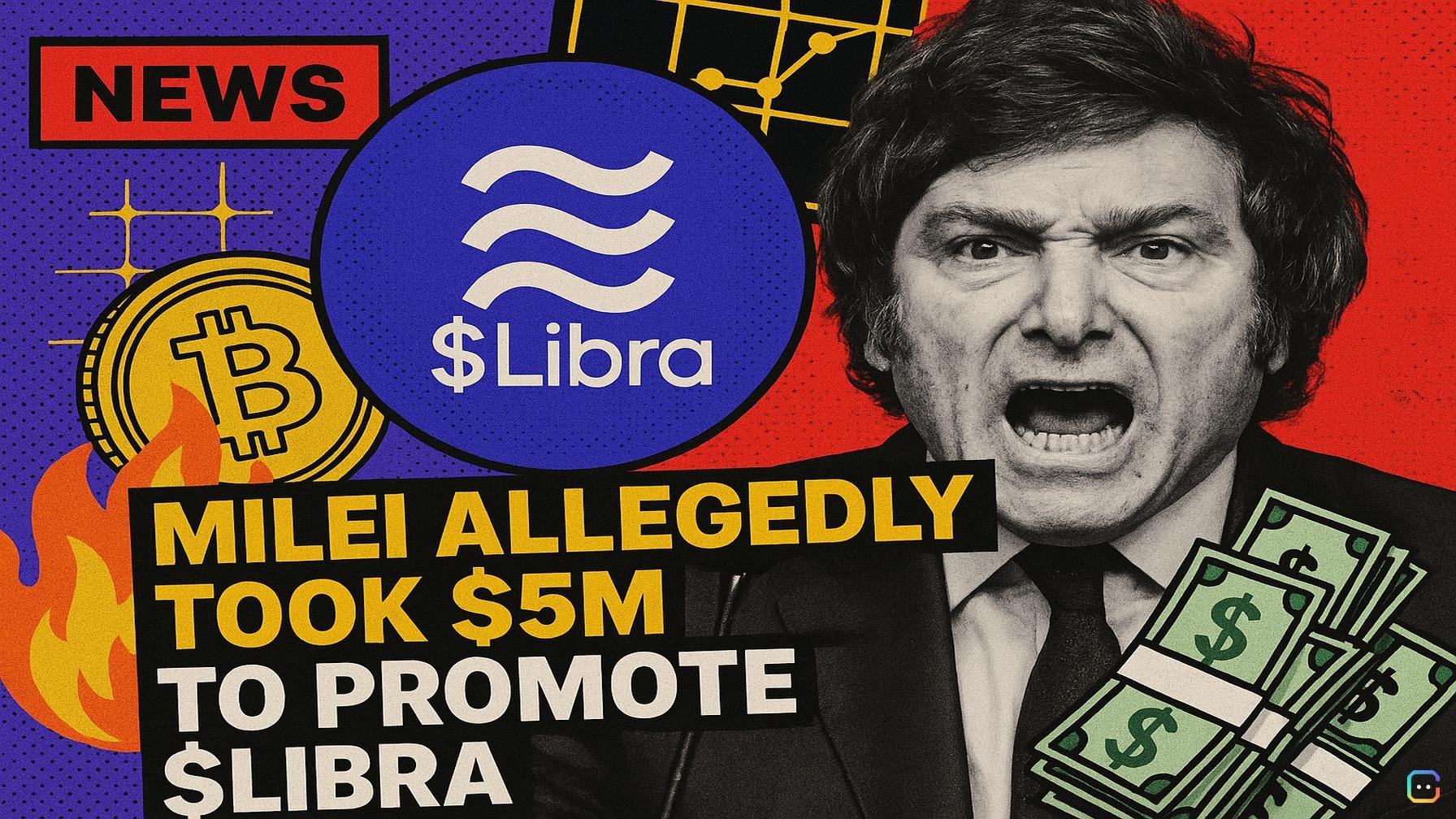
Argentina’s pro-crypto president, Javier Milei, is facing his lowest approval ratings since taking office in 2023 after newly published evidence alleges a $5 million financial agreement tied to his public endorsement of a niche token last year. The episode — a high-profile pump-and-crash of the $Libra token and revelations of payments traced to a crypto lobbyist’s phone — has dealt a reputational blow to Argentina’s nascent crypto ecosystem at a moment when industry insiders had hoped political instability would draw fresh capital and innovation.
What happened
- On 14 February 2025 Milei tweeted his support for $Libra, a small cryptocurrency promoted as “boosting the growth of the Argentinian economy.” The token spiked to about $5 after the endorsement and then collapsed to under $1, wiping out roughly $250 million across 13,000 token holders.
- Investigative reporting by El Destape, and documents recovered by state investigators from the cellphone of crypto lobbyist Mauricio Novelli, allege a three-phase payment schedule — $1.5m, $1.5m and $2m — to entities connected to Milei, totaling $5m. Call logs cited by La Nación reportedly show multiple calls between Milei and Novelli in the minutes before the $Libra tweet.
- At the time of the calls, Novelli was in Texas with colleagues working on $Libra, including an American crypto entrepreneur who, per the alleged agreement, Milei had agreed to name as an adviser.
- Milei has previously insisted he had no connection to $Libra organizers and that he “obviously” discovered and promoted the token on his own.
Industry reaction and fallout
- The scandal quickly eroded public trust in crypto across Argentina. For entrepreneurs and advocacy groups who had pitched crypto as an answer to inflation and currency instability, the association with alleged bribery undercut efforts to present the technology as a reliable financial alternative.
- Vitalik Buterin publicly responded within days of the $Libra episode, urging education and framing conventions such as Devconnect — which Argentina later hosted — as opportunities to show “the best of what crypto can offer.” Milei replied on social media calling such events an “honor for Argentina.”
- Local advocacy group Crecimiento, founded in 2024 to press for business-friendly crypto rules, saw its strategic window narrow after the scandal. Crecimiento figures had helped bring Devconnect to Buenos Aires and worked with authorities to fast-track visas and create crypto-friendly infrastructure ahead of the conference.
Regulatory progress — stalled but not stopped
- Regulators who had been moving to integrate crypto into Argentina’s financial system slowed some initiatives as public outrage mounted. Some officials withdrew from discussions after the $Libra revelations.
- By the time Devconnect took place in November 2025, many regulators had tentatively re-engaged. Argentina’s securities regulator launched a regulatory sandbox for crypto and fintech startups, and the agency on 7 April recognized some cryptocurrencies, including ether, as counting toward investors’ personal net worth — a decision that allows certain holders to qualify for more sophisticated financial products.
- Plans by the central bank for banks to offer crypto services were slated to begin in April (status remains unclear), and observers note Argentina’s regulators often follow U.S. approaches — which suggests a total halt to crypto’s growth is unlikely even if momentum has been dented.
Voices from the sector
- Maria Milagros Santamaria, formerly head of Crecimiento’s regulatory efforts, describes the past two years as three milestones: the $Libra scandal in February 2025, a partial regulatory rebound by Devconnect in November, and the latest tranche of evidence tying Milei to the payments — which she says has again compromised momentum.
- Entrepreneurs express “disbelief and disappointment” at the alleged ties between the president and $Libra, but many are pressing on. “We’re still trying to build on top of [the scandal] and keep showing what we can do,” Santamaria said.
- Emi Velazquez, former director at Crecimiento, said Devconnect helped show a different side of crypto and temporarily reduced the political cost of experimentation, citing the conference’s 17,000 attendees and positive international attention.
What this means for crypto in Argentina
- Short term: reputational damage, investor wariness, and a slowdown or increased scrutiny of regulatory reforms. Retail traders who lost funds in the $Libra crash are likely to feed political pressure for tougher oversight.
- Medium term: some regulatory initiatives — sandboxes, recognition of digital assets for investor classification — remain on the table and could progress if advocates successfully separate legitimate projects from scams.
- Political uncertainty: Milei has weathered scandals before and could rebound, but his falling approval ratings and the possibility of formal investigations add a layer of unpredictability for crypto firms and foreign investors considering Argentina.
Bottom line: The $Libra episode has highlighted how closely crypto’s fate in emerging markets can be tied to politics. Argentina’s large cohort of crypto users and existing regulatory work give the sector room to recover, but rebuilding trust will require clear enforcement, better investor protections and distance between public office and private token promotions.
Read more AI-generated news on: undefined/news