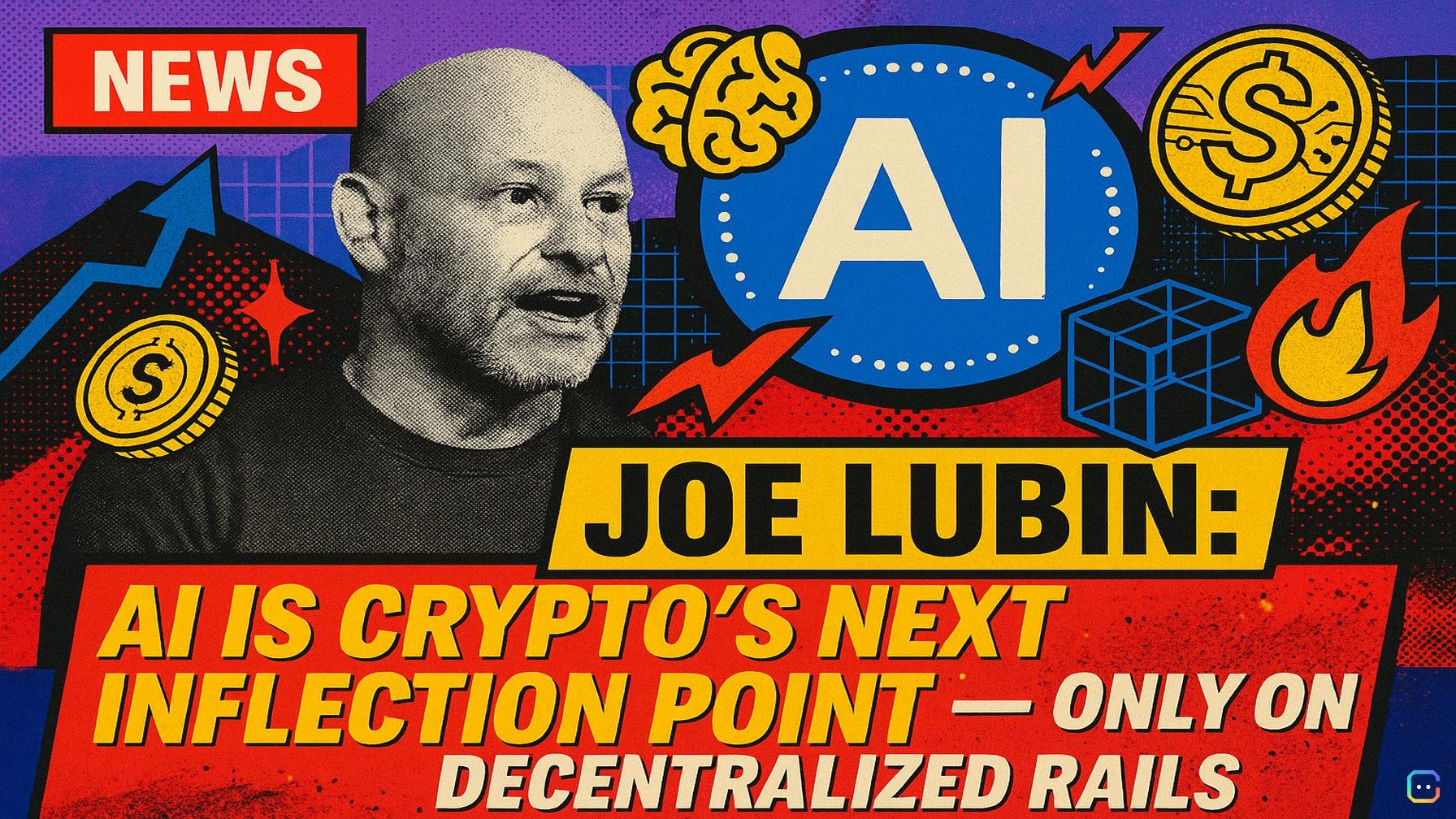
Headline: Joe Lubin: AI Is Crypto’s Next Inflection Point — Provided It Doesn’t Fall Under Big Tech’s Thumb
Consensys CEO and Ethereum co-founder Joseph Lubin told CoinDesk that artificial intelligence will spark crypto’s next major inflection point — but only if the technology is built on decentralized rails. Lubin argues that autonomous and semi-autonomous AI agents can transact, coordinate and verify one another on blockchains, using crypto infrastructure as the foundation for machine-driven economic activity.
Lubin, who will speak at Consensus Miami 2026, said he’s “sympathetic to the idea that blockchain is for machine intelligences,” but doesn’t expect humans to be displaced. Instead, smarter interfaces will hide technical complexity and let people interact with protocols through intent rather than manual steps, with AI acting as the intermediary layer between users and decentralized systems.
That promise carries a major caveat: concentration of AI infrastructure in the hands of a few large tech companies. “We could be in trouble,” Lubin warned, arguing that decentralized architecture and cryptography will be crucial to preserve accountability. In his view, cryptographic verification enables machines to “check on one another” in transparent, auditable environments.
Consensys is already adapting its products for this future. Lubin said MetaMask is being rebuilt as “a new kind of neobank that you own and control,” part of a broader push toward a “personal money operating system.” In that model, AI-powered agents could manage assets, execute transactions and navigate decentralized services on behalf of users. “You can walk around with your personal financial system in your pocket,” he said.
Lubin also sees structural shifts across the Ethereum ecosystem. He expects more “corporate chains” as businesses seek higher throughput and operational control, but he stressed that assets are most durable when issued on Ethereum’s base layer: “the best way to ensure that an asset is durable… is to mint it on Ethereum layer one,” even if it later moves across other networks.
Stablecoins, he said, are an important transitional technology — a “stepping stone” toward a more native crypto money — but current models still rely heavily on centralized issuers. Over time, Lubin expects growth in decentralized collateral and other mechanisms that will create more robust, crypto-native forms of money.
On tokenization, Lubin foresees a convergence of traditional finance and decentralized finance, merging long-standing financial techniques with blockchain’s programmability to create a more granular, programmable global economy.
Finally, Lubin took a measured view of long-term technical threats like quantum computing: not an immediate crisis, but something Ethereum developers have prepared for over years. “A lot of us just see it as being folded into the natural evolution of Ethereum,” he said.
Read more AI-generated news on: undefined/news