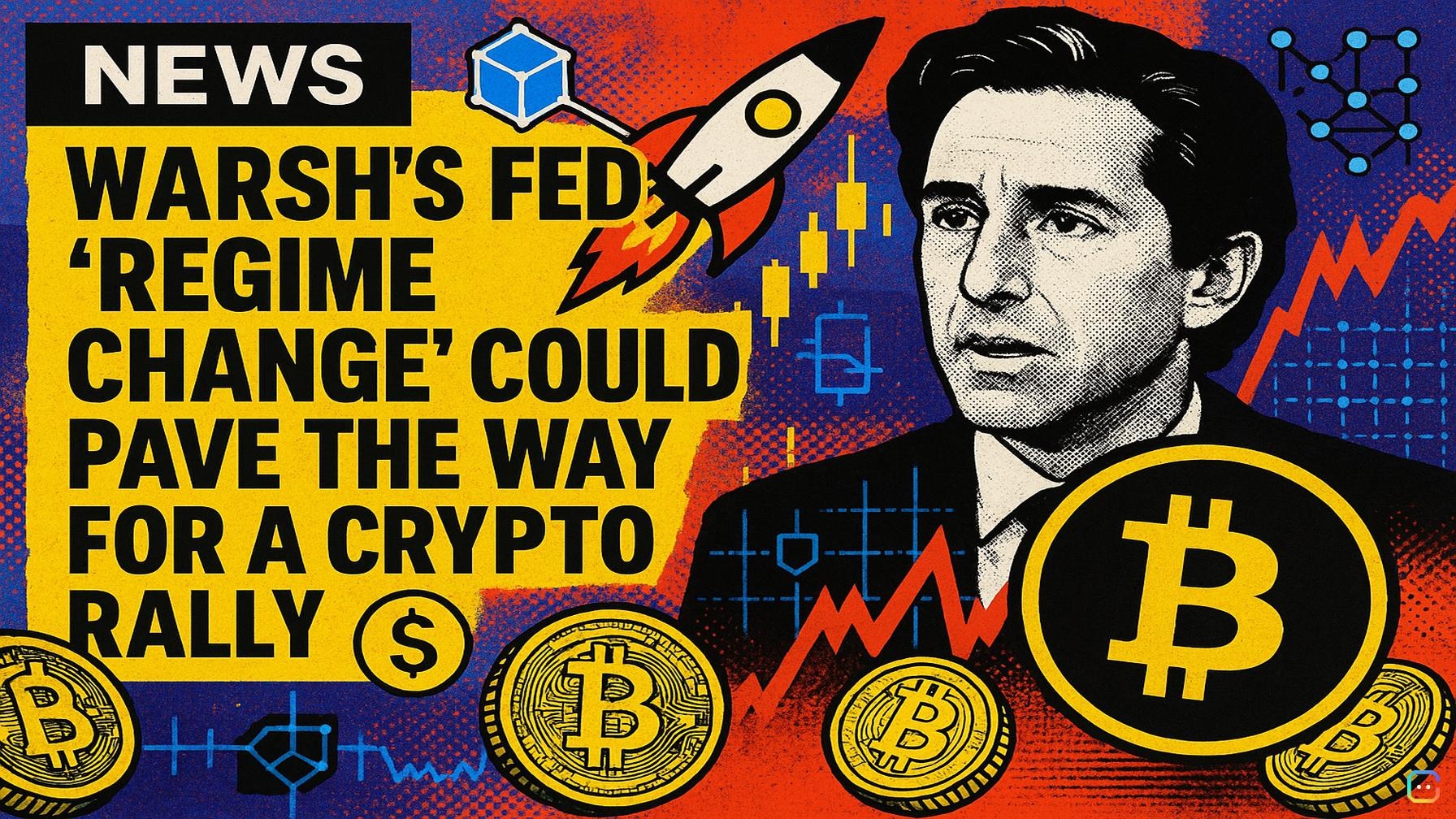
Kevin Warsh, President Trump’s nominee for Fed chair, told the Senate Banking Committee Tuesday that the Federal Reserve’s handling of inflation in 2021–22 was not merely a mistake of degree but a “fatal policy error,” and that fixing it requires a full “regime change” in how monetary policy is run — not small, incremental tweaks. That argument and his proposed fixes have clear implications for markets, and for crypto in particular.
What Warsh said
- At the confirmation hearing Warsh drew a blunt line between his prospective leadership and the Powell era. “After Covid, when prices went up to the tune of 25 to 35% for virtually all deciles of the American people, that’s an indication that the Fed missed its mark,” he said, adding that “we are still dealing with the legacy of the policy errors in 2021 and 2022.”
- He rejected a gradualist reading of the Fed’s 2021 pause — when the policy rate sat near zero as inflation began to rise — calling it a failure of kind, not just degree.
- Warsh said the Fed has yet to fully reckon with that episode and must do so before any new credible framework can be put in place.
Policy changes he’s pushing
- “Regime change”: new inflation framework, new policy tools, and restructured communications.
- Less forward guidance: Warsh argued Fed officials should speak less about future rate paths, stating provocatively, “Price stability exists when no one talks about inflation.” He views frequent forward guidance as constraining the Fed’s response to new data and a source of market disruption.
- Fewer meetings: he floated reducing the number of policy meetings per year (without committing to a specific number), but said press conferences should accompany any meetings that do occur.
- Balance sheet reduction: shrinking the Fed’s balance sheet to create room to lower interest rates for households and small- and mid-sized businesses without stoking inflation.
- AI and disinflation: Warsh called AI “the most disruptive moment in modern economic history,” arguing productivity gains from the technology could be structurally disinflationary and allow for lower rates while preserving price stability.
Context and recent data
- The Fed left its benchmark rate near zero throughout 2021 while inflation was rising, then tightened rapidly from mid-2022 into January 2023.
- U.S. inflation was still running above the Fed’s 2% target — about 3.3% year-over-year as of March 2026.
Why crypto traders should care
- A Fed moving toward lower rates would be broadly favorable for risk assets, including crypto. Lower policy rates reduce the opportunity cost of holding non-yielding assets such as Bitcoin, and diminish the relative appeal of cash and short-duration yields.
- Warsh’s stated AI-driven disinflation thesis and balance-sheet shrinkage plus eventual easing are a combo that could remove an important macro headwind that has capped crypto’s recovery.
- The article notes Bitcoin’s October 2025 all-time high of $126,000; if rate pressure eases under a Warsh approach, it could help clear a path toward renewed price upside.
- Warsh’s own private exposure to the space—reported investments across more than 20 blockchain and digital-asset companies via venture structures—also signals an uncommon familiarity with the sector for a Fed nominee. Still, his policy stance, rather than personal holdings, would be the dominant driver of market impact.
What to watch next
- The Senate confirmation vote and whether Warsh’s “regime change” proposals survive political and institutional scrutiny.
- Any concrete plans on meeting cadence, forward-guidance rules, and balance-sheet strategy if he is confirmed.
- Inflation and productivity data, and signs that AI-driven productivity gains are materializing in ways that can sustain lower rates without reigniting inflation.
Bottom line: Warsh is pitching a stark break from recent Fed practice — tighter lips on guidance, fewer meetings, a smaller balance sheet and a belief that AI will help tame inflation structurally. For crypto, that’s a potentially bullish macro story, provided the nominee is confirmed and the Fed’s policy mix actually shifts toward lower rates.
Read more AI-generated news on: undefined/news