Headline: U.S. Freezes $344M in USDT as OFAC Steps Up “Economic Fury” Against Iran’s Crypto Networks
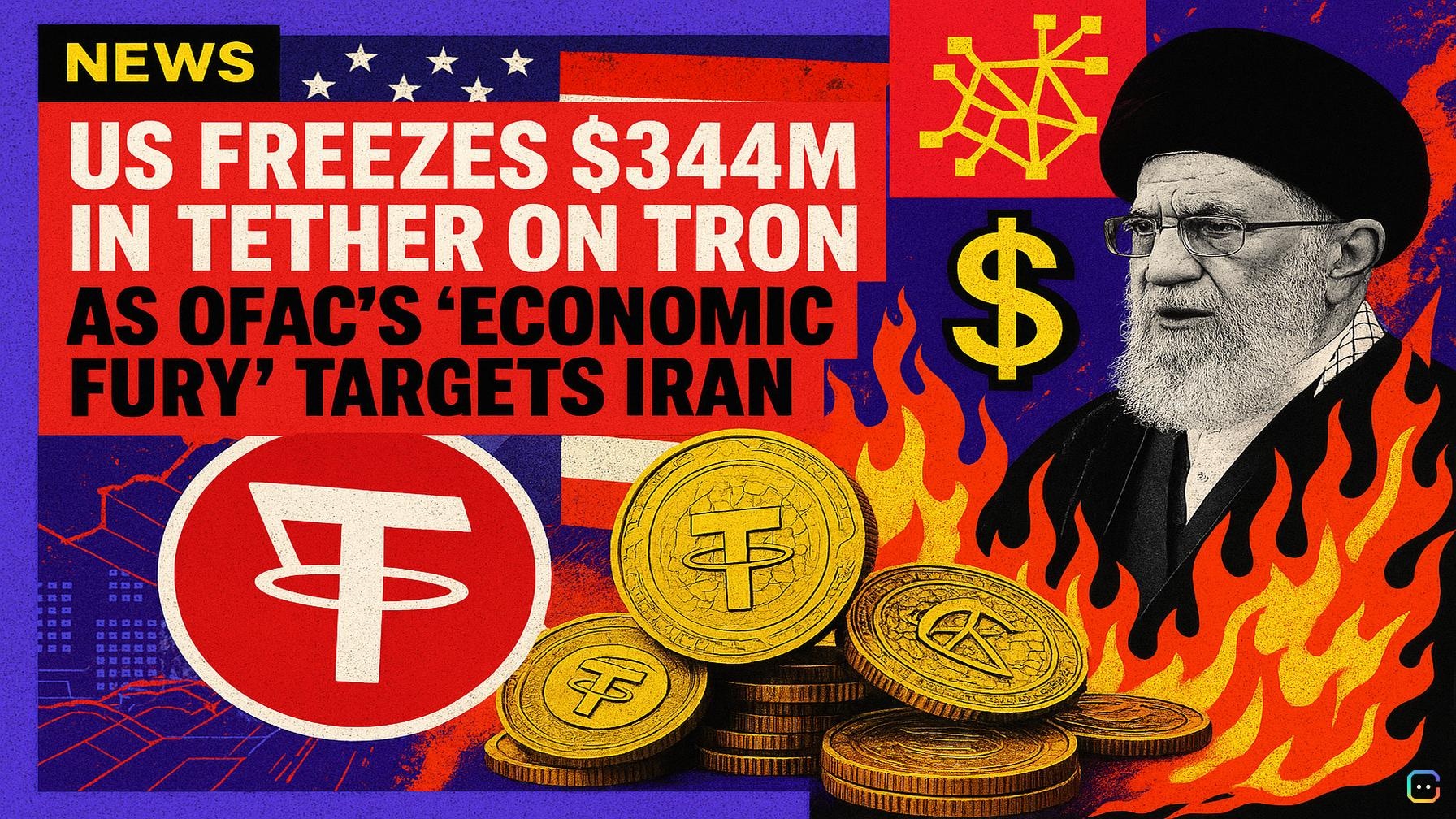
The U.S. Treasury says a $344 million freeze of Tether stablecoins is part of a broader campaign to choke off Tehran’s ability to move money overseas.
What happened
- The Treasury’s Office of Foreign Assets Control (OFAC) has sanctioned multiple crypto wallets tied to Iran, prompting a freeze of roughly $344 million in USDT held on the Tron network. Treasury Secretary Scott Bessent announced the move on X, linking the action to a new pressure campaign called “Economic Fury.”
- Tether blacklisted two Tron addresses on Thursday that together held $344 million in USDT. The company has not responded to requests for comment.
Why the Treasury acted
- A U.S. official told CoinDesk the sanctioned wallets had “material links” to the Iranian regime: transactions with Iranian exchanges and routings through intermediary addresses connected to wallets associated with the Central Bank of Iran.
- Treasury officials say Iran’s central bank has increasingly used digital assets to obscure cross-border transactions and sustain trade under sanctions. OFAC alleges Iran is employing more complex transaction patterns and intermediaries to mask its involvement in payments and trade flows.
Broader enforcement activity
- OFAC says it is pairing traditional sanctions on front companies with aggressive action against digital-asset channels that enable evasion. On the same day, the agency sanctioned Hengli Petrochemical (Dalian) Refinery Co., accusing the China-based refiner of playing a significant role in Iran’s oil economy.
- The Treasury emphasized ongoing coordination with blockchain analytics firms and financial institutions — including crypto exchanges — to trace and block illicit flows tied to sanctioned entities.
What this means for crypto users and platforms
- Blacklisting wallet addresses can prevent on-ramps and exchanges from processing funds tied to sanctioned actors, increasing compliance pressure on custodians and stablecoin issuers.
- The incident underscores that regulators are combining traditional sanctions tools with blockchain tracing to follow value across on-chain rails — a signal that states will continue to treat digital assets as both a target and a vector for enforcement.
Bottom line
The freeze highlights the growing intersection of sanctions enforcement and crypto compliance: U.S. authorities are actively treating on-chain flows as actionable targets in efforts to limit Iran’s financial lifelines.
Read more AI-generated news on: undefined/news