A fresh battle over how tightly to police cryptocurrencies is unfolding in Washington, pitting a major banking trade group against crypto industry leaders — and shining a spotlight on diverging interpretations of the same data.
What the banks are saying
- The Bank Policy Institute (BPI), a Washington, D.C.–based industry group representing large banks, released a report titled “Time for a Reckoning on AML and Crypto.” The BPI argues that crypto and stablecoins are increasingly used by money launderers and terrorist financiers, and that crypto firms do not face the same legal obligations as banks to protect the financial system.
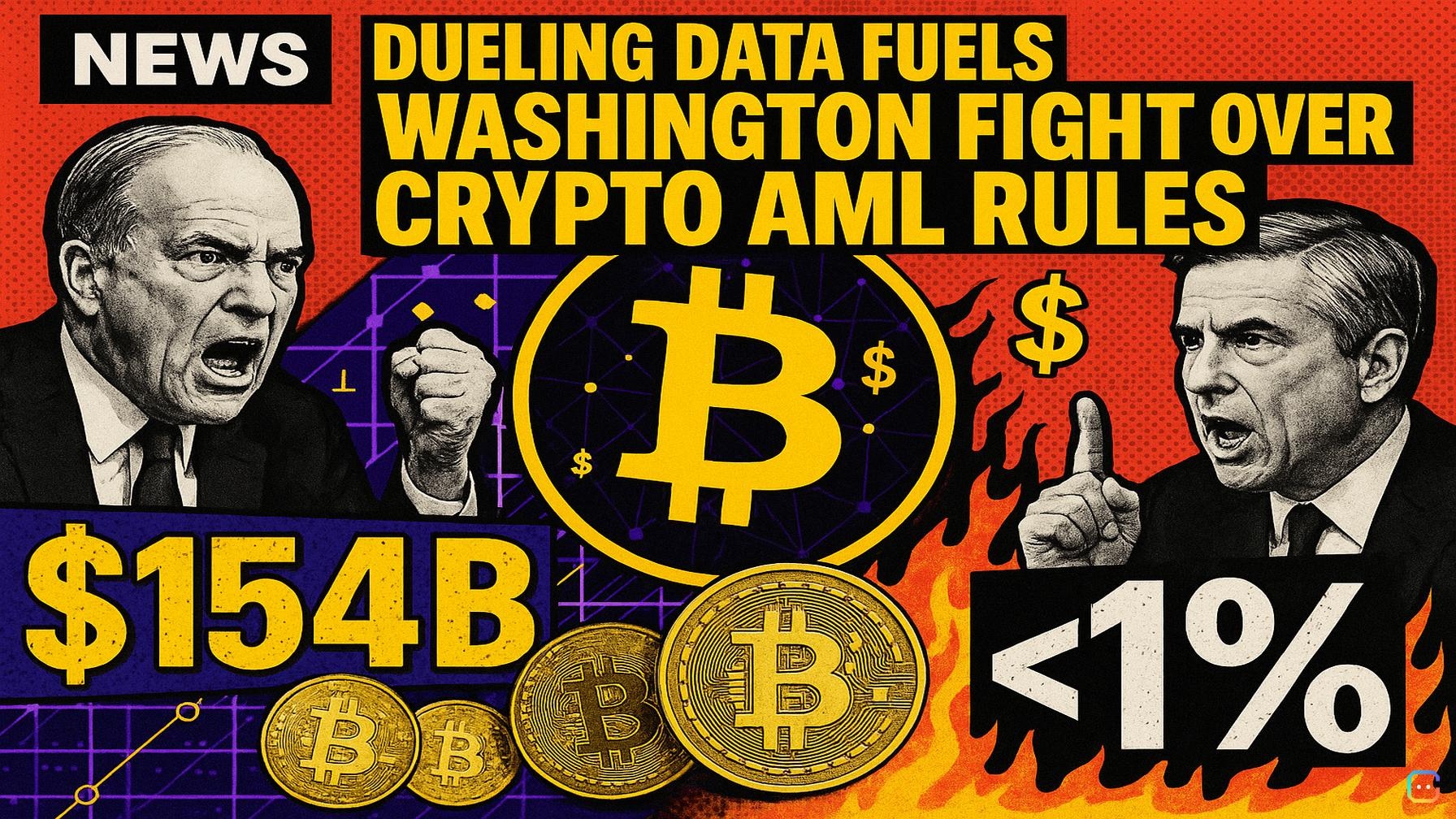
- To underline the urgency, BPI cites Chainalysis’s 2026 Annual Report, saying illicit crypto addresses received $154 billion in 2025 — a 162% year-over-year increase. The institute also points to a sharp rise in suspected crypto-linked human trafficking activity in 2025, with “hundreds of millions of dollars” flowing through identified services and an 85% year-over-year increase in that category.
- BPI frames the issue as not only a matter of financial integrity but U.S. national security, urging Congress to use market-structure legislation to level the regulatory playing field so compliance is not a competitive disadvantage for some firms.
- The group also notes momentum inside government, pointing to Treasury’s recent Notice of Proposed Rulemaking that would impose AML and sanctions obligations on stablecoin issuers — a model BPI believes should be extended to other crypto intermediaries.
How the crypto sector responded
- Coinbase’s Chief Policy Officer Faryad Shirzad pushed back on the report’s framing. He argued BPI overemphasizes the headline $154 billion figure and ignores key context: Chainalysis itself estimates illicit activity remained under 1% of total on-chain volume in 2025. TRM Labs estimates the illicit share at about 1.2%, and both firms, Shirzad said, show the illicit proportion has stayed at or below those levels for years.
- Shirzad broadened the comparison to traditional finance, citing the UN Office on Drugs and Crime’s estimate that 2–5% of global GDP is laundered through the traditional financial system — including the banks BPI represents — as a reminder that illicit finance is not unique to crypto.
- Importantly, Shirzad did not claim crypto should be unregulated. He acknowledged bad actors exploit every payment rail and said stablecoin issuers and exchanges should invest in AML, sanctions screening, and intelligence sharing — but argued the data do not justify singling out crypto as uniquely dominated by criminal use.
Why it matters now
- The dispute comes as U.S. regulators and lawmakers are actively shaping rules for stablecoins and crypto intermediaries. BPI’s report elevates the argument for equalizing legal obligations across market participants; crypto leaders push back on the narrative and on selective use of statistics.
- Both sides signal they want stronger AML defenses in practice — they differ on whether the problem is an industry-specific crisis or part of a broader, cross-sector challenge that requires carefully calibrated policy rather than a narrowly targeted crackdown.
Bottom line
Expect this debate to intensify as Treasury rulemaking and possible congressional action advance. The clash highlights a central policymaking tension: how to build effective, proportionate AML and sanctions rules that reduce illicit use without stifling legitimate innovation.
Featured image from OpenArt, chart from TradingView.com.
Read more AI-generated news on: undefined/news